Ski Strong This Season: Don’t Let the Holidays Slow You Down

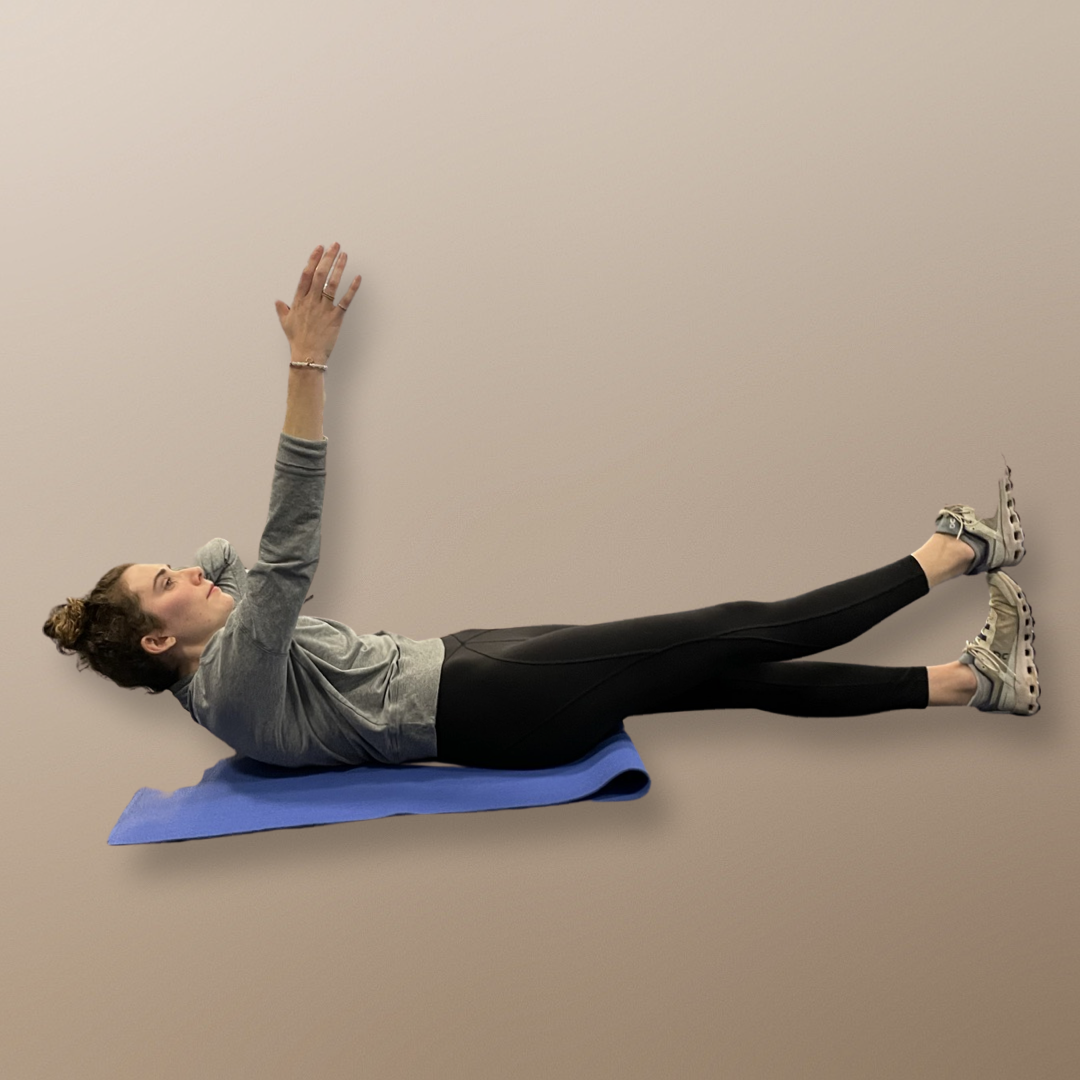
During the holidays, the priority should be to maintance training.

For alpine and nordic skiers, the holiday season arrives just as winter routines are taking shape—when consistency begins to matter more than ambition. With travel, packed schedules, and parties, structured training is often the first thing to disappear. It’s tempting to pause workouts and rely on skiing alone. Sports science suggests that approach comes at a cost.

Consistency, even at reduced volume, is one of the strongest predictors of in-season performance. Strength, power, and aerobic capacity begin to decline sooner than many athletes expect. Research shows minor dips in neuromuscular performance can occur within two weeks of reduced training. For alpine skiers, this can mean decreased force production, earlier fatigue, and increased injury risk. For nordic skiers, reductions in strength and aerobic efficiency can compromise technique and late-race performance. The solution isn’t training harder—it’s not skipping your routine.

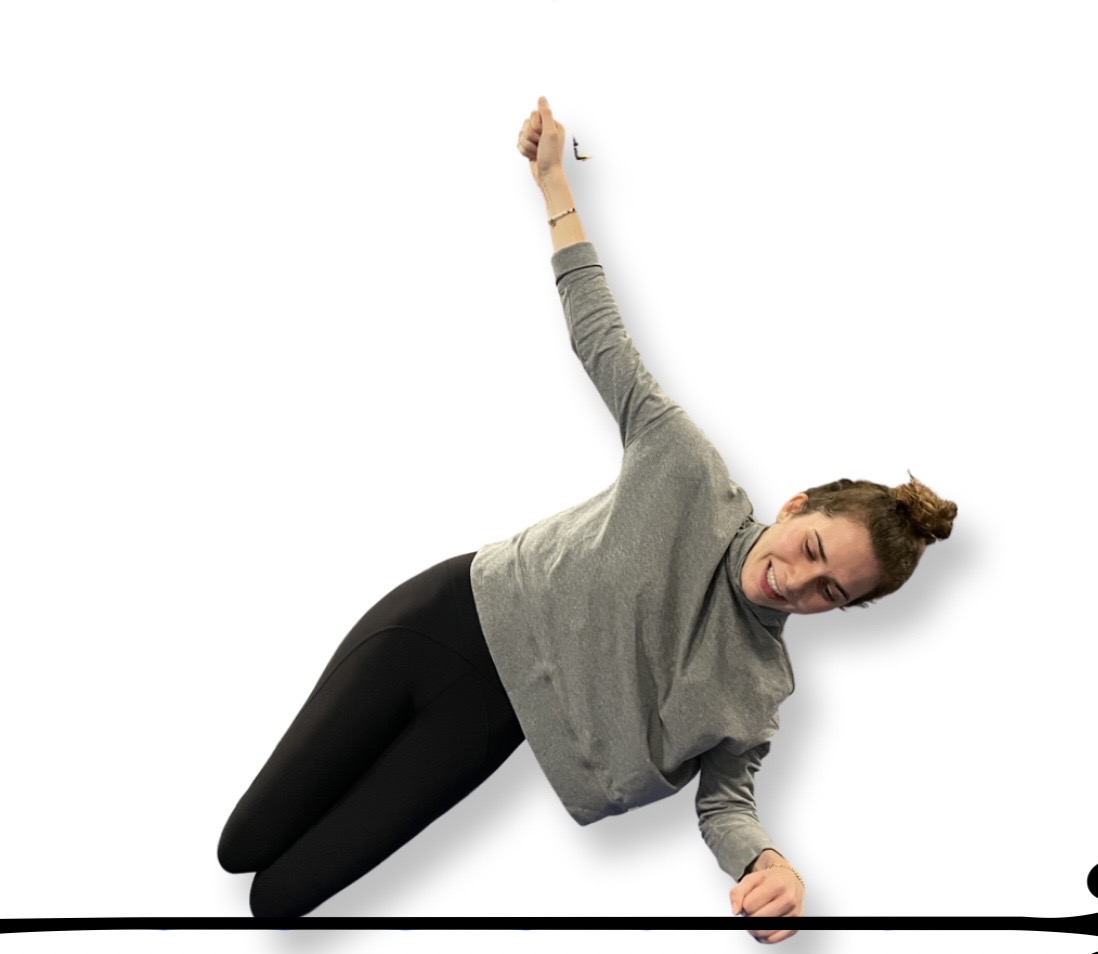
During the holidays, the priority should be maintenance training. Studies consistently show that maintaining intensity while reducing volume—often to 30–40 percent of normal load—is sufficient to preserve strength and power. Two short strength sessions per week, focused on the lower body, trunk, and upper-body pulling, can support both disciplines. These sessions don’t need to be long or elaborate; they just need to happen.

Skiing provides an important sport-specific stimulus, but it doesn’t fully replace structured training. Alpine skiing places repeated eccentric stress on the quadriceps, which builds endurance but doesn’t fully preserve maximal strength.  Nordic skiing, while highly aerobic, often lacks the strength stimulus needed to preserve upper-body power and hip stability. Skipping off-snow training can leave athletes feeling strong early in the season but struggling as fatigue accumulates.

Consistency also supports movement quality. Staying  strong improves coordination, balance, and force transfer—key elements for edge control in alpine skiing and technique durability in nordic skiing. These qualities fade quickly when training becomes sporadic.

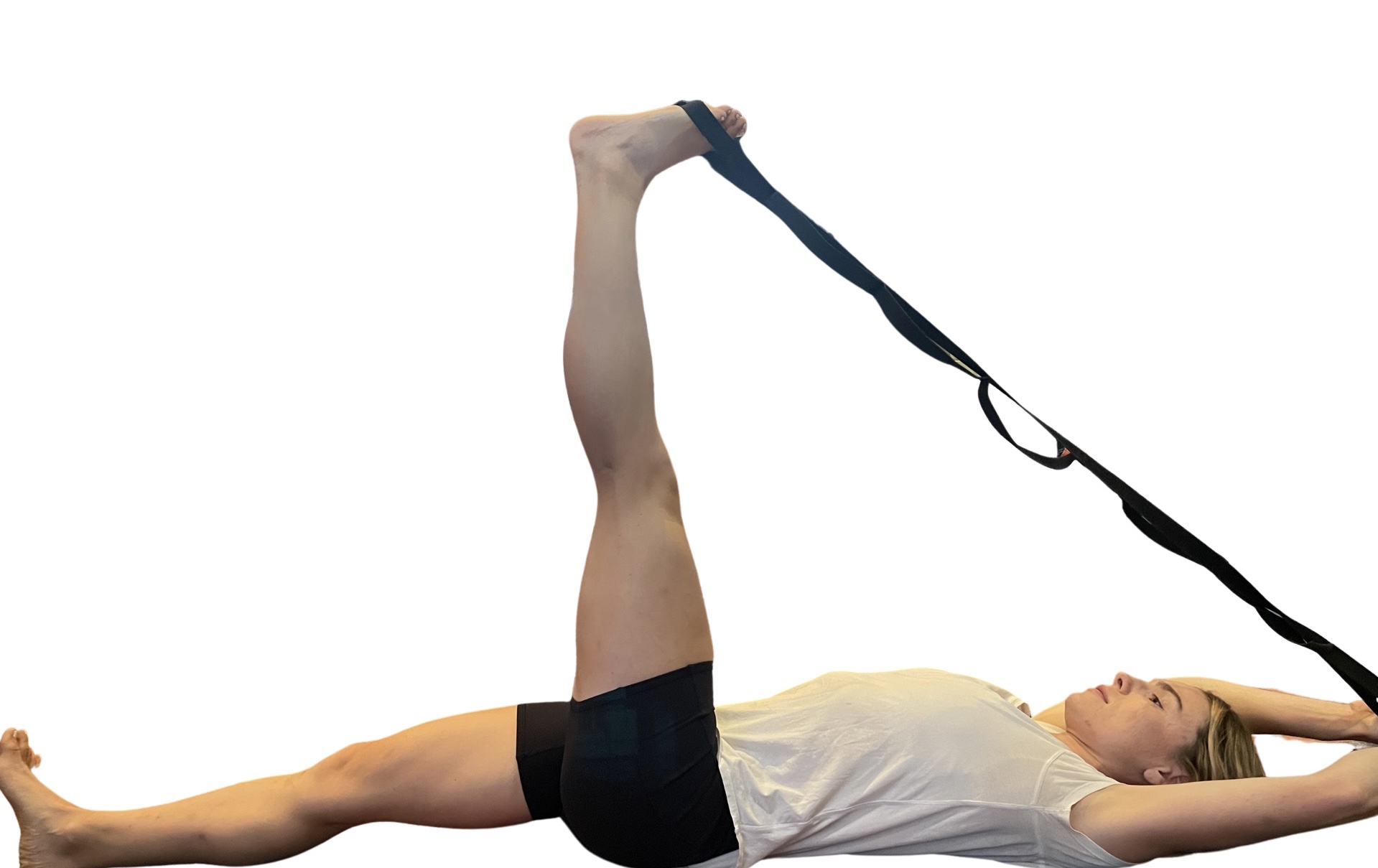
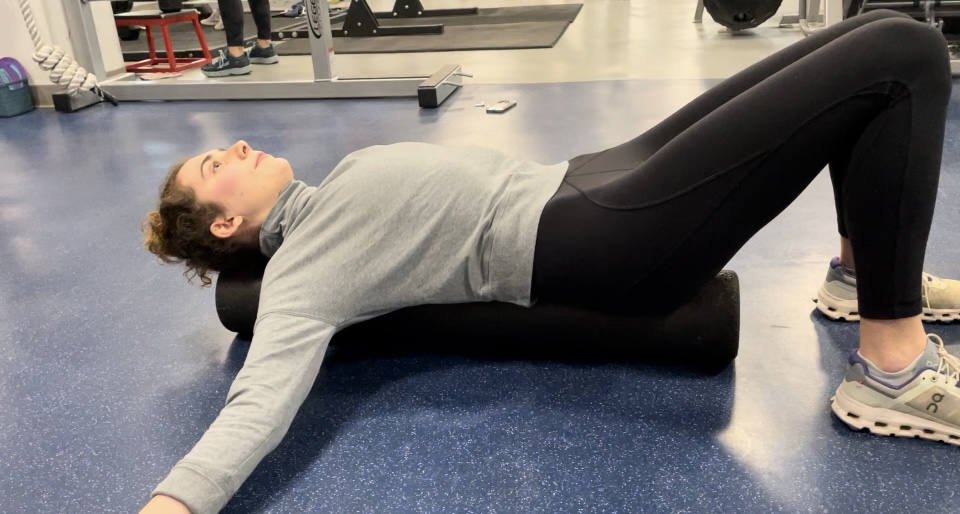
Recovery also matters. Active recovery exercises, like stretching, foam rolling, and easy spinning  help you recover with less soreness. Sleep and fueling play a role as well; poor sleep and under-fueling increase perceived effort and make workouts easier to skip. Regular meals, adequate carbohydrates, and hydration—especially in cold environments—support energy and training quality.

The holiday season is also a time for gratitude. Being able to train and ski through winter reflects robust bodies worth taking care of. You don’t need long workouts—just consistency. Aim for two short strength sessions each week. Keep intensity up and volume manageable. Fuel regularly, hydrate, and protect your sleep when you can. Do the basics well. Small, steady efforts now preserve performance and help you move through the rest of the season feeling strong and resilient on snow.

Connie Aronson is an Exercise Physiologist and Corrective Exercise Specialist ( TMMB-CES ) Visit her at the Y, www.conniearonson.com , and Instagram @Josie_the golden 

Move better, feel better: the power of myofascial release

Our bodies are built to handle incredible forces thanks to bones, muscles, tendons and fascia working in harmony. But when pain or recurring injuries strike, we often overlook one key player: fascia. This dense, connective tissue weaves throughout the body like an intricate network, influencing how we move and feel.

Ever peeled the skin off a chicken before cooking it? That slippery, white film you see is fascia—it’s the same tissue that wraps around your muscles, organs and bones. In fact, the fascia that lines your bones is what gives structure and support to the entire body.

Justin Price, a leading corrective exercise specialist, compares fascia to a spider’s web: When a fly gets caught in one part of the web, the spider senses the change in tension throughout the entire structure. Similarly, when something’s off in your body, the entire system feels it. A tight calf, for example, might affect not only your ankle but your knee’s alignment and even the way you walk.

When fascia becomes restricted due to injury, repetitive stress or tension, it forms adhesions. These adhesions can limit range of motion and cause compensations in other muscles and joints, explains Price. Learning effective self-myofascial release techniques can help you target these adhesions, rejuvenating the soft tissue and restoring your body’s natural movement patterns.

So how do you keep your fascia healthy and flexible? Self-myofascial release. These simple techniques help relieve tension, break up adhesions and restore mobility—no fancy gear required. A few basic tools, like tennis balls, a baseball, a golf ball or a foam roller can work wonders to release tension in restricted areas. Combined with specific stretches right after rolling, you’ll effectively target tight spots.

Tennis or golf ball foot roll

Tennis or golf ball foot roll

Target: Plantar fascia and lower leg

Tools: Tennis ball, golf ball or any small ball

How to:

  • Place the ball under your foot.
  • Roll back and forth to find tender spots.
  • Pause and apply pressure on sore areas.
  • Roll for 30 seconds to 1 minute per foot.

Pro tip: Keep a ball near your desk or couch as a reminder to roll daily.

Foot and toe wall stretch

Target: Foot and ankle flexibility

Foot and toe wall stretch

How to:

  • Keep the ball of your foot and base of your toes on the floor.
  • Press your toes and knee gently against a wall.
  • Slowly roll your foot and ankle inward toward the wall.
  • Hold for 15-20 seconds.
  • Repeat twice daily.

Target: Psoas and hip flexors

nis ball hip flexor release
Tennis ball hip flexor release

Target: Psoas and hip flexors

How to:

  • Lie face-down.
  • Place the tennis ball just to the side of your belly button.

Gently roll to find tender spots between your belly button and hip.

  • Pause on sore spots for 20-30 seconds.
  • Total time: 2-3 minutes per side

Pro tip: Internally rotate your leg to deepen the stretch.

Follow with a hip flexor stretch

Target: Hip flexors

Kneeling hip flexor stretch

How to:

  • Kneel down, with one foot forward. Pad your knee if needed.
  • Keep your hips tucked in and under.
  • Tighten the glutes and abs isometrically during the stretch.
  • Gently change arm angles to further target hip flexors.
  • Hold for 15-20 seconds, 2-3 cycles.

Taking just a few minutes a day to release and stretch tight fascia can dramatically improve your mobility, reduce pain and even boost performance. Small, consistent actions lead to big changes—so grab a tennis ball and start rolling your way to better movement. 

Published in the Idaho Mountain Express September 26, 2025 https://www.mtexpress.com/wood_river_journal/features/fitness-guru-move-better-feel-better/article_0b114c31-3afd-47c9-bacc-1f9ec9ec9b6f.html

Mountain Flow:Why Outdoor Yoga in the Summer Offers a Reset

As summer takes hold in our mountain town, it’s the perfect time to bring your yoga practice outside. Whether you’re stretching in your backyard, on the porch, or in a quiet clearing, being in nature shifts how your body and mind respond. The aspen-filtered light, open air, and uneven ground offer something the studio can’t: a reset.

Here’s why practicing yoga outdoors—especially in the mountains—offers something new:

1. Fresh Air, Clear Mind
The crisp mountain air is the perfect backdrop for a yoga practice. Every breath you take fills your body with oxygen, and boosts energy. Whether you’re starting your day with a slow flow or unwinding with a sitting meditation, the natural environment around you amplifies the calming benefits of breathwork. The power of the outdoors isn’t just in what you can see—it’s in how you feel when you’re breathing deeply in a natural, open space.

2. Ground Your Practice, Strengthen Your Body
The real benefit of practicing yoga outdoors comes from the terrain. Grass, or irregular terrain naturally challenge your balance. Unlike a studio floor, uneven ground prompts your body to engage stabilizing muscles.

For example, in standing poses, yoga teaches you to spread your toes and distribute your weight evenly between the ball of each foot and the heels. Your feet contain 26 bones, 33 joints, and over 100 muscles, tendons, and ligaments. Standing on uneven ground activates small muscles in your feet, ankles, and core, strengthening your lower body, improving your balance, and enhancing proprioception (your body’s awareness of its position in space). This makes every posture feel more engaged and adds depth to your practice.

3. Posture, Flexibility, and Stress Relief
Yoga improves posture, flexibility, and overall strength, and doing it outdoors heightens those benefits. Without mirrors or studio distractions, you rely on your body’s natural feedback to guide your alignment. From standing tall in Tadasana to stretching in Downward Dog under the open sky, practicing in nature encourages a deeper connection to your body.

The benefits go beyond the physical, too. Yoga incorporates diaphragmatic breathing, relaxation, and imagery techniques—all effective tools for managing stress. Studies show that simple stretching and breathing exercises can reduce anxiety and promote emotional well-being, making outdoor yoga a great tool for mental and emotional health.

4. Focus on How You Feel, Not How You Look
In mountain towns, there’s often a strong focus on fitness, and performance.  But yoga offers a different kind of opportunity—it’s not about pushing your limits or hitting new milestones. It’s about tuning in to your body. Outdoors, without mirrors or the usual pressures, you can focus less on how things look and more on how they feel. Nature reminds us that it’s okay to simply be present.

5. The Mountains as Your Sanctuary
Practicing yoga outside is a grounding experience, both physically and mentally.  The fresh air, open space, and connection to nature create an atmosphere that encourages stillness, focus, and reflection.

This summer, take your mat outdoors. Whether it’s by the river, or just in your backyard, the mountains can be the perfect backdrop for your practice. Let the natural world offer you the quiet and space needed for a reset.

Published in The Idaho Mountain Express, August 1, 2025.

https://www.mtexpress.com/wood_river_journal/features/mountain-flow-why-outdoor-yoga-in-the-summer-offers-something-new/article_b791f3b7-bd9a-483a-965c-f34e5d6951c6.html

Get flexible with the TRX deep squat

Fitness_1.jpg
Deep squats can improve hip mobility and leg strength.
Photo courtesy of Connie Aronson

How easy is it for you to sit in a deep, bodyweight squat? Deep squats are a natural human movement. Knees fully bent, buttocks low to the ground and heels down, it’s a posture still used by people young and old, whether while eating, playing games, socializing or doing household chores. I’m not suggesting giving up chairs, but practicing deep squats on a regular basis is great for your hip mobility and leg strength.

Called the “primal†or “Asian†squat, the position requires hamstring, glute, ankle and hip mobility. Also, the front shin and spine need to be strong enough to hold you in position. For most people with healthy knees, a deep squat can improve the strength of the stabilizing ligaments and soft tissues. If you have problems with your squat depth and range of motion, specific calf and ankle stretches can also be helpful.

In a deep squat, you have to flex your ankles. The front shin needs to move forward over your toes. A limited range of motion in your ankles can affect not only good squatting form, but sports performance and balance. Two big muscles on the back of the leg, the gastrocnemius and soleus, provide movement, and are often tight or stiff. Both of these muscles attach to the heel via the Achilles tendon. These muscles play a big role when you flex your ankles.

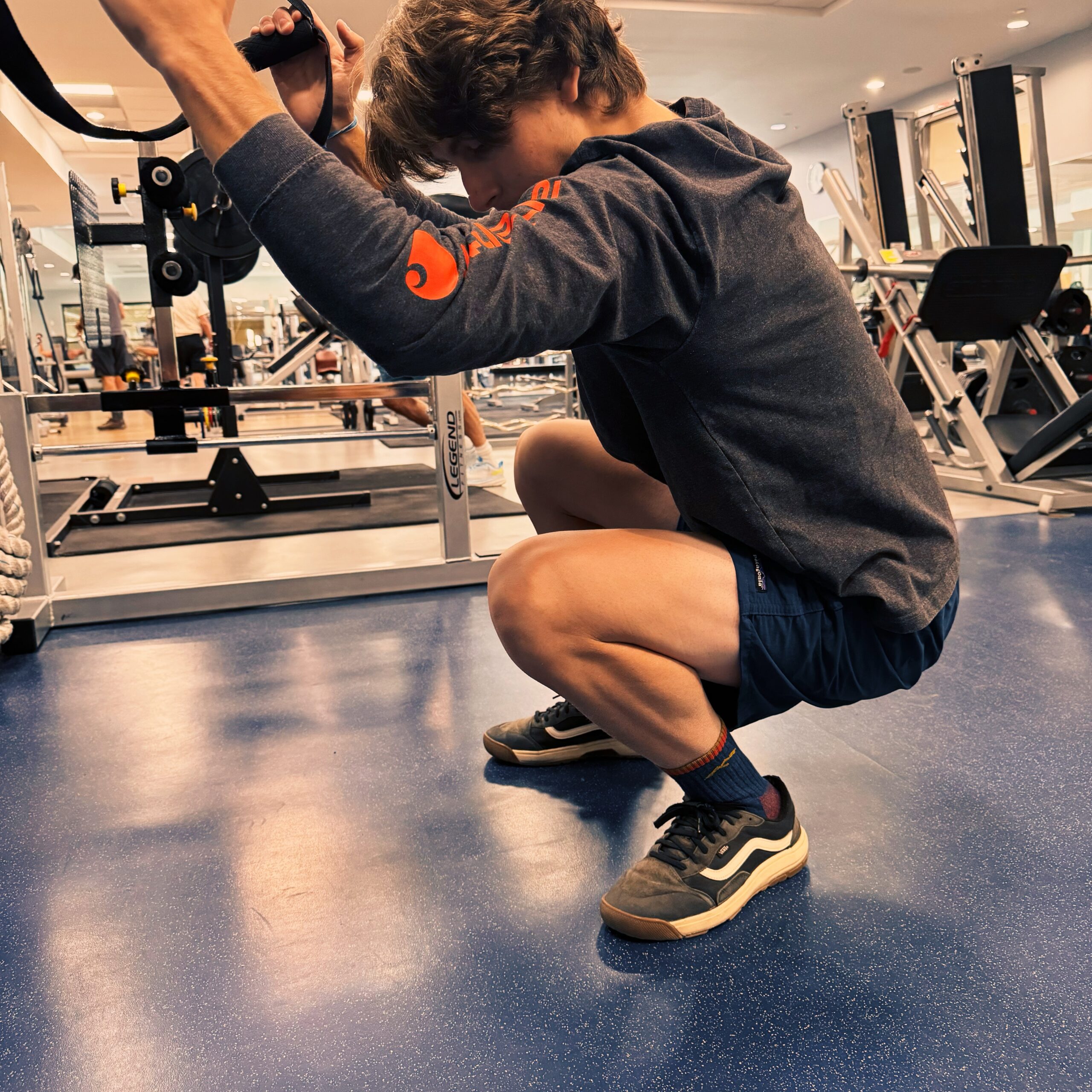
The ankles have to bend. Dorsiflexion involves being able to bring the lower leg over the foot. It occurs any time your foot hits the ground. And, of course, in a squat. Using a TRX for assistance and stability, as shown, will help you experience a deeper stretch than you thought possible in both the ankles and hips in the deep squat. With daily practice, you’ll be able to get down on the floor and play with your kids or grandkids, impressing them with your youth!

TRX deep squat mobility warm-up

Hold onto a TRX, set a medium length and sink down into a low squat. Sink, sway and move side to side to open up your hips. Pull your hips both forward and back. Keep your heels down. Perform three to four reps of 20 to 30 seconds before standing up.

A woman is stretching on the floor with another person.

Once you are in a deep squat, sink, sway and move side to side to open up your hips & allow the shins to move forward

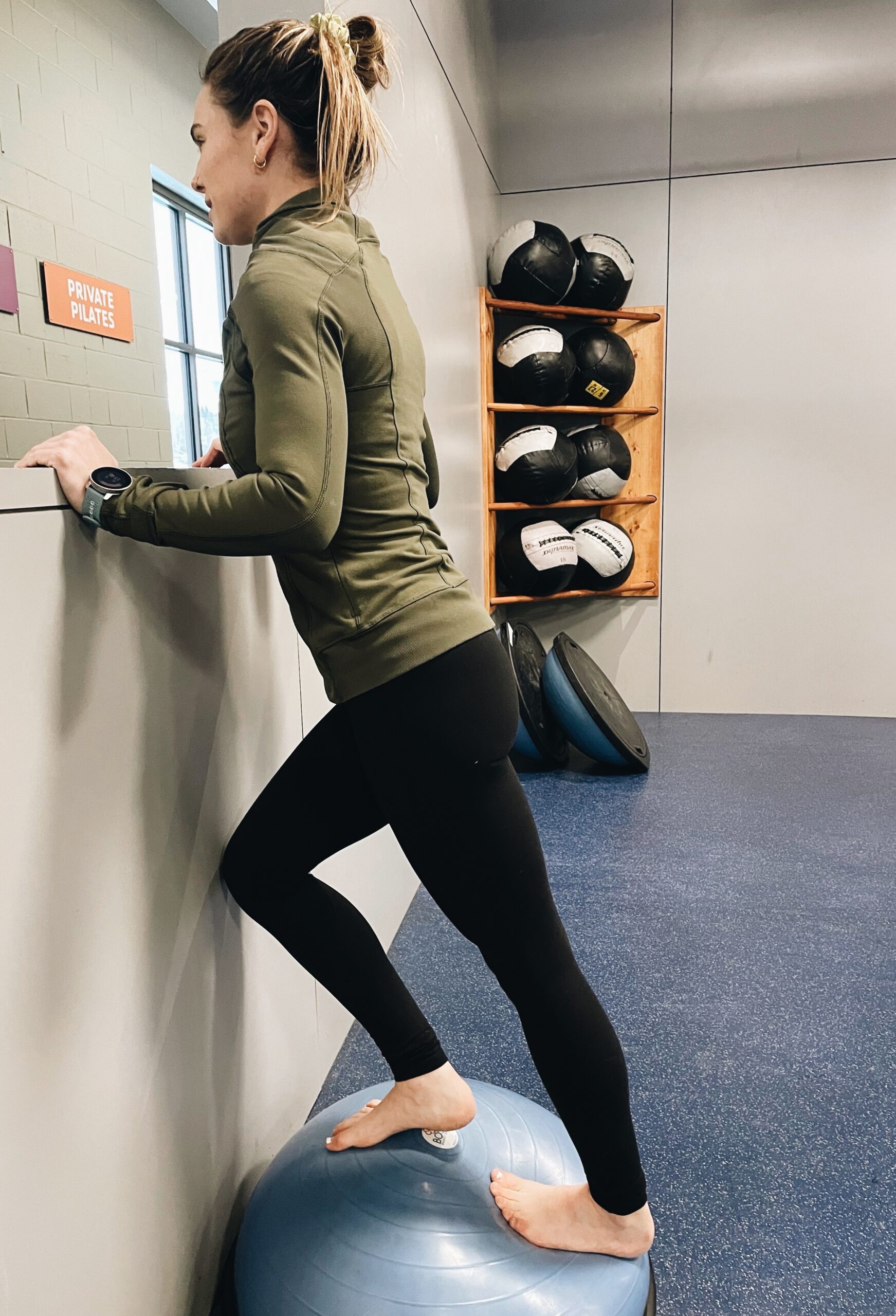
Best calf stretch (on a BOSU)

A woman is stretching on the floor with another person.

Stretching the calf muscle can help the ankle dorsiflex (so the shin comes over the foot)

Photo courtesy of Connie Aronson

Place a BOSU ball against a wall for balance. Stand on the center of the dome with one leg behind you. Push the heel of the back foot down into the BOSU, leg straight, posture erect. Hold for 20 seconds. Move the heel outward 10 degrees and hold the stretch for 20 seconds, then move the heel inward 10 degrees and hold the stretch for 20 seconds. Repeat on the other leg.

Connie Aronson is an exercise physiologist and corrective exercise specialist (TBBM-CES). Visit her at www.conniearonson.com and follow her on Instagram using @conniearon.

Vist link at https://www.mtexpress.com/wood_river_journal/features/get-flexible-with-the-trx-deep-squat/article_9f9abbe6-6018-11ef-a047-b3262712cfd7.html

Do it right: How to stretch the external rotators of the hip

Hips move, as they are mobile joints just as your neck, shoulders and ankles are. All muscle helps us move and maintain our posture, especially the hip complex.

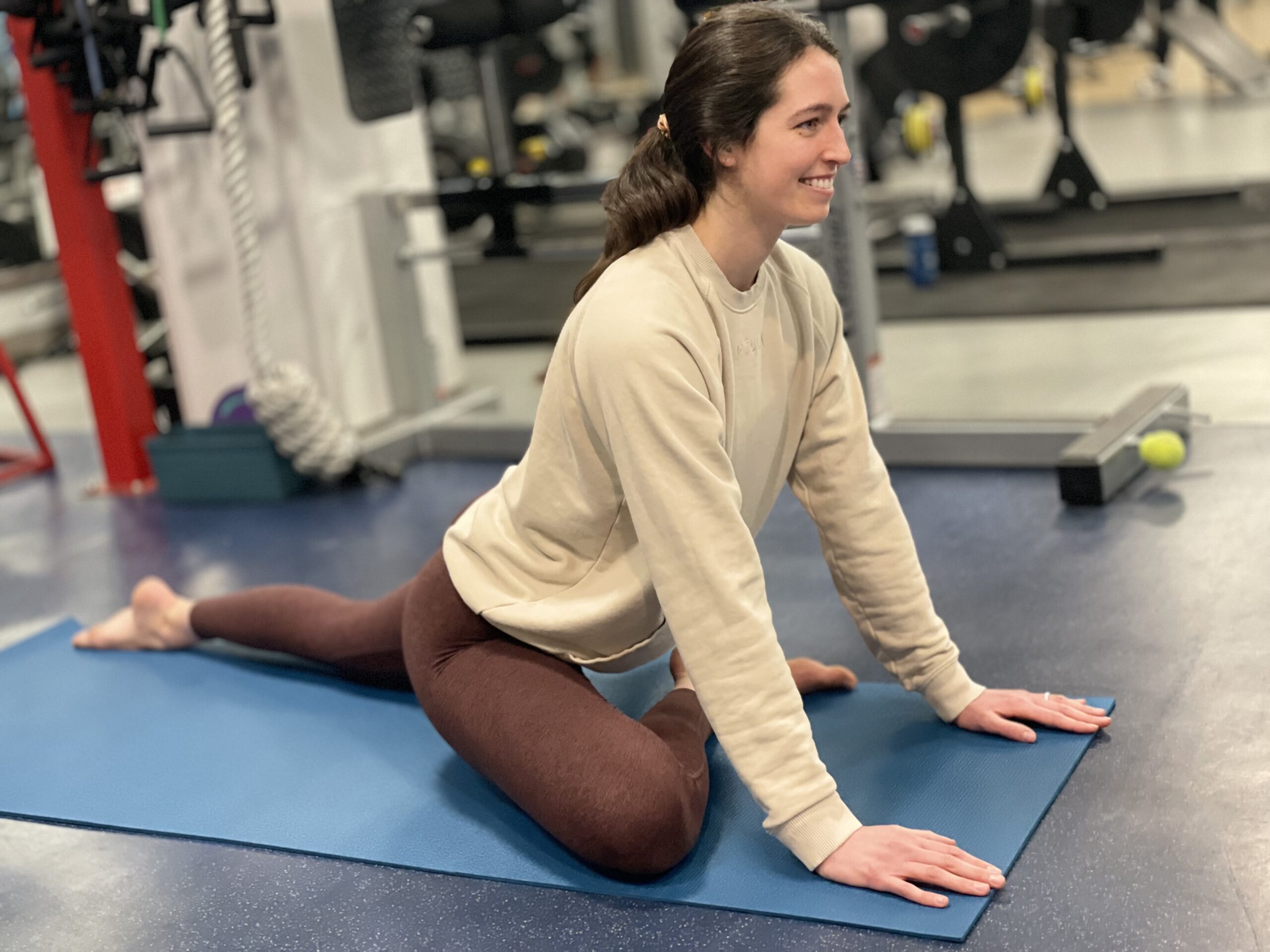
For many of us, we don’t stretch them enough and end up with tight hips, specifically the external rotators. If you do stretch regularly, you know that Pigeon Pose is an excellent hip and buttock stretch that can help you restore movement to these areas. But it can hurt sensitive knees, or be impeded by a current injury, as it requires the shinbone to be at a 45 degree angle beneath the front hipbone.

Hips need both good mobility and strength in every activity from walking to skiing. The main job of the external rotators of the hips is to stabilize the pelvis during the swing phase of walking. For example, when you step out on your right foot, as you transfer the weight into that foot, there is a moment in which you are standing on one leg.

As your foot and leg absorb your body weight, the hip internally rotates as you step. At the same time, the external rotators of the right hip tighten to keep the pelvis level to the ground as you swing your left foot through to step on it. This action slows down the knee as it moves toward the midline of the body, so your knees don’t collapse inward.

Good hip mobility and strength allow you to have better biomechanics from the hip down to the foot. Tight or weak hips affect not only a normal gait, but every activity that you enjoy doing.

A woman is stretching on the floor with another person.

Pigeon Pose

When your hips are too tight, you may feel crooked, sore, or admit to yourself that you really need to do some yoga. When your hips aren’t tight—particularly the posterior muscles of the rear—walking, getting out of the car, climbing stairs, or skiing can feel effortless.

Here are two variations to Pigeon Pose that you might like to add to your daily stretching routine.

A woman is stretching on the floor with another person.

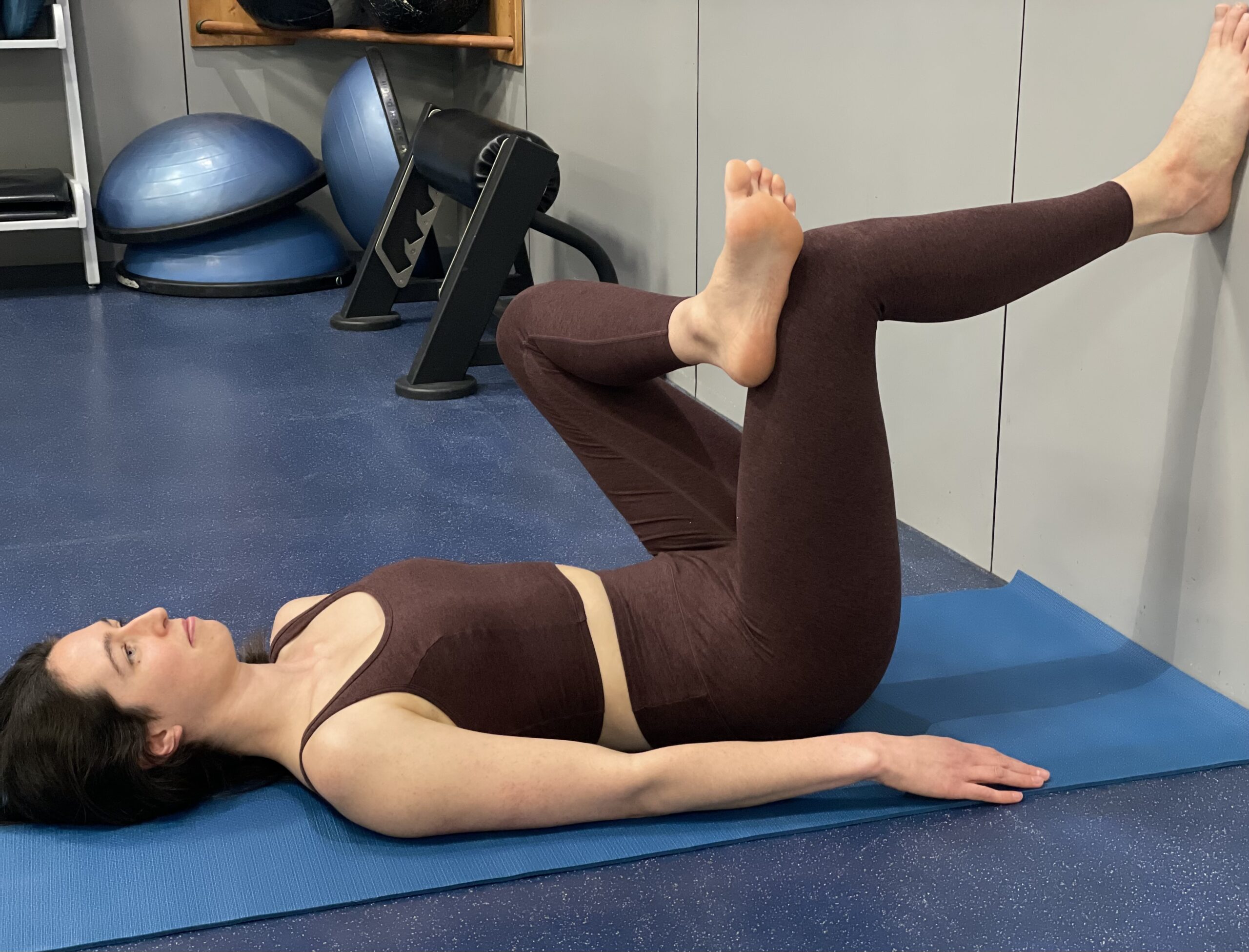
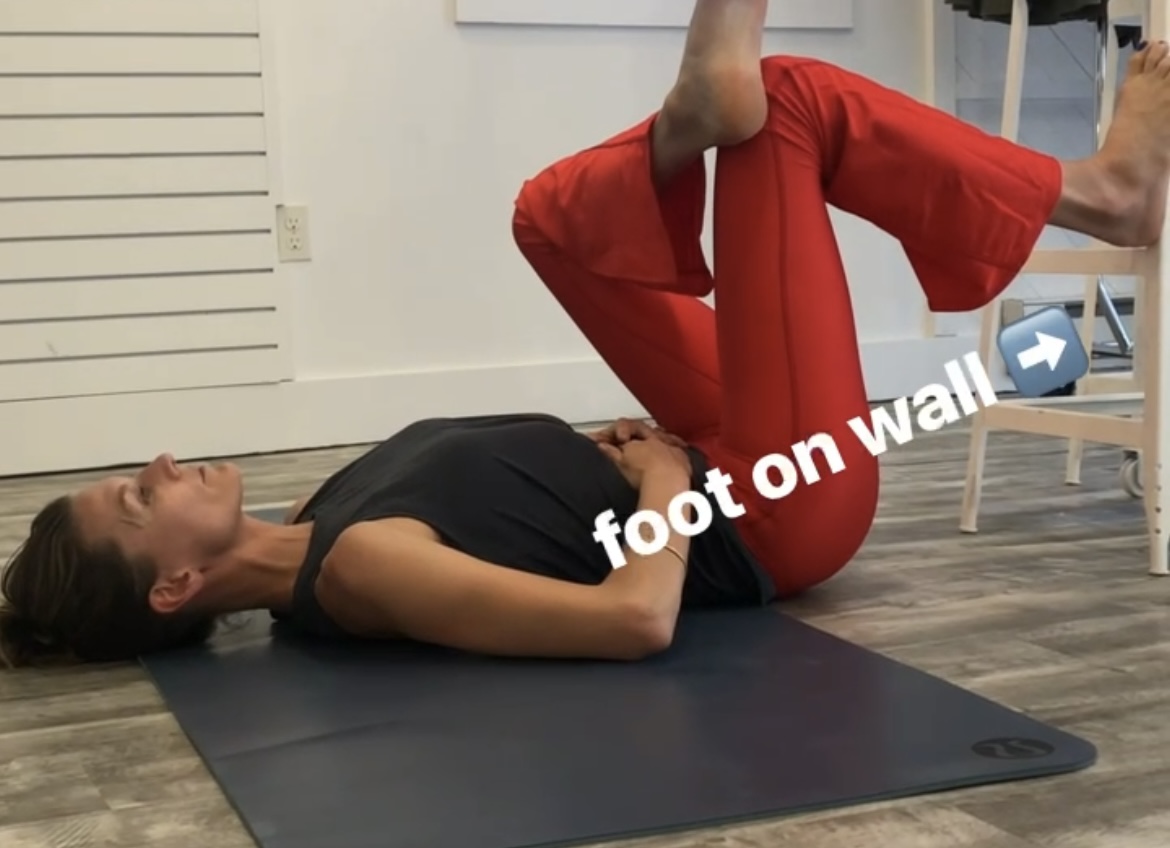
1. Figure 4 stretch using the wall

Figure 4 is an excellent stretch for the external and internal hip rotators, including the piriformis and glutes.

Tip: The piriformis is one of the six external rotators of the hip. (The sciatic nerve runs over, under or through the piriformis muscle and can be responsible for sciatica pain.)

Lie on the floor, place your left foot on a wall, and place your right ankle over your left knee.

Let the right side of your pelvis drop away from your right shoulder until your pelvis becomes level.

Hold the stretch to release your hip rotators.

Stretch each side for 20-30 seconds, at least once a day.

A woman is stretching on the floor with another person.

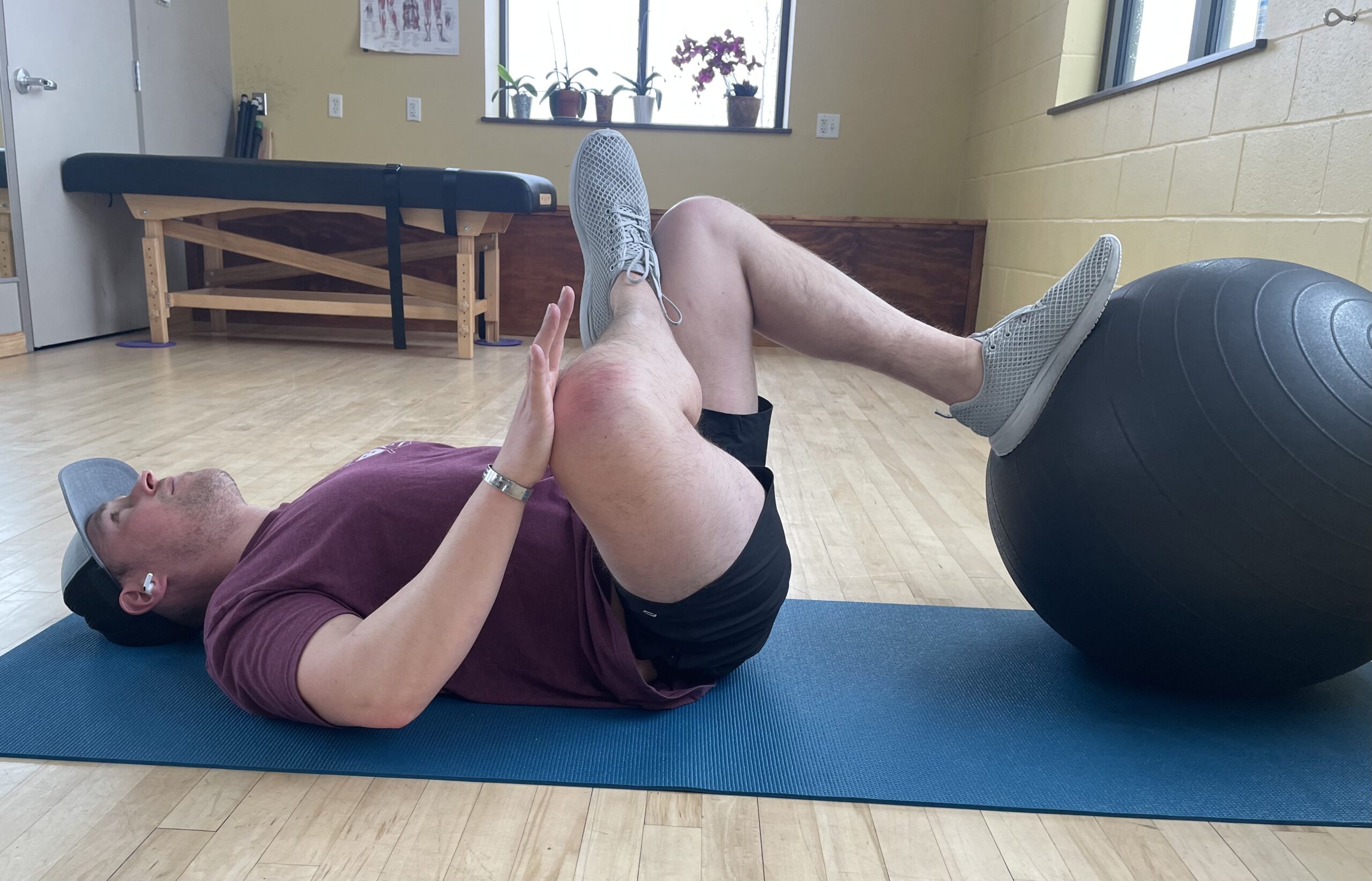
2. Figure 4 stretch using a physio ball

  • all photos by Connie Aronson

Instructions are the same as the above stretch, ( stretch 1 ) except that you place one foot on a physio ball.

Using a physio ball allows you to create a deeper stretch by gently rolling the ball toward you with the foot that is placed on the ball.

As seen in The Idaho Mountain Express March 24, 2024

https://www.mtexpress.com/wood_river_journal/features/do-it-right-how-to-stretch-the-external-rotators-of-the-hip/article_96d925c4-dc97-11ee-9afc-cb569b10a505.html

Save a fall with strength and balance

A woman is stretching on the floor with another person.

We take our balance for granted—until we have an embarrassing fall.

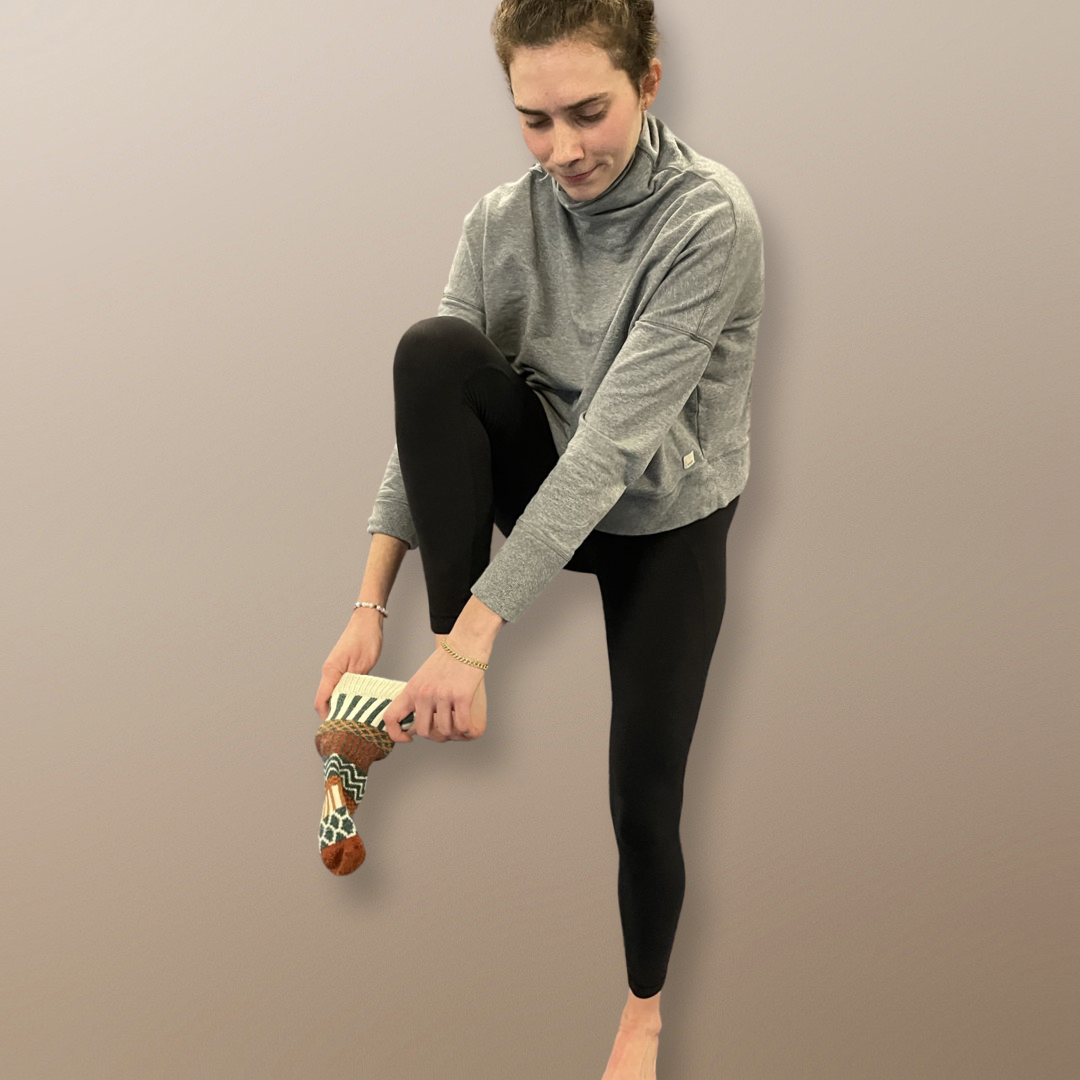
For youngsters, they typically shake off a fall. A young person has no problem slipping a sock on standing up. That’s a demonstration of balance and strength. Those past a certain age, however, usually sit down to pull on socks or sneakers. The fear of falling is a real concern. One of three older adults suffer a fall each year. Falls claimed 60,000 lives in 2012 and 2013. Falls are a serious health concern for older adults, alongside the cascade of other debilitating factors and a loss of independence.

Balance training is the mainstay of a fall prevention program, as well as strength and coordination. Lower body weakness increases the odds of falling fourfold. Unfortunately, there are other risk factors that contribute to falls. This includes foot problems, improper footwear like sneakers or slippers without traction and tight ankles. A limited range of motion in your ankles can affect balance and the simple ability to step up. Vision and environmental hazards in the house, like loose rugs or clutter, can contribute to falls as well.

One of the best things you can do as an adult is to make sure your gluteal medius and gluteal maximus muscles are strong. These posterior muscles are prime movers and important for stability. Making sure your glutes are working well, in conjunction with ankle mobility and stability, will help you move around with grace and confidence, and not fall.

Try to the following exercises every day.

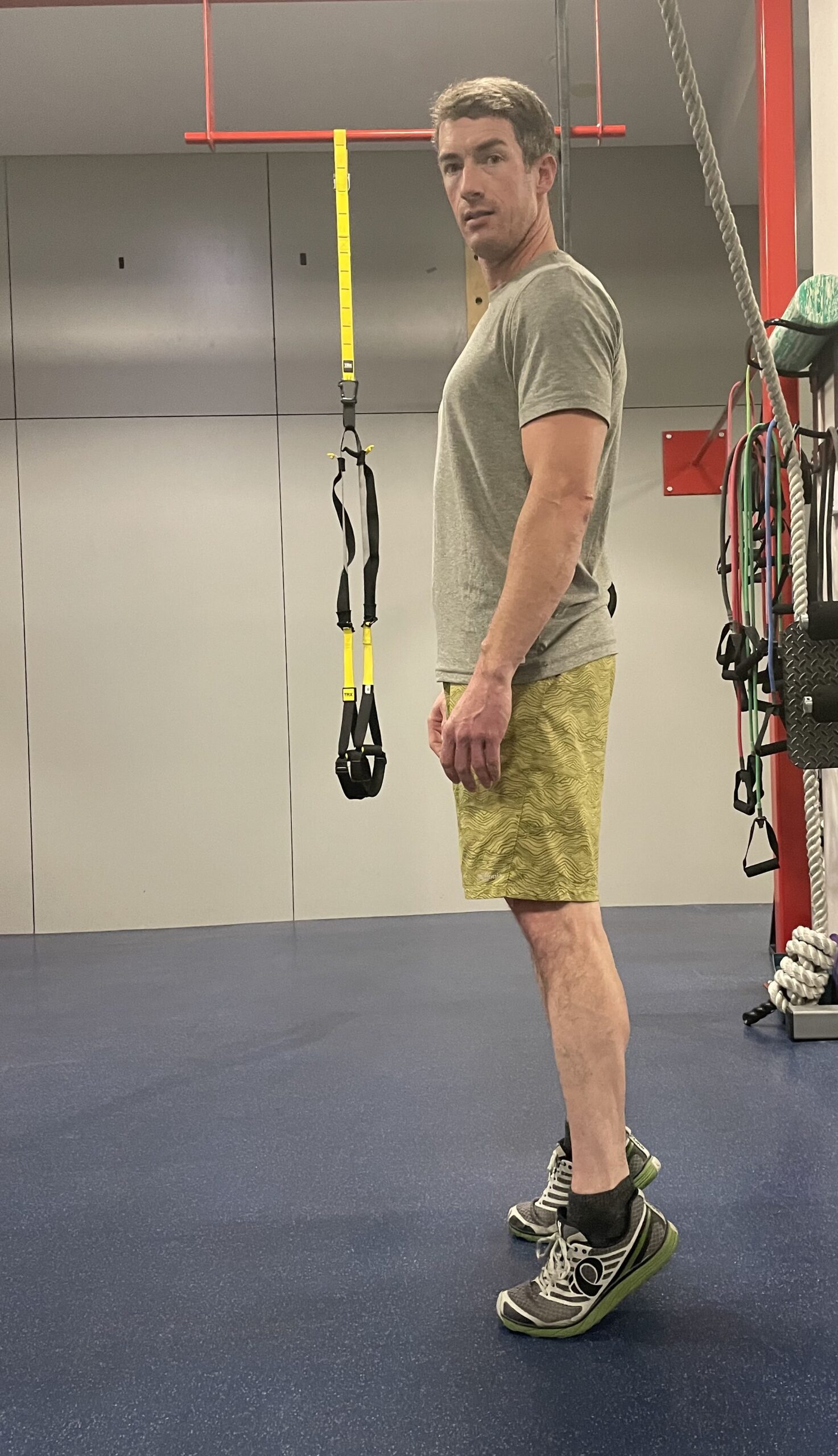
Heel rise rocker

A woman is stretching on the floor with another person.

• Rise upward onto your toes and immediately rock back onto your heels as you lift your toes up towards your shins. Aim for 10-15 reps daily. Use a wall for support if needed.

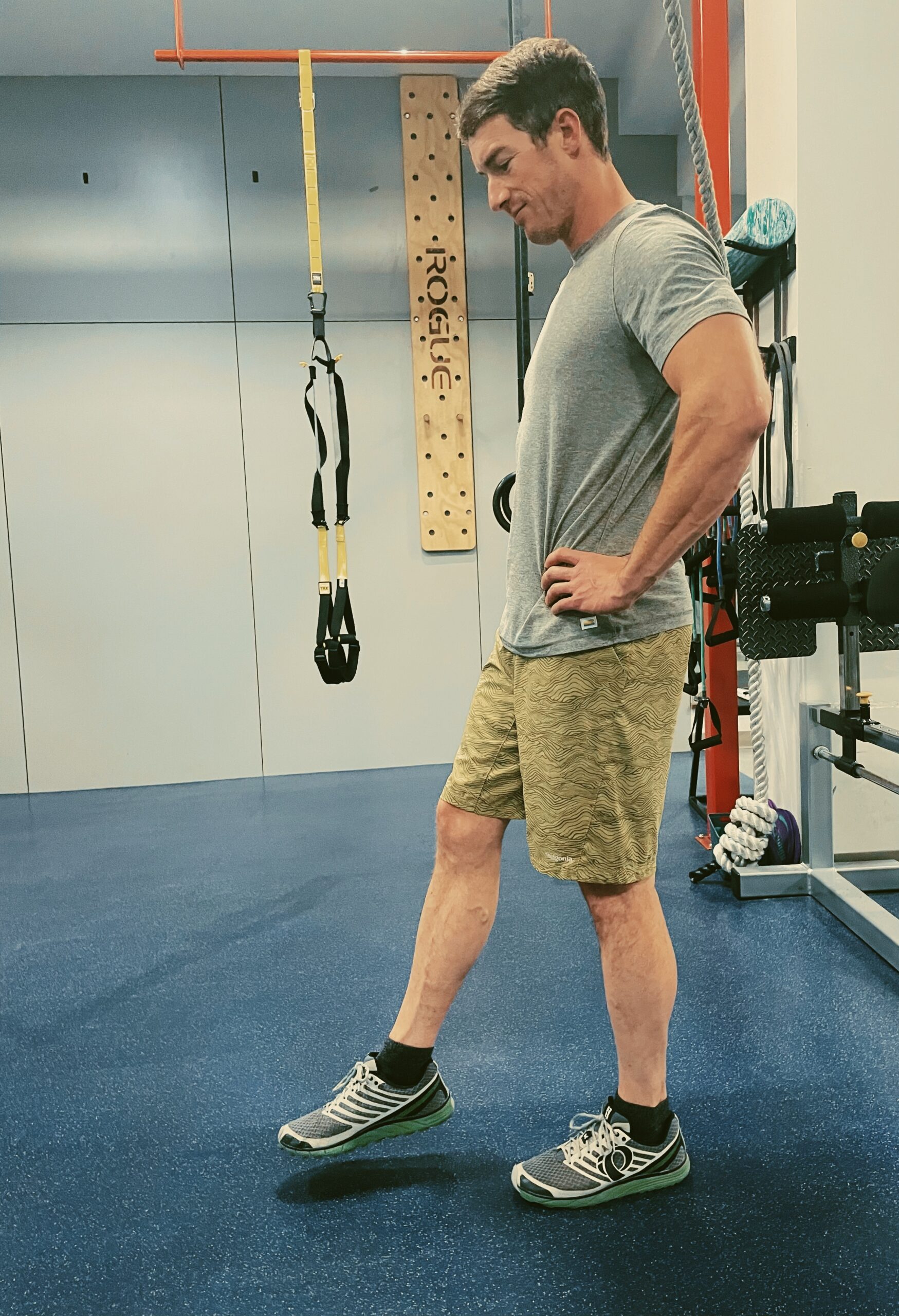
Alphabet

A woman is stretching on the floor with another person.

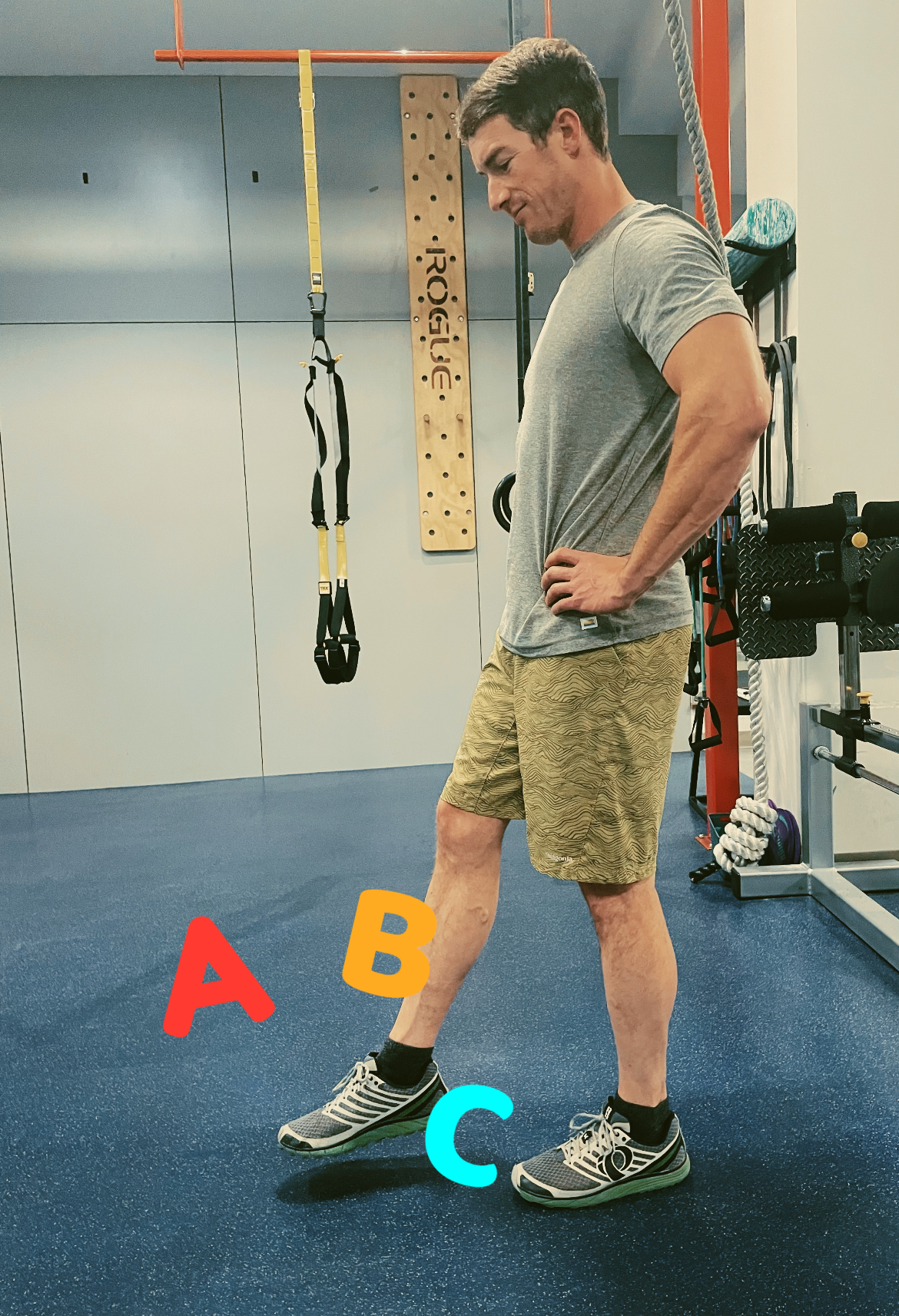
• Stand on your right leg with your opposite foot off the ground close to your right foot.

• Push your hips back slightly, into a quarter squat. Keep your torso engaged, and the weight balanced on the whole foot.

• With your foot in the air, write the letters of the alphabet with your foot using small movements.

• Repeat on the left leg.

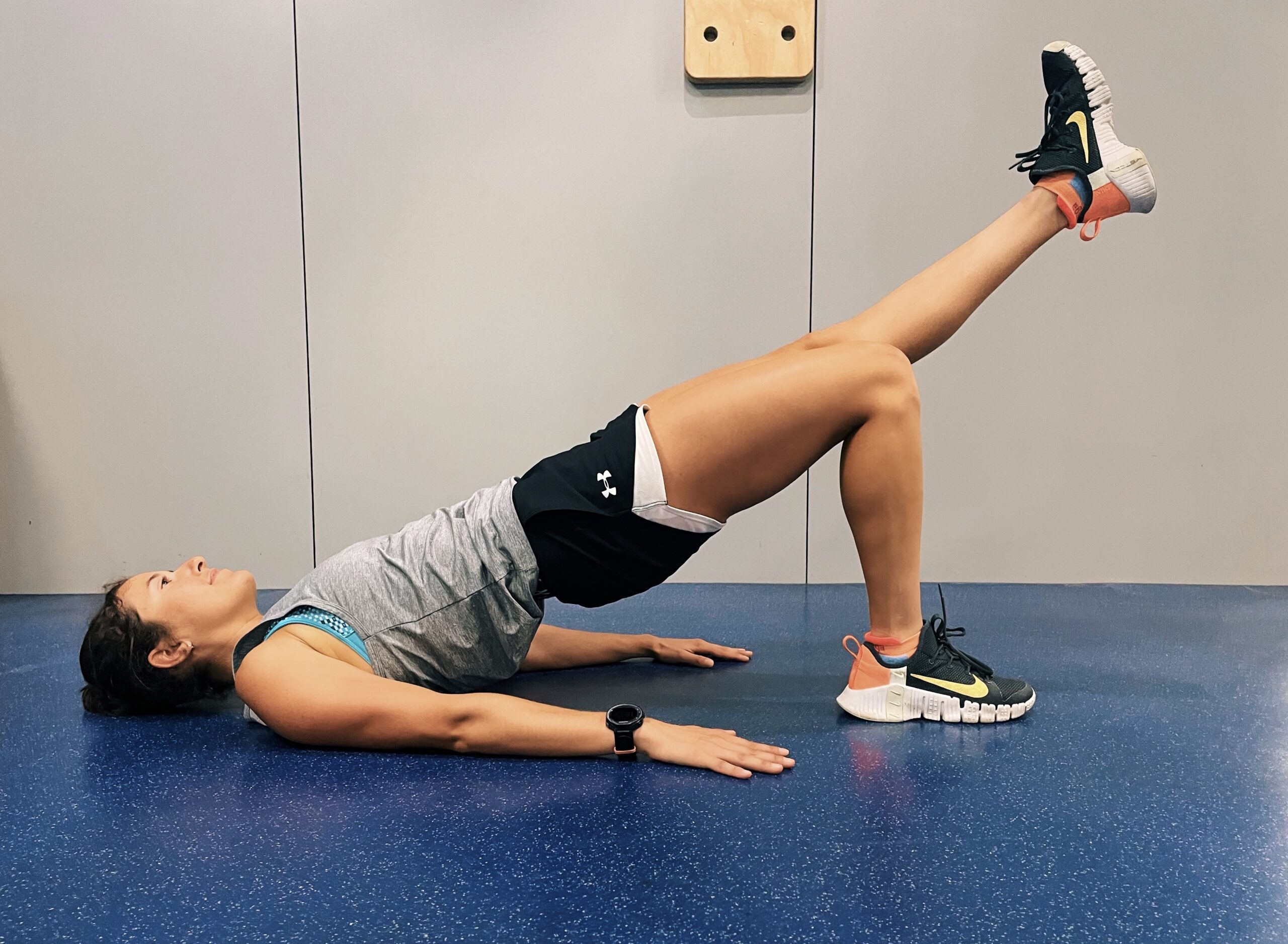
Bridging—single leg

A woman is stretching on the floor with another person.

• Lie face-up with your arms by your side, knees bent and feet flat on the ground.

• Squeeze your glutes and lift your hips off the ground until your knees, hips and shoulders are in a straight line.

• Extend one leg, foot flexed, and keep it extended.

• Lower and lift your hips 12 times. Repeat on the other side.

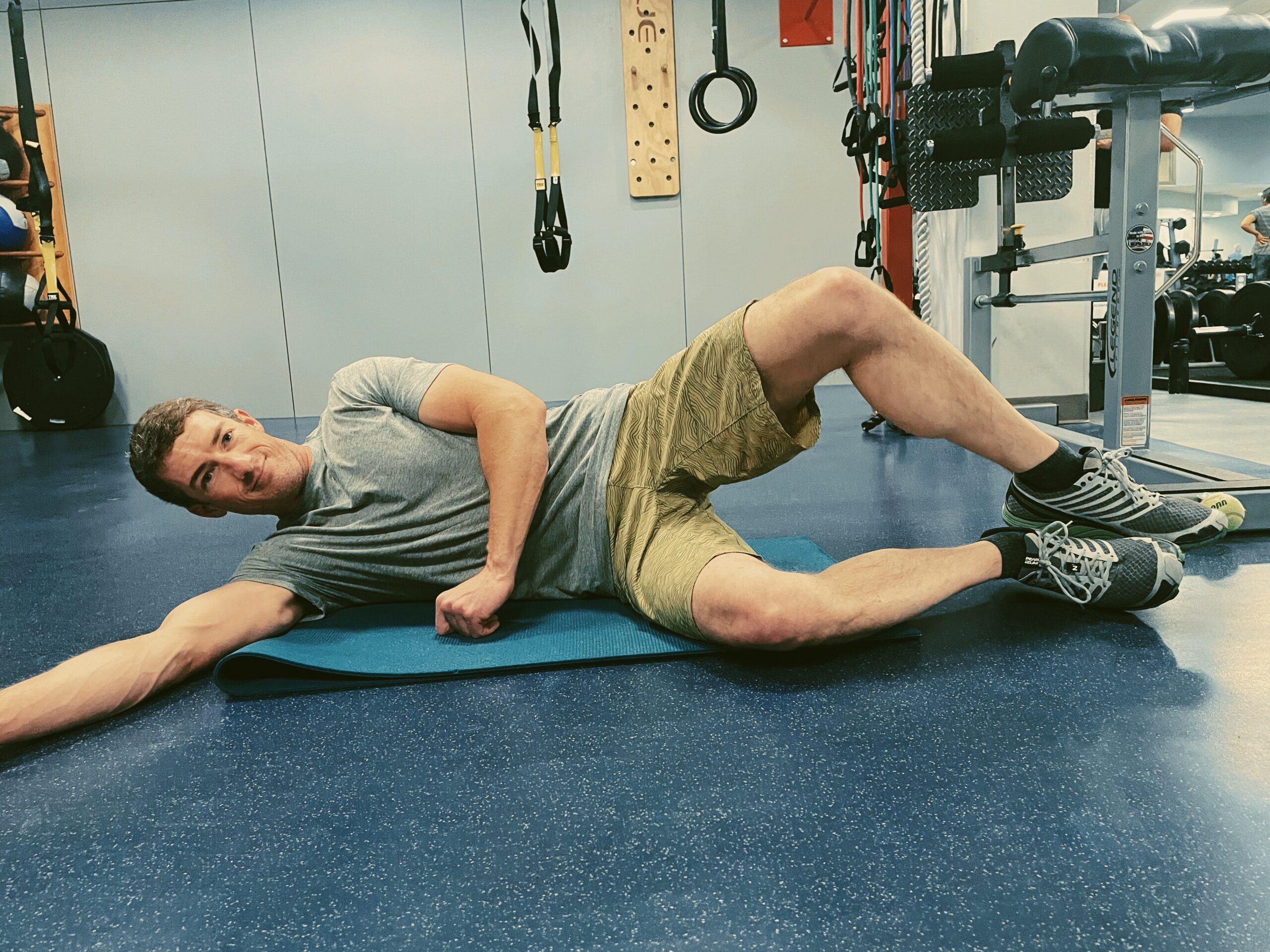
Clam Shell

A woman is stretching on the floor with another person.

• In a side-lying position, hips slightly flexed and the knees bent, raise your top knee off the bottom knee by contracting the hip muscles. This exercise mimics the opening of a clamshell.

• Avoid rolling or rotating your torso as you lift your knee.

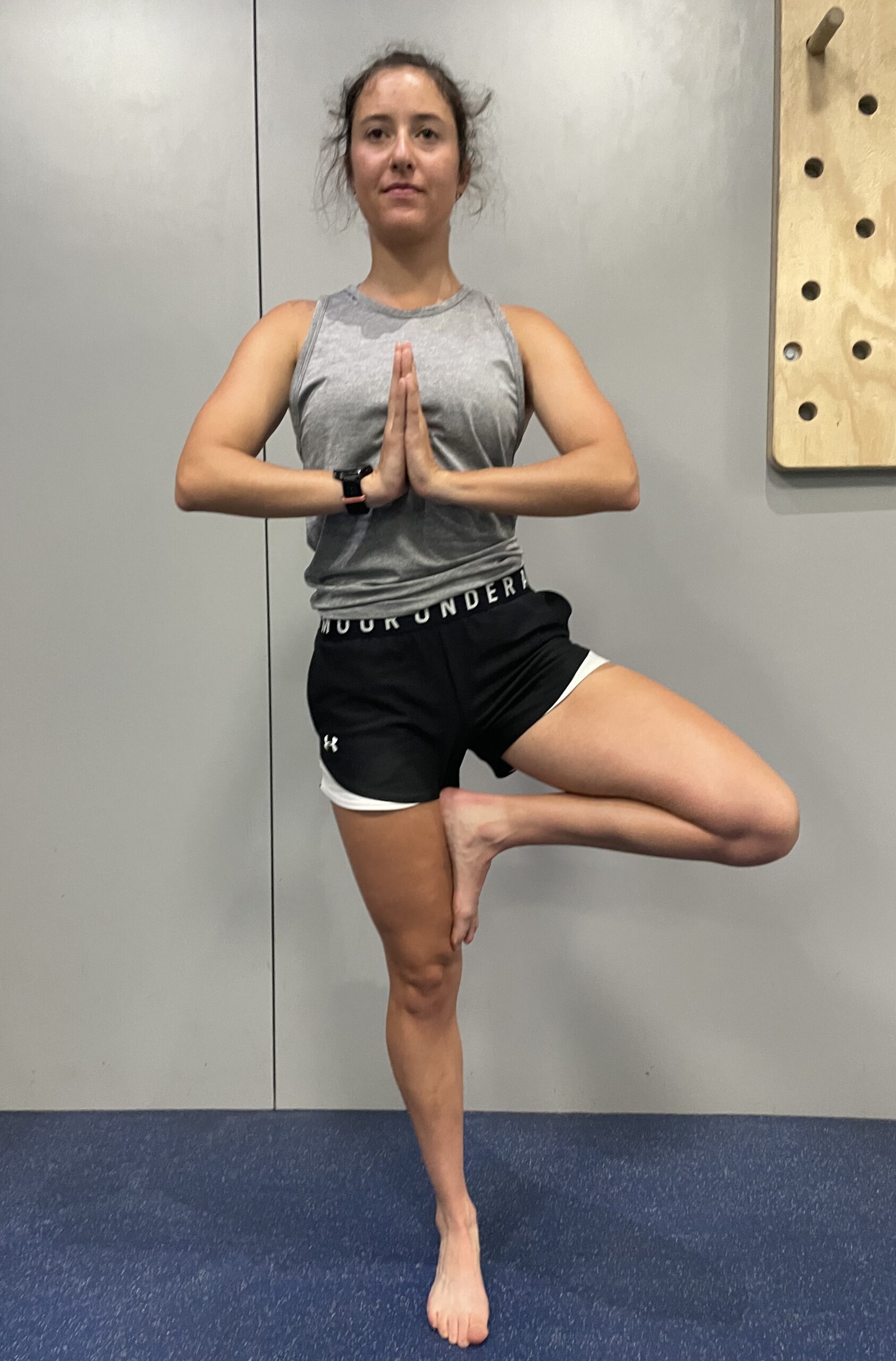
Tree Pose

A woman is stretching on the floor with another person.

Tree pose develops balance, stability  and poise. It strengthens the muscles of the supporting leg and foot.

• Stand firm on the right leg. Use a wall for support if needed.

• Bend the left leg out to the side, hold the foot and press the sole of your right foot into the top of your right inner thigh.

• Straighten the right knee and press the left knee back, in line with the left hip.

• Try to balance for 20 seconds before repeating on the left leg.


Published in the Idaho Mountain Express June 16, 2023

https://www.mtexpress.com/wood_river_journal/features/fitness-guru-save-a-fall-with-balance-and-strength/article_dfa2b6ea-0afa-11ee-a111-974c9f3b63a9.html

4 stretches to stay ahead of aging

Featured

We all want to enjoy a healthy work-life balance and have more energy throughout the day. Regardless of your age, the habits of daily living become more important, whether you are in your 40s or 60s. The body, however, has an agenda of its own, and presents unforeseen challenges. You start to notice signs of arthritis; joint stiffness first thing in the morning, knee buckling, or clicking or popping sounds in your joints.

Osteoarthritis is the most common form of arthritis; it often emerges slowly and affects everyone differently. Stiffness for a short period of time after a long road trip, too much sitting, or limited reach are indicators of the condition. Women are more likely to develop it, and there is a genetic component to the disease. Osteoporosis used to be thought of as simple wear and tear of tissue. The Arthritis Foundation opines that it is now known as a degenerative disease of the entire joint, including bone, cartilage, ligaments, and the synovial fluid that lubricates the joint.

Though it is more common in individuals over 50, much younger people can also develop osteoarthritis (OA), usually the result of a joint injury, like a torn ACL, cartilage or bone fracture. After such an injury, it can develop within just a few years. Other factors that can contribute to osteoarthritis are overuse, using the same joint over and over in a sport or job, or excess weight. But the good news is that osteoarthritis isn’t a normal process of aging, and some people never even develop it. If you are willing to include daily habits, like getting plenty of exercise, and stretching, you can stay ahead of arthritis and pain.

There is no cure for osteoarthritis, and anti-inflammatory and pain medications can help manage pain. A nondrug therapy, like moving and regular exercise is an imperative part of your treatment plan.

One of the best ways to manage OA is through moving more and regular stretching. Stretching not only feels good, but it will help increase limited range of motion. Here are four essential stretches to energize the entire body and increase your mobility, no matter your age.

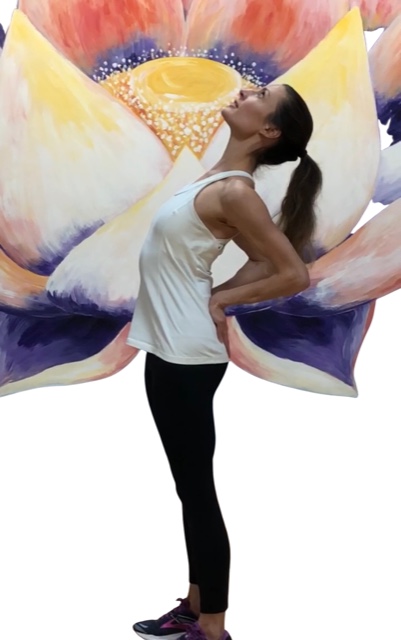
Spine Extension

A woman is stretching on the floor with another person.

Spine Extension

Photo courtesy Connie Aronson

• Place your hands firmly on your lower back, fingers pointed downward.

• Gently arch the upper back by lifting your ribs. 8 repetitions

Figure 4 Stretch on wall

A woman is stretching on the floor with another person.

Figure 4 Stretch on wall.

Photo courtesy Connie Aronson

Benefits: Releases tension in the hips and groin

• Place one foot on a wall, head resting on the floor or a pillow

• Cross one ankle over the opposite leg

• Feel the stretch in your outer hip and inner thigh

• Hold for 1 minute each side

Side-lying quad stretch

A woman is stretching on the floor with another person.

Side-lying quad stretch.

Photo Courtesy Connie Aronson

Benefits: Stretches the hip flexors and quadriceps

• Start on your side

• Using your hand or a strap, pull your heel up toward the buttocks

• As you bring the knee back, gently rotate the pelvis under

• Hold for 1 minute each side

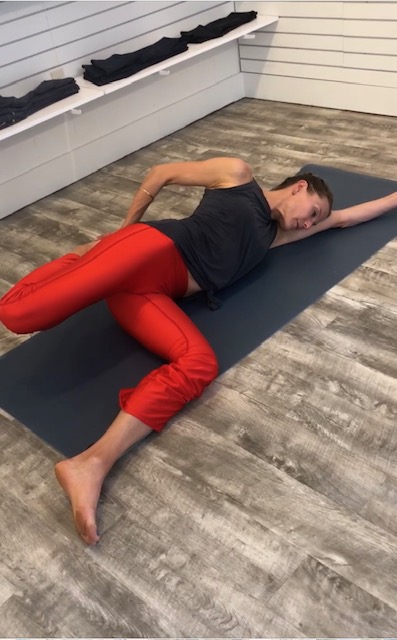
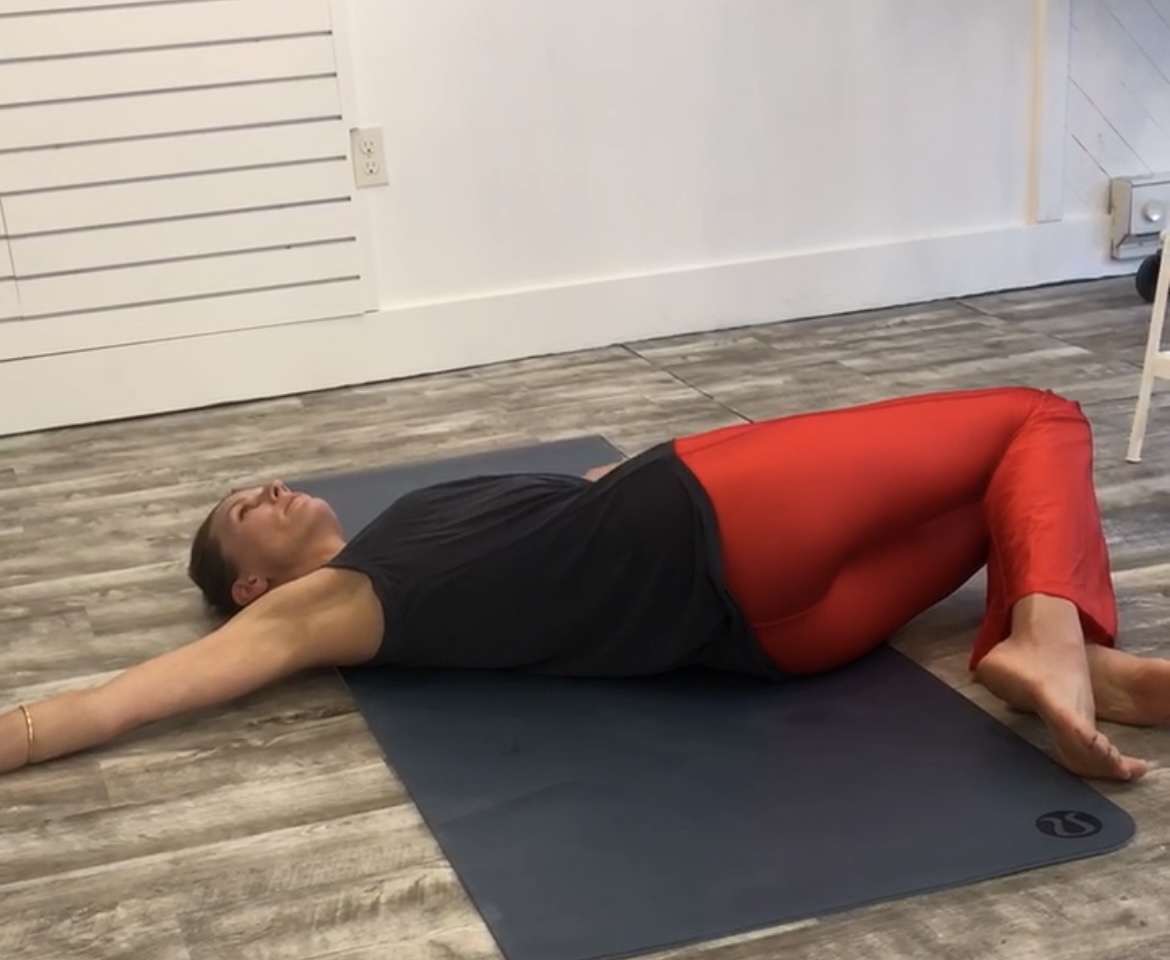
Reclining Twist

A woman is stretching on the floor with another person.

Reclining Twist

Photo courtesy Connie Aronson

Benefits: Stretches, rotates and relieves tension around the belly, chest, shoulders, hips and spine.

• Start on your back with your legs bent, feet together

• Bring the knees towards your chest. Flatten your sacrum, and lower back, and settle the shoulder blades under so your back is comfortable

• As you exhale, take your legs to the right

• Let them descend toward the floor

• Experiment with moving the knee closer to your head, or your feet, or turn your head to gaze toward the left hand.

• Repeat on the other side. 3-4 repetitions

https://www.mtexpress.com/wood_river_journal/features/fitness-guru-4-stretches-to-stay-ahead-of-aging/article_9c5617ba-f4e8-11ed-ba58-a351f6d58462.html

Break old habits to fix an achy back

Featured

Healing a sore back requires breaking some old habits and forming some new ones, says Dr. Stuart McGill. If you’re living with an achy back, getting your swagger back, as McGill, the most recognized spine researcher in the world, states, is different from a knee or shoulder problem. The knee and shoulder, particularly in the early stages of rehab, both do well with full range of motion exercises—think of arm circles. Fixing your low back pain is different and more nuanced, as your spine needs stability, not excess motion. This means that you don’t want excess curves in the spine. A goal for a healthy back is to maintain a neutral spine position during your prescribed program, as well as in daily activities.

The emphasis throughout the day and during workouts is to focus on proper spine stability, rather than more movement in the lower back. Do you slouch when you sit or have too much curve in your lower back while standing? Do you bend over to lift a large object, which is problematic for the posterior back disks? Poor movement habits, repeated throughout the day, can result in a sore back. Stretching and strengthening are important, but not the whole answer. A key to a healthy back is retraining how you position your back during activities, lessening excess spine curves.

Move mindfully with the abdominal brace

McGill likens the abdominal brace as a mild contraction of the abdominals as though you are preparing to get punched in the belly. But it’s not in extremes, like “sucking them in.†Like a dimmer switch gradually adjusts light levels in a room, the abdominal stiffness during your activities isn’t an on/off switch, but works in relationship to what you are doing. You would use less ab bracing during walking and more for lifting a heavy object, for example.

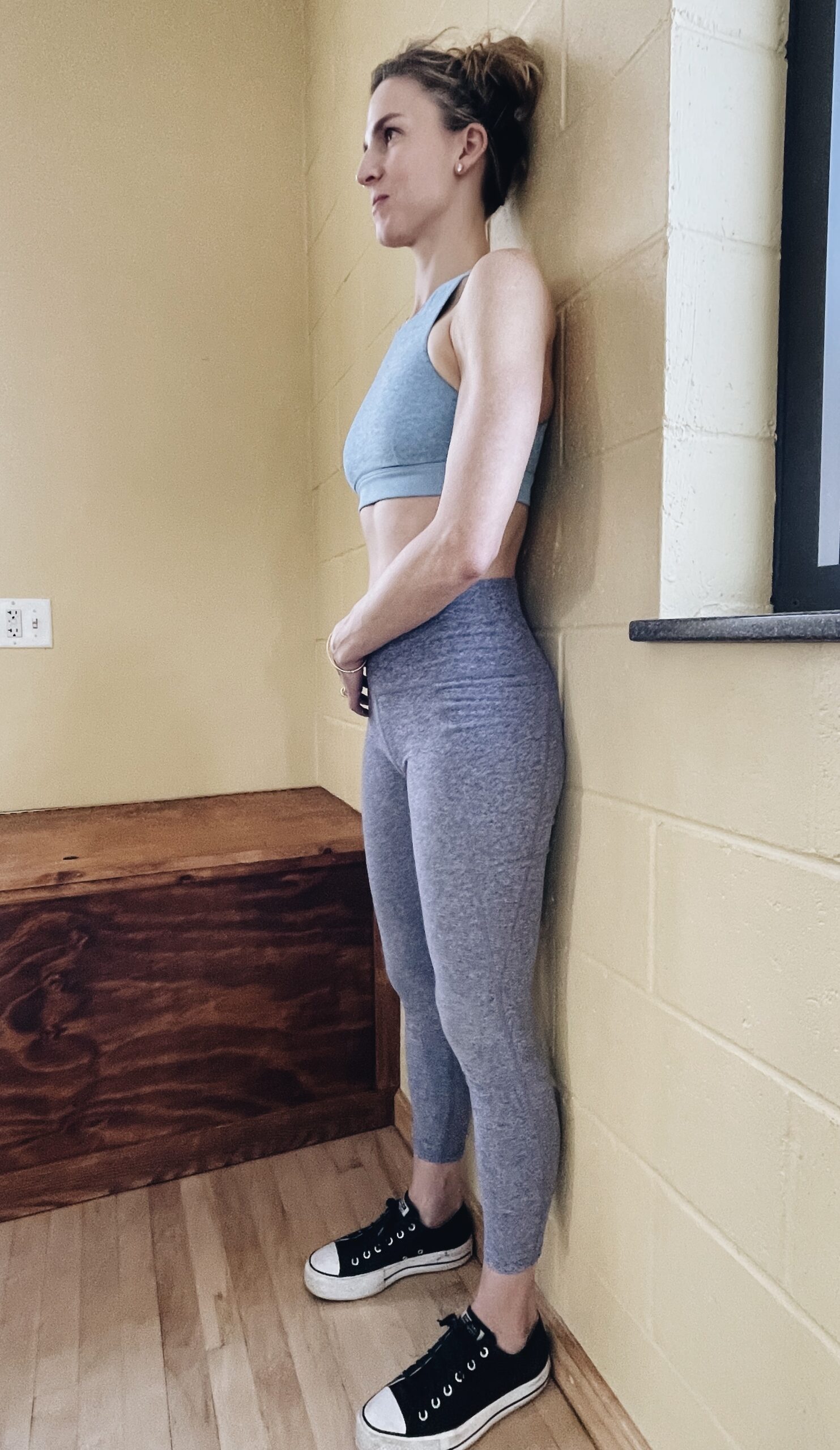
Wall test for excess low back curve

A woman is stretching on the floor with another person.
Photo by Connie Aronson
A woman is stretching on the floor with another person.
Try the wall test to check for excessive lumbar curve

The abdominal muscles connect your ribs to hips along the front and sides. When you use your abs, they pull the ribs and hips closer. When you stand up, for example, and don’t use your abs, you allow your ribs and hips to be too far apart, creating back sway. Over time, this can contribute to movement flaws, soft tissue stress, or disc problems.

If you can’t stand back with your back against a wall with your heels, hips, upper back and the back of your head lightly touching, without arching your back, you probably have weak abdominal muscles. Remember, our goal is to reduce the excess curves of the spine. Try this test at home.

• Stand with your back to a wall, with heels, butt, shoulders, and head comfortably touching the wall.

• Keep your feet in a neutral position and legs straight.

• Have a friend place a hand behind your low back, or use your hand.

Results: If you can put your whole hand behind the space in the lower back, you have too much back sway.

A woman is stretching on the floor with another person.
Ideally, if you know how to brace your core, you wouldn’t be able to put your hand behind lower back !

If you can only get the first knuckle in your hand behind the lower back, congratulations, you have excellent abdominal bracing skills!

https://www.mtexpress.com/wood_river_journal/features/fitness-guru-break-old-habits-to-fix-your-achy-back/article_b0a8b022-b336-11ed-9db5-5b0e14ef4dc1.html: Break old habits to fix an achy back

Benefits of stretching and flexibility

A woman is stretching on the floor with another person.
Stretching goals could be biological, psychological or philosophical, such as a yoga practice.

Along with regular physical activity and resistance training, adults whose goal is to improve fitness and health shouldn’t overlook stretching. No matter how stiff or old you are, you can improve your flexibility by starting a stretching program. The American Heart Association, the American College of Sports Medicine and the Physical Activity Guidelines for Americans all recommend including a flexibility program to your week. A deliberate, planned regular program of stretching practiced 2-3 times per week can increase range of motion in approximately 3-4 weeks. Your flexibility may improve in as few as ten sessions with an intensive program.

The benefits of flexibility are vast and determined by your goals. Your objectives may be biological, psychological or philosophical, such as a yoga practice. Stretching feels good, whatever your objective is. 

When you stretch, you take soft tissue structures beyond their available length to increase range of motion. Flexibility isn’t a general characteristic, but is specific to a particular joint and joint action. For example, you might have full range of motion in the hip, but not in the foot or ankle.

Here are a few things to consider when embarking on a stretching program.

1.Which types of stretching improve flexibility?

Several types of flexibility exercises can improve your range of motion.

When performed properly, ballistic flexibility—like the â€œbouncing” or rebounding typically seen in basketball—increases flexibility similar to static stretching.

Dynamic, or functional, flexibility is akin to a ballet dancer slowly raising and holding her leg at a 60-degree angle, and progressively increasing her range of motion as the movement is repeated several times.

Active static stretching involves holding the stretched position using the strength of the agonist muscle, as in yoga.

Also consider PNF and static stretching. Both elicit greater gains in joint range of motion than dynamic or slow-movement stretching.

2. Rolling is time well-spent

Self-myofascial release is another stretching technique that focuses on the muscles and the fascia that surrounds them. It is a massage technique of applying sustained pressure to a knot, adhesion or area that is tight or stiff. Muscle fibers are altered from a bundled position into straighter alignment within the fascia. The goal is to find a tender spot and , with a tennis ball or foam roller, and sustain pressure on that spot for 20-30 seconds.

4. Muscular relaxation of stress and tension

One of the most important benefits of a stretching program is that it can alleviate stress and promote relaxation. A contracted muscle requires more energy than a relaxed one. Tight muscles tend to cut off their own circulation, creating reduced blood supply and waste products accumulating in the cells, potentially causing aches and pains. Stretching helps maintain the normal functional length of all muscles.

5. Poise and posture

Inflexibility in some muscle groups contributes to poor posture. Posture is the position of body parts in relation to each other where minimum stress is applied to each other. Rounded shoulders, for example, can weaken and shorten the pectoral muscles. Stretching the pecs, as well as strengthening the scapular girdle, will improve posture.

6. How long should a stretch be held?

Hold a stretch for 10-30 seconds at the point of tightness or slight discomfort to enhance joint range of motion. Research shows there is little benefit resulting from longer durations. Instead, repeat the stretch three to four times, resulting in 60 seconds of total stretching time per flexibility exercise. Older people will achieve greater improvements with longer holds, between 30-60 seconds.

https://www.mtexpress.com/wood_river_journal/features/fitness-guru-benefits-of-stretching-and-flexibility/article_41d1c102-5aee-11ed-ab9f-dbde24fcb2e8.html

Fitness Guru: The best way to get rid of neck pain

The ability to turn your head, or easily look up should be a movement you take for granted. Yet as we age, neck pain is common. Like the rest of the body, bones in the neck change, as surfaces of them become rougher, and discs that cushion the cervical spine deflate.

Your neck may feel stiff and sore as a result of arthritis and stiffness. A pair of facet joints run down the back of your cervical spine, each lined with cartilage, and surrounded by a capsule filled with synovial fluid. However, as cartilage thins and wears away, there is less fluid. The result is bone-on-bone friction occurring in your facet joints. As well, the discs that cushion the bones of the neck and head lose their plumpness and the muscles, tendons, ligaments, and other soft tissues are compromised.

The multiple muscles of the neck make for a very mobile structure, yet neck pain limits functional range of motion. The neck pain you feel is all too common, being that the neck muscles are hyper-alert to the many pain receptors in this area of the body. Take care of your neck with the following 5 stretches that you can do just about anywhere. 

 Child’s Pose with extended arms 

A woman is stretching on the floor with another person.
Child’s Pose -This move stretches the neck extensors and upper back

Kneeling, stretch your hands as far away from you as possible. Slowly lift your head to look up towards your hands. Hold for 20 seconds, 2-3 times. This move stretches the neck extensors located on the back of the neck and upper back: semispinalis capitis, semispinalis cervicis, and splenius capitis. Interestingly, the later muscle acts as a glue that holds the head firmly to the neck. The name comes from the Latin words spleniummeaning “plaster†and capitis meaning “ of the head.â€

Neck Extensors Stretch   ( no photo, but don’t miss this one ! )

This stretch helps release tightness in the neck extensors. Place your hands on the crown of your head, keeping the elbows together.  Pull your shoulders down. Gently pull your chin to your chest to feel the stretch in the back of the neck and shoulders. Hold for 15-20 seconds; 2-3 cycles at least once a day.

Trapezius Stretch 


A woman is stretching on the floor with another person.
Trapezius stretch

1.Using a chair: Sit tall on a chair and firmly grip the seat. Slowly bend your neck away from your hand grasping the chair. Engage your lower traps and rhomboids (middle back ) to help pull the shoulder into correct alignment. 

A woman is stretching on the floor with another person.
Trapezius stretch using a band

2. Standing, drape a band across the top the shoulder, keeping tension on the band. Slowly bend your neck away from the banded shoulder, Hold for 15-20 seconds at least 1x day, preferably 2-3 a day.

Neck Turn 


A woman is stretching on the floor with another person.
Neck turn- this will help maintain neck rotation

Place your first 2 fingers horizontally along your jaw. Using your hand to assist, turn your head to one side. Hold 15-20 seconds. Repeat 2-3 cycles. Repeat the stretch going the opposite direction. 

Check out my column in Idaho Mountain Express !

https://www.mtexpress.com/wood_river_journal/features/fitness-guru-the-best-way-to-get-rid-of-neck-pain/article_467c245a-ed2e-11ec-ae97-b3b068199910.html