Move better, feel better: the power of myofascial release

Our bodies are built to handle incredible forces thanks to bones, muscles, tendons and fascia working in harmony. But when pain or recurring injuries strike, we often overlook one key player: fascia. This dense, connective tissue weaves throughout the body like an intricate network, influencing how we move and feel.

Ever peeled the skin off a chicken before cooking it? That slippery, white film you see is fascia—it’s the same tissue that wraps around your muscles, organs and bones. In fact, the fascia that lines your bones is what gives structure and support to the entire body.

Justin Price, a leading corrective exercise specialist, compares fascia to a spider’s web: When a fly gets caught in one part of the web, the spider senses the change in tension throughout the entire structure. Similarly, when something’s off in your body, the entire system feels it. A tight calf, for example, might affect not only your ankle but your knee’s alignment and even the way you walk.

When fascia becomes restricted due to injury, repetitive stress or tension, it forms adhesions. These adhesions can limit range of motion and cause compensations in other muscles and joints, explains Price. Learning effective self-myofascial release techniques can help you target these adhesions, rejuvenating the soft tissue and restoring your body’s natural movement patterns.

So how do you keep your fascia healthy and flexible? Self-myofascial release. These simple techniques help relieve tension, break up adhesions and restore mobility—no fancy gear required. A few basic tools, like tennis balls, a baseball, a golf ball or a foam roller can work wonders to release tension in restricted areas. Combined with specific stretches right after rolling, you’ll effectively target tight spots.

Tennis or golf ball foot roll

Tennis or golf ball foot roll

Target: Plantar fascia and lower leg

Tools: Tennis ball, golf ball or any small ball

How to:

  • Place the ball under your foot.
  • Roll back and forth to find tender spots.
  • Pause and apply pressure on sore areas.
  • Roll for 30 seconds to 1 minute per foot.

Pro tip: Keep a ball near your desk or couch as a reminder to roll daily.

Foot and toe wall stretch

Target: Foot and ankle flexibility

Foot and toe wall stretch

How to:

  • Keep the ball of your foot and base of your toes on the floor.
  • Press your toes and knee gently against a wall.
  • Slowly roll your foot and ankle inward toward the wall.
  • Hold for 15-20 seconds.
  • Repeat twice daily.

Target: Psoas and hip flexors

nis ball hip flexor release
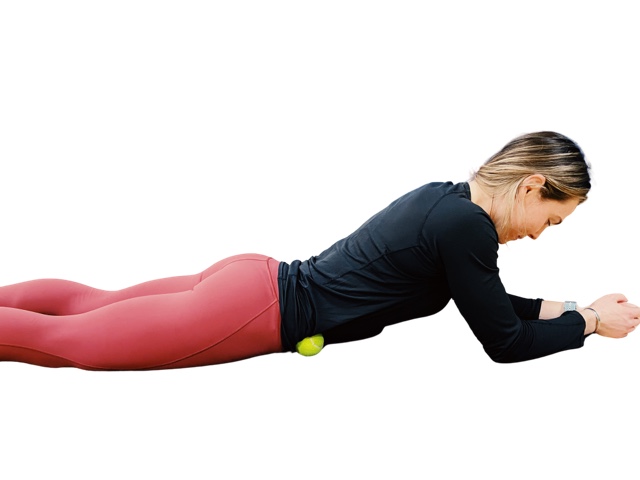
Tennis ball hip flexor release

Target: Psoas and hip flexors

How to:

  • Lie face-down.
  • Place the tennis ball just to the side of your belly button.

Gently roll to find tender spots between your belly button and hip.

  • Pause on sore spots for 20-30 seconds.
  • Total time: 2-3 minutes per side

Pro tip: Internally rotate your leg to deepen the stretch.

Follow with a hip flexor stretch

Target: Hip flexors

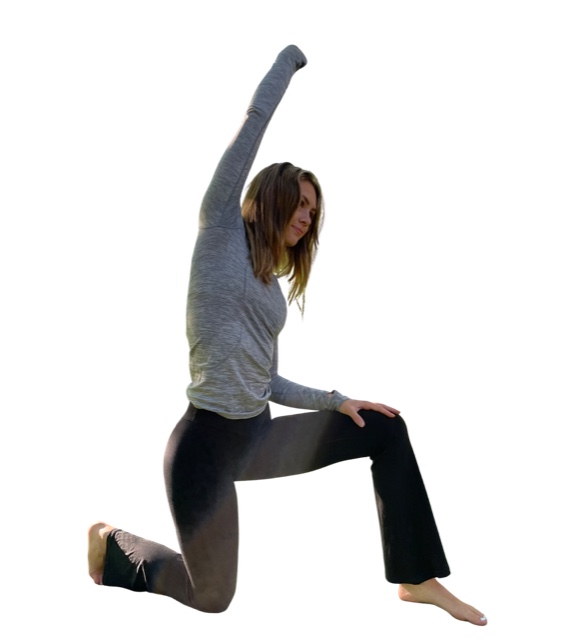
Kneeling hip flexor stretch

How to:

  • Kneel down, with one foot forward. Pad your knee if needed.
  • Keep your hips tucked in and under.
  • Tighten the glutes and abs isometrically during the stretch.
  • Gently change arm angles to further target hip flexors.
  • Hold for 15-20 seconds, 2-3 cycles.

Taking just a few minutes a day to release and stretch tight fascia can dramatically improve your mobility, reduce pain and even boost performance. Small, consistent actions lead to big changes—so grab a tennis ball and start rolling your way to better movement. 

Published in the Idaho Mountain Express September 26, 2025 https://www.mtexpress.com/wood_river_journal/features/fitness-guru-move-better-feel-better/article_0b114c31-3afd-47c9-bacc-1f9ec9ec9b6f.html
Fitness Guru-How to find tight neck and shoulder relief

Featured

If your neck and shoulders are chronically tight, not only does it feel bad, but neck and shoulder limitations affect the biomechanics of your body.

Conversely, when you have balance and alignment in everyday life, you establish a great starting point for exercise. Rolling on balls has become an increasingly popular way to target areas of your body that are restricted and tight. Ball exercises can target areas in the neck and upper back that are otherwise not easily accessible. Using a ball specifically for these troublesome areas allows you to hit tender points and virtually melt them out of your body.

If you consider that your head weighs anywhere between 9 and 12 pounds, a forward position of the head can wreck havoc on your neck and shoulders. Consider that the weight of the head effectively doubles for every inch forward of its optimal alignment. Not only does this create neck and shoulder tension, but the position of the head and neck affects the alignment of the whole body.

Furthermore, internally-rotated arms, caused by rounded posture—a result of looking at a computer screen throughout the day—or elevated shoulders, increase the likelihood of upper back discomfort. Rolling a tennis ball along the neck and shoulders penetrates deep into the musculature, helps pull your head back into neutral and gives you gentle extension in your upper back.

Another benefit of ball rolling on your upper back is that you are creating a ball bearing between your body and the floor. This allows more extensive movement on the floor, so that your upper back will feel more spread out and relaxed.

Tennis ball on the shoulder blade

A woman is stretching on the floor with another person.
Tennis ball on top of the shoulder blade

Rejuvenate and mobilize the upper back and shoulder blades with tennis ball rolling. This exercise targets the muscles in the upper back that have become chronically lengthened by internally-rotated arms: the infraspinatus and teres minor and the trapezius muscles.

Lie on your back and place a tennis ball on top of your shoulder blade. Use a pillow under your neck for proper head alignment.

Hug the opposite shoulder in order to increase pressure on the ball.

Push with your feet to move the ball, finding a tender spot. Try to relax while breathing normally. Hold for 20-30 seconds.

Gently move your body up, down and sideways to find additional sore spots.

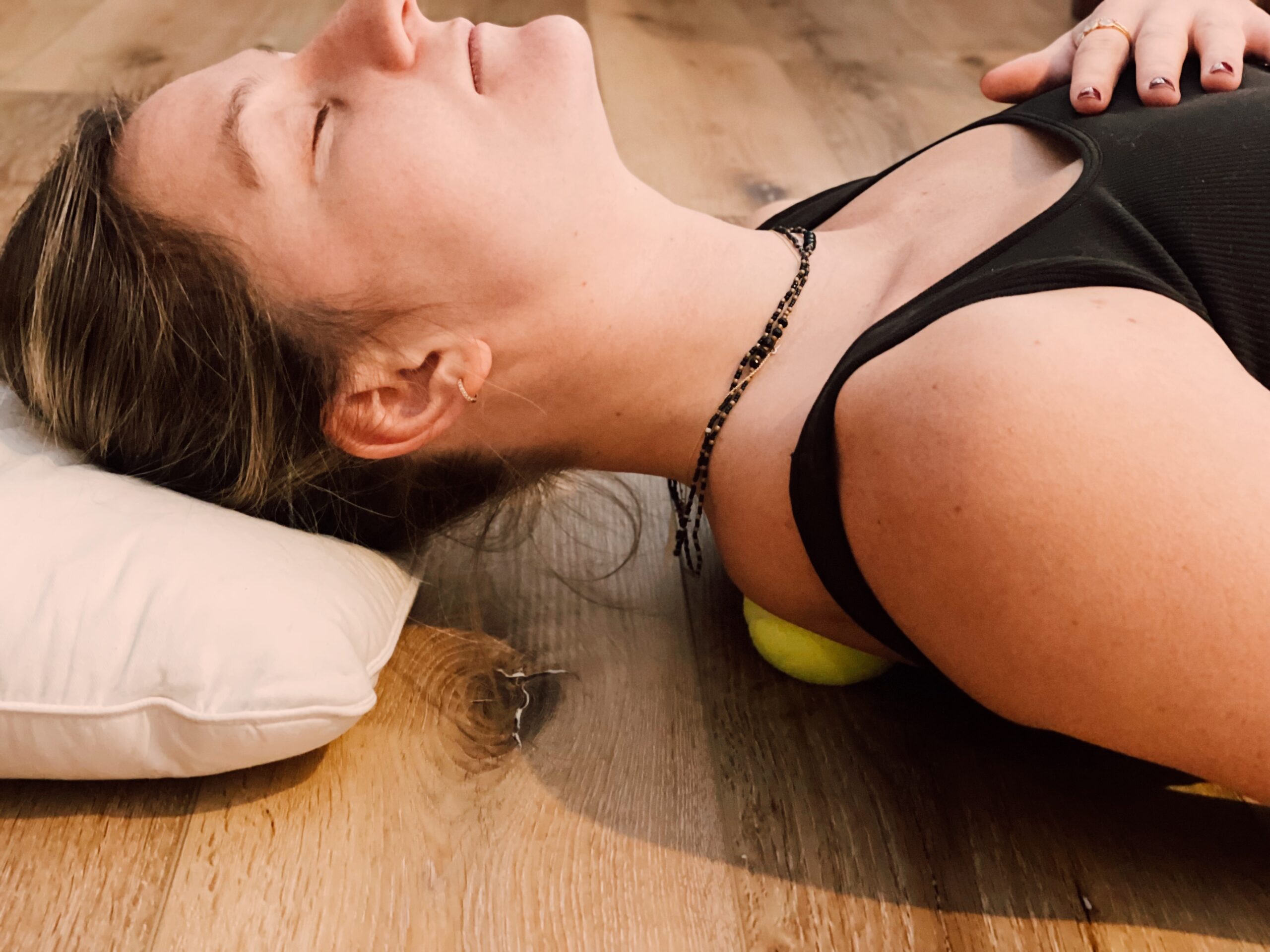
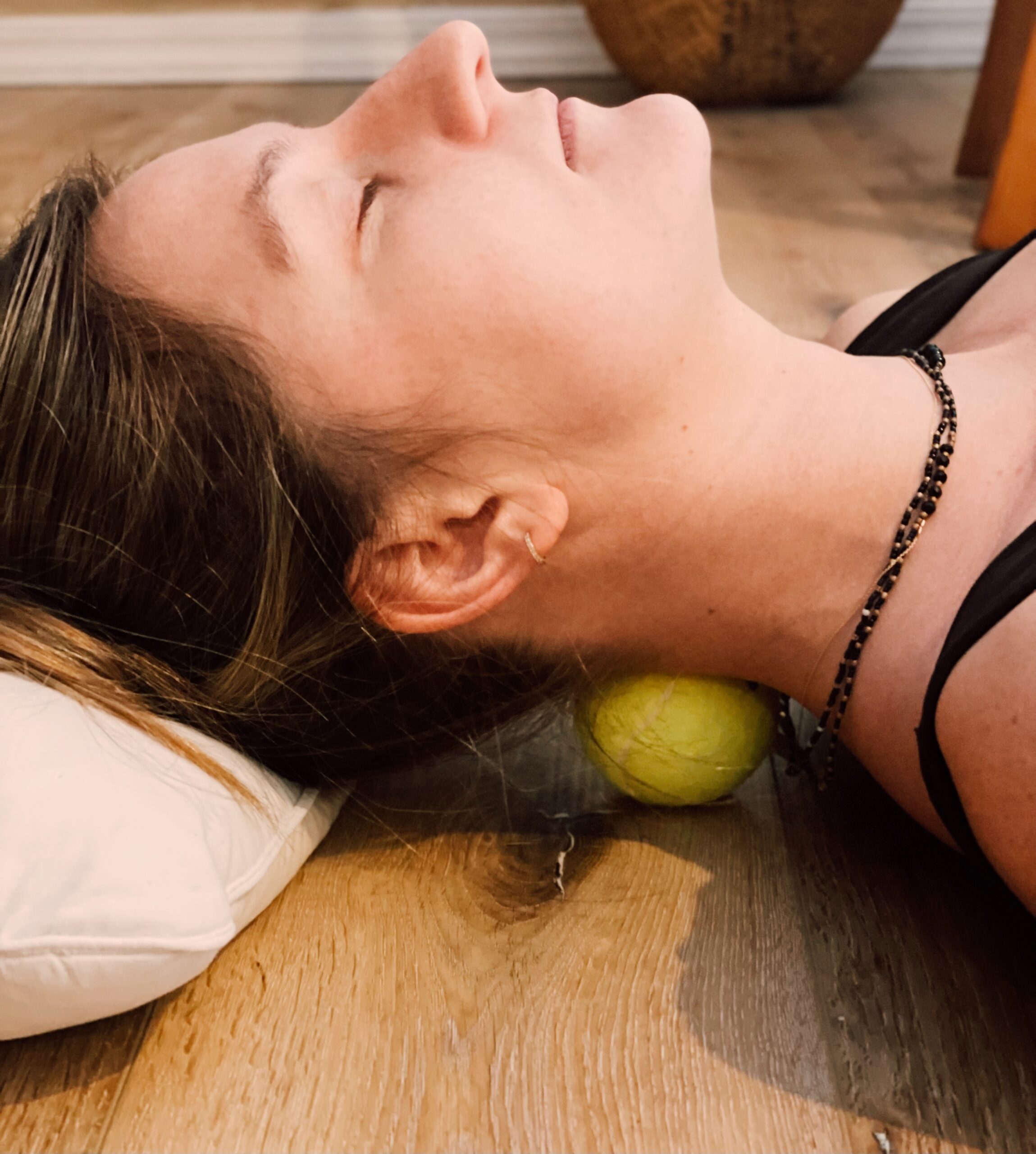
Tennis ball on the back of the neck

A woman is stretching on the floor with another person.
The “Tennis ball on the back of the neck” exercise can ne used to target specific tight or sore spots.

This exercise helps regenerate the tissues of the neck—so that the neck can flex more easily—and allows the head to move back into better alignment.

Lie on your back and place a tennis ball under your neck. Use a pillow or towels to support your head.

Apply pressure for 20-30 seconds at each sore spot, for a total of 2-3 minutes.

Next, perform the following stretch:

Back of neck stretch

A woman is stretching on the floor with another person.
Neck stretching can help provide relief from tension and pain.

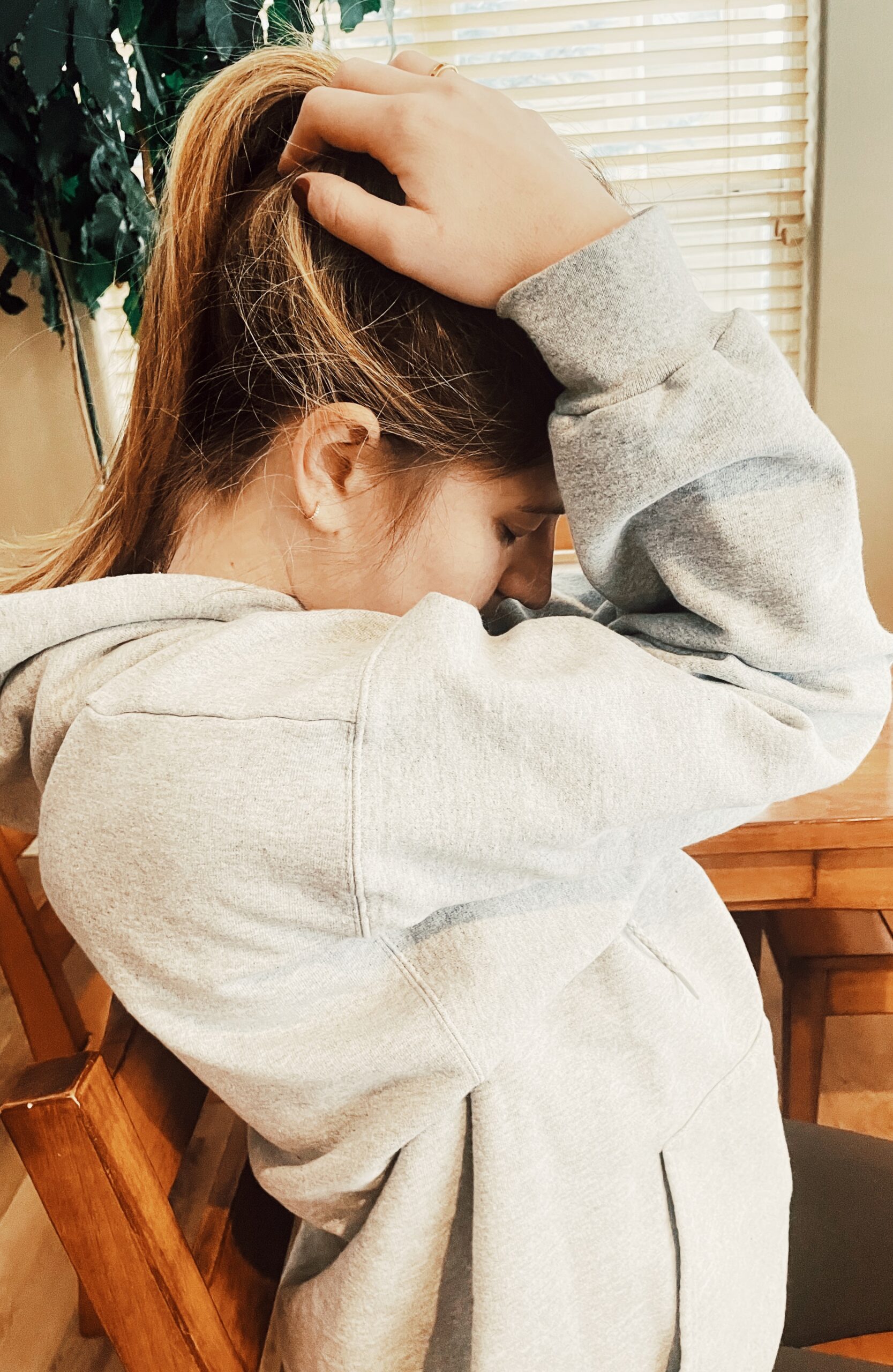
The muscles of the neck have a natural curve to help maintain stability and maintain alignment over the body. When this curve is overstretched or exaggerated in any way, it can become quite uncomfortable. This stretch helps release tightness in the neck.

Place your hands on top of your head, keep your elbows together, and pull your shoulders down using your mid-back muscles.

Pull your chin to your chest to feel the stretch in the back of your neck and shoulders.

Hold for 20 seconds, and repeat the cycle three times.

Published in the Idaho Mountain Express Jan.5, 2024.

https://www.mtexpress.com/wood_river_journal/features/fitness-guru-how-to-find-tight-neck-and-shoulder-relief/article_07ce84f8-ab2a-11ee-a9ff-a7fbfeece97e.html

Add single -leg squats to your training

Featured

  • Early fall, ski-teamers are working on quad strength for their upcoming competitive season. You should be, too, if you are planning to ski this winter. Even if you’re not doing any type of physical activity, you should at least train your legs to keep them strong. As an exercise, squats strengthen your leg muscles, especially the glutes and quadriceps, and your core, burn calories and help prevent injury. If you’ve been avoiding squats because of knee pain, you are not alone, as over 50% of people experience knee pain on a regular basis. It’s likely that you might not have sufficient ankle, foot or hip mobility to squat well. With specific massage, stretches and exercises you can fix this common muscle imbalance.

The squat is a movement that we do throughout the day, from sitting into a chair or car, to lifting up a child or parcel. It’s also a foundational movement where the feet, ankles and hips have to be working correctly. Leg machines such as the leg extension and leg curl machine are useful, but you could be missing out on building more dynamic, full-body exercises that burn more calories and are fun. A ground-based exercise, the single leg squat, puts high loads on the leg without the need for additional weight.

Consider that in walking or any ground-based activity, the ankle needs to roll in, bend, and absorb weight as you transfer your weight from the right foot to the left. Similarly, the hip should internally rotate as you step forward. Together, there is an accepting and transferring of weight through the entire lower kinetic chain. For example, if the hips aren’t internally rotating in a back swing, stresses may affect the knee, shoulder or back. The knee simply doesn’t have the same mobility that the ankles and hips are capable of, as the knee mostly bends forward and back, with limited movement side to side and in rotation. Without the feet, ankles and hips working correctly, the knee is compromised. It’s important to note that the knee and foot’s (and spine’s) primary function is stability.

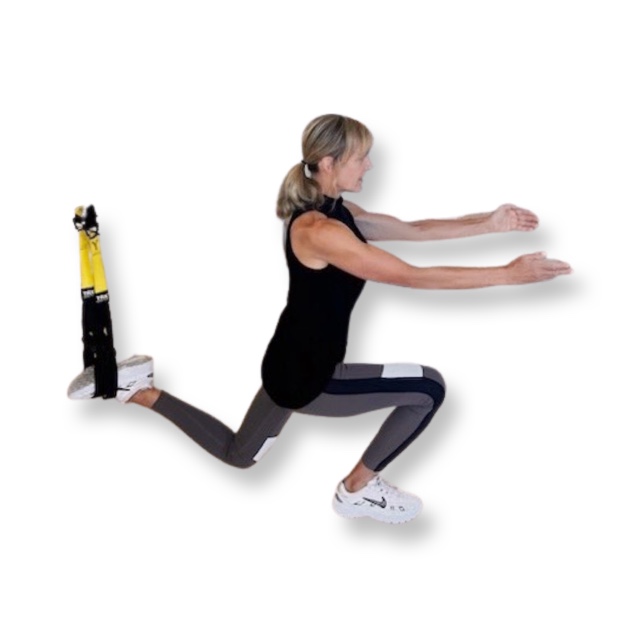
The TRX Lunge (photo 3), a single leg exercise, will strengthen your leg muscles and is a great way to dynamically stretch the hip flexor muscles of the rear leg.

Corrective exercise sequence to target the hip flexors

1. Tennis ball rolling on the hip flexor. Justin Price, creator of the BioMechanics Method, likens tennis ball or foam rolling to blowing a big bubble. You first have to chew the gum to prepare it to be pliant enough to blow a bubble! You can use a baseball or any other ball you have during the self-myofascial release portion. Hold each sore spot for 20-30 seconds, for a total of two to three minutes on each side.  


A woman is stretching on the floor with another person.
Tennis ball on the hip flexor

2. Kneeling hip flexor stretch. Hold for 30 seconds to 1 minute on each side 


A woman is stretching on the floor with another person.
Kneeling quad stretch- engage the gluteals and core

3. Single leg  lunge. Aim for about 90% of the weight on your front leg.

A woman is stretching on the floor with another person.
TRX suspended lunge

Printed in the Idaho Mountain Express October 12, 2022

https://www.mtexpress.com/wood_river_journal/features/fitness-guru-add-single-leg-squats-to-your-training/article_00966ace-443e-11ed-9418-67966173447a.html