
Mountain Flow:Why Outdoor Yoga in the Summer Offers a Reset

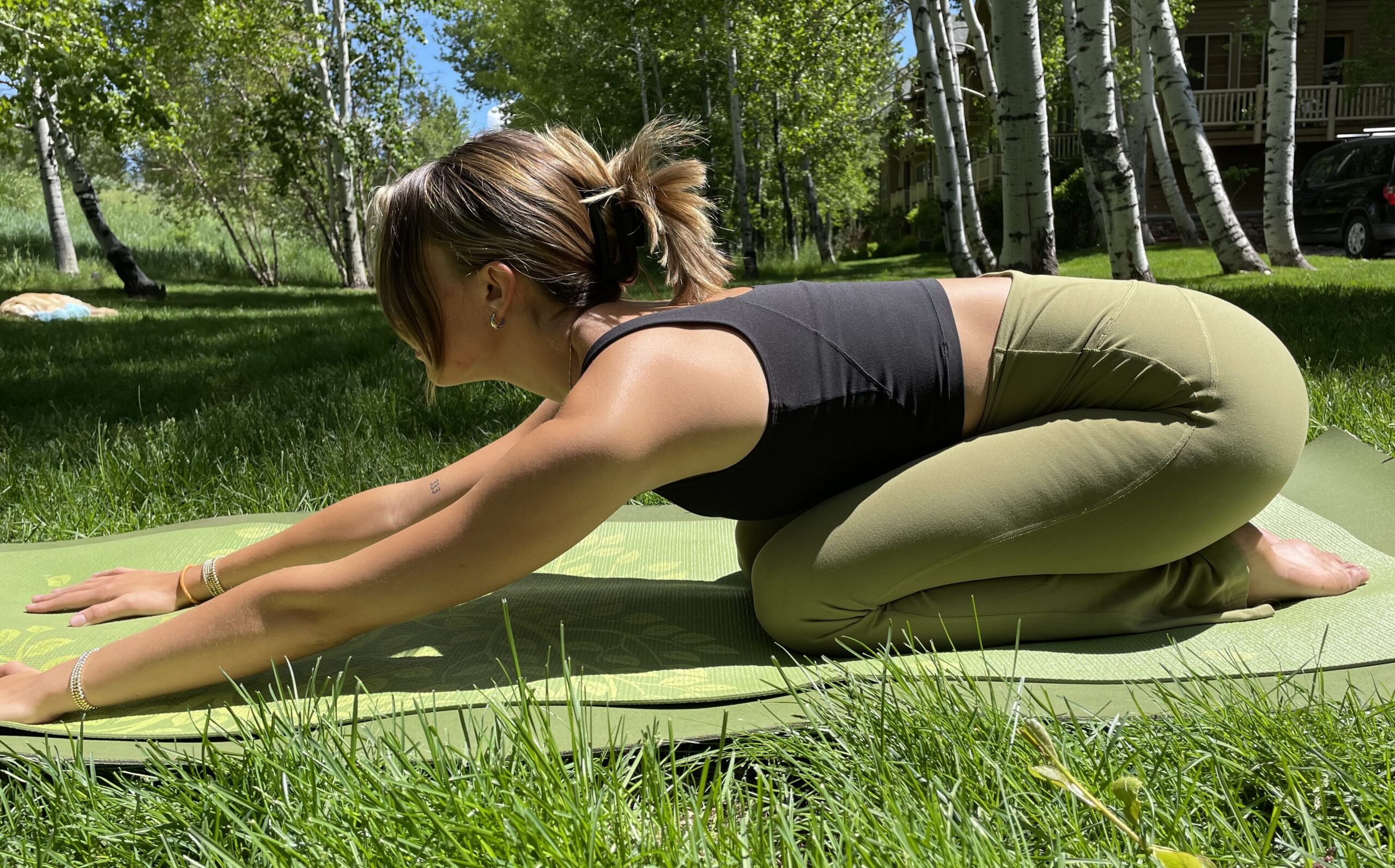
As summer takes hold in our mountain town, it’s the perfect time to bring your yoga practice outside. Whether you’re stretching in your backyard, on the porch, or in a quiet clearing, being in nature shifts how your body and mind respond. The aspen-filtered light, open air, and uneven ground offer something the studio can’t: a reset.

Here’s why practicing yoga outdoors—especially in the mountains—offers something new:

1. Fresh Air, Clear Mind
The crisp mountain air is the perfect backdrop for a yoga practice. Every breath you take fills your body with oxygen, and boosts energy. Whether you’re starting your day with a slow flow or unwinding with a sitting meditation, the natural environment around you amplifies the calming benefits of breathwork. The power of the outdoors isn’t just in what you can see—it’s in how you feel when you’re breathing deeply in a natural, open space.

2. Ground Your Practice, Strengthen Your Body
The real benefit of practicing yoga outdoors comes from the terrain. Grass, or irregular terrain naturally challenge your balance. Unlike a studio floor, uneven ground prompts your body to engage stabilizing muscles.

For example, in standing poses, yoga teaches you to spread your toes and distribute your weight evenly between the ball of each foot and the heels. Your feet contain 26 bones, 33 joints, and over 100 muscles, tendons, and ligaments. Standing on uneven ground activates small muscles in your feet, ankles, and core, strengthening your lower body, improving your balance, and enhancing proprioception (your body’s awareness of its position in space). This makes every posture feel more engaged and adds depth to your practice.

3. Posture, Flexibility, and Stress Relief
Yoga improves posture, flexibility, and overall strength, and doing it outdoors heightens those benefits. Without mirrors or studio distractions, you rely on your body’s natural feedback to guide your alignment. From standing tall in Tadasana to stretching in Downward Dog under the open sky, practicing in nature encourages a deeper connection to your body.

The benefits go beyond the physical, too. Yoga incorporates diaphragmatic breathing, relaxation, and imagery techniques—all effective tools for managing stress. Studies show that simple stretching and breathing exercises can reduce anxiety and promote emotional well-being, making outdoor yoga a great tool for mental and emotional health.

4. Focus on How You Feel, Not How You Look
In mountain towns, there’s often a strong focus on fitness, and performance.  But yoga offers a different kind of opportunity—it’s not about pushing your limits or hitting new milestones. It’s about tuning in to your body. Outdoors, without mirrors or the usual pressures, you can focus less on how things look and more on how they feel. Nature reminds us that it’s okay to simply be present.

5. The Mountains as Your Sanctuary
Practicing yoga outside is a grounding experience, both physically and mentally.  The fresh air, open space, and connection to nature create an atmosphere that encourages stillness, focus, and reflection.

This summer, take your mat outdoors. Whether it’s by the river, or just in your backyard, the mountains can be the perfect backdrop for your practice. Let the natural world offer you the quiet and space needed for a reset.

Published in The Idaho Mountain Express, August 1, 2025.
https://www.mtexpress.com/wood_river_journal/features/mountain-flow-why-outdoor-yoga-in-the-summer-offers-something-new/article_b791f3b7-bd9a-483a-965c-f34e5d6951c6.html

Why Yoga Works – The Top Reasons to Try It


A woman is stretching on the floor with another person.

Yoga is good for the mind, body and soul.

Yoga might be the only time in your busy day that is truly yours; a time when all of your attention is directed to exactly what you are doing. Today over 15 million people in the US know the value of doing just that-relaxing with yoga. The yoga that we practice today rises out of an ancient meditation heritage dating back at least 4,000 years. Fast forward to today’s crazy hectic pace, especially with the approach of the holiday season, the benefits to your physical, mental and emotional health are top reasons why yoga still works.

1. Stress relief. Yoga reduces stress by encouraging relaxation and lowering the levels of the stress hormone cortisol. Yoga teaches you how to breathe more fully by taking slower, deeper breaths. Known as  pranayama, breathing more fully helps improve lung function and trigger the body’s relaxation response. By changing our pattern of breathing, we can significantly affect our body’s experience and response to stress. Other benefits include reduced blood pressure, cholesterol and heart rate,  improved immune system as well as reduced anxiety, depression, fatigue, insomnia, and easier pregnancies.
2. Pain relief. Next time you have a headache, neck, back, or other chronic painful conditions, yoga can help. In the largest US study to date, published in the Archives of Internal Medicine, yoga or stretching classes were linked to diminished symptoms from chronic low back pain, more so than a self-care book. Both the yoga and stretching class emphasized the torso and legs. Researchers found that the type of yoga, called viniyoga, which adapts and modifies poses for each student, along with breathing exercises, works because the stretching and strengthening of muscles benefit back function and symptoms. Many people with chronic pain shy away from yoga’s misleading reputation for requiring supple joints for fear of getting hurt. But the same goes for approaching any new activity with too much gusto, writes Kelly McGonigal, Ph.D., in Yoga For Pain Relief . Instead of pushing yourself to your limit, think of staying in a 50-60% effort zone.

3. Better Posture & Better Bones. Yoga helps to maintain your muscularity and that helps with maintaining your posture. It also helps with stretching all the muscle groups that support better body alignment. For women, increasing research is showing that exercise is a means of preventing the risk of various cancers, particularly breast cancer. The reasons are twofold, in that both the physical effects and indirect effect of adding yoga as a form of exercise prevents weight gain.

4. Befriending Your Body. For anyone who feels ashamed or self-conscious about their body, yoga can help you become an alley with yourself instead of an adversary. Our obsession with thinness equates the physical practice as a good way to sweat/ get /thin/quick; all about the outer body. Yet yoga primarily evolved for a subtle and more powerful connection of the inner world: the mind, senses and emotions. Today 90% of all women and junior and senior high school girls, respectively, dislike their bodies and are on a diet. ( 15% of these girls are actually overweight.) It doesn’t help that classes might be packed with thin fit people. While yoga does teach you to use and discipline your body to be strong and flexible, the emphasis is on your body as a whole entity: living, changing, accepting and alive in the moment.

This article was originally published in the Idaho Mountain Express. November 16, 2012.

Connie Aronson is an American College of Sports Medicine Health & Fitness Specialist. Visit her at: www.conniearonson.com