Move better, feel better: the power of myofascial release

Our bodies are built to handle incredible forces thanks to bones, muscles, tendons and fascia working in harmony. But when pain or recurring injuries strike, we often overlook one key player: fascia. This dense, connective tissue weaves throughout the body like an intricate network, influencing how we move and feel.

Ever peeled the skin off a chicken before cooking it? That slippery, white film you see is fascia—it’s the same tissue that wraps around your muscles, organs and bones. In fact, the fascia that lines your bones is what gives structure and support to the entire body.

Justin Price, a leading corrective exercise specialist, compares fascia to a spider’s web: When a fly gets caught in one part of the web, the spider senses the change in tension throughout the entire structure. Similarly, when something’s off in your body, the entire system feels it. A tight calf, for example, might affect not only your ankle but your knee’s alignment and even the way you walk.

When fascia becomes restricted due to injury, repetitive stress or tension, it forms adhesions. These adhesions can limit range of motion and cause compensations in other muscles and joints, explains Price. Learning effective self-myofascial release techniques can help you target these adhesions, rejuvenating the soft tissue and restoring your body’s natural movement patterns.

So how do you keep your fascia healthy and flexible? Self-myofascial release. These simple techniques help relieve tension, break up adhesions and restore mobility—no fancy gear required. A few basic tools, like tennis balls, a baseball, a golf ball or a foam roller can work wonders to release tension in restricted areas. Combined with specific stretches right after rolling, you’ll effectively target tight spots.

Tennis or golf ball foot roll

Tennis or golf ball foot roll

Target: Plantar fascia and lower leg

Tools: Tennis ball, golf ball or any small ball

How to:

  • Place the ball under your foot.
  • Roll back and forth to find tender spots.
  • Pause and apply pressure on sore areas.
  • Roll for 30 seconds to 1 minute per foot.

Pro tip: Keep a ball near your desk or couch as a reminder to roll daily.

Foot and toe wall stretch

Target: Foot and ankle flexibility

Foot and toe wall stretch

How to:

  • Keep the ball of your foot and base of your toes on the floor.
  • Press your toes and knee gently against a wall.
  • Slowly roll your foot and ankle inward toward the wall.
  • Hold for 15-20 seconds.
  • Repeat twice daily.

Target: Psoas and hip flexors

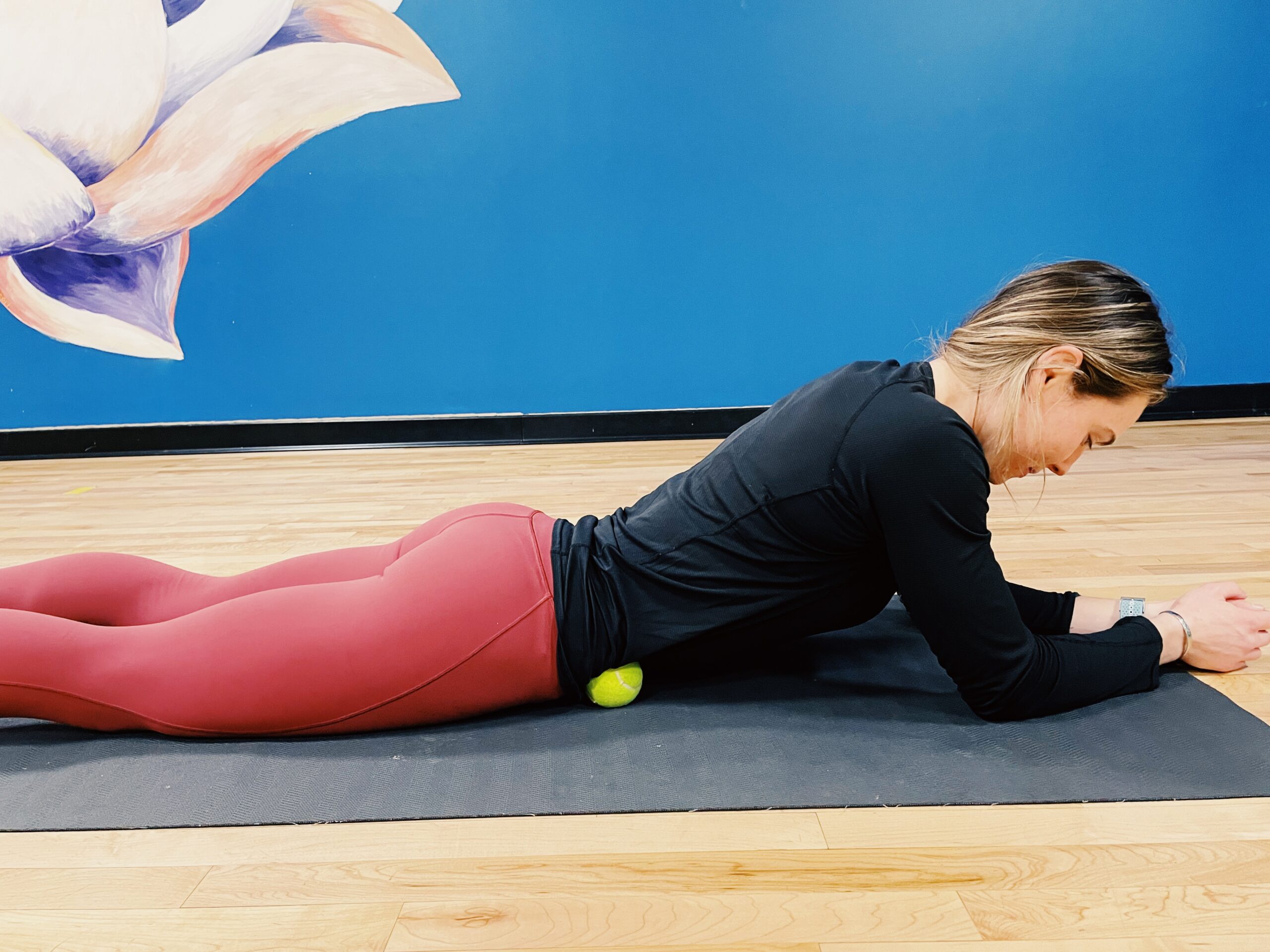
nis ball hip flexor release
Tennis ball hip flexor release

Target: Psoas and hip flexors

How to:

  • Lie face-down.
  • Place the tennis ball just to the side of your belly button.

Gently roll to find tender spots between your belly button and hip.

  • Pause on sore spots for 20-30 seconds.
  • Total time: 2-3 minutes per side

Pro tip: Internally rotate your leg to deepen the stretch.

Follow with a hip flexor stretch

Target: Hip flexors

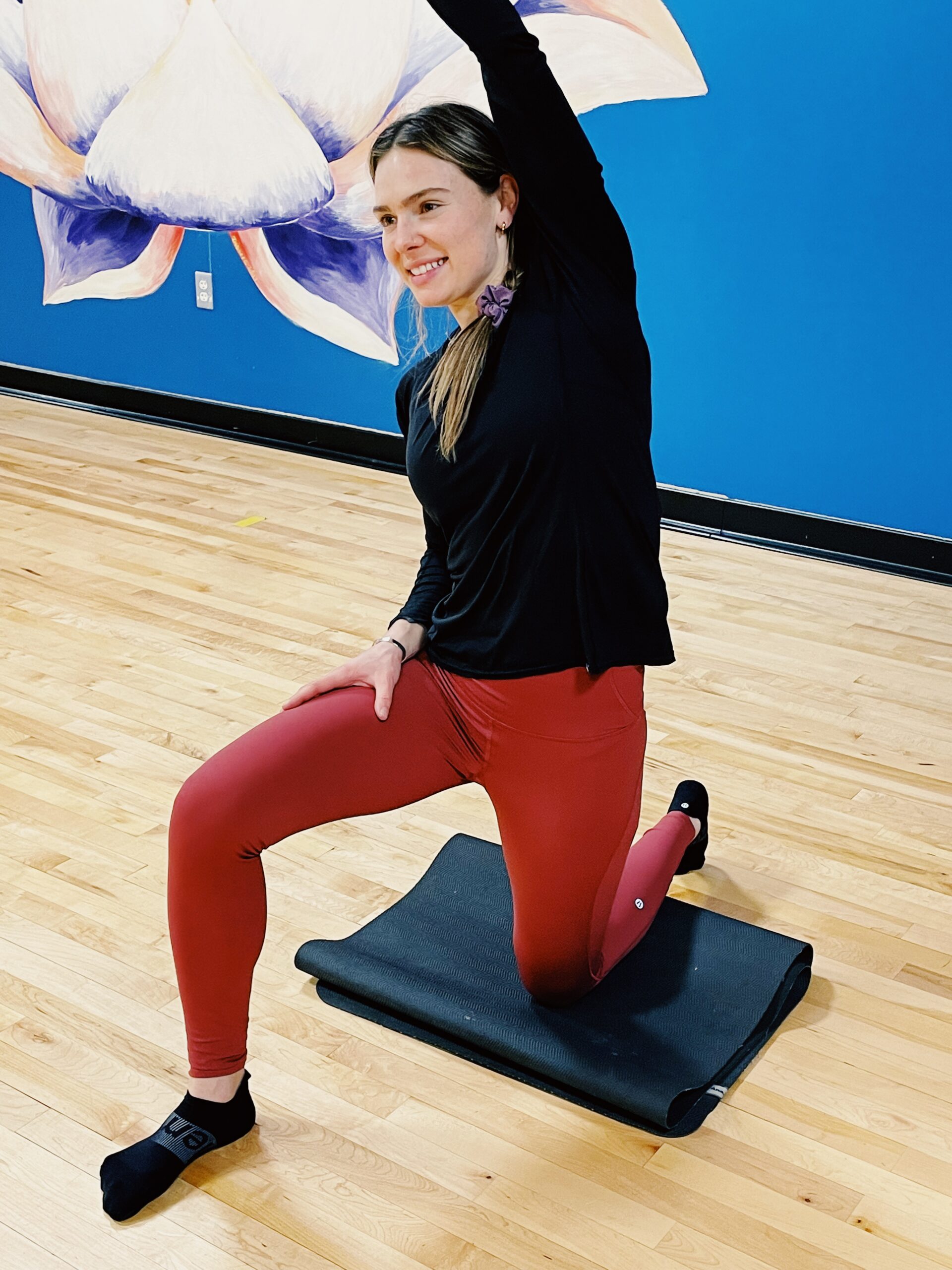
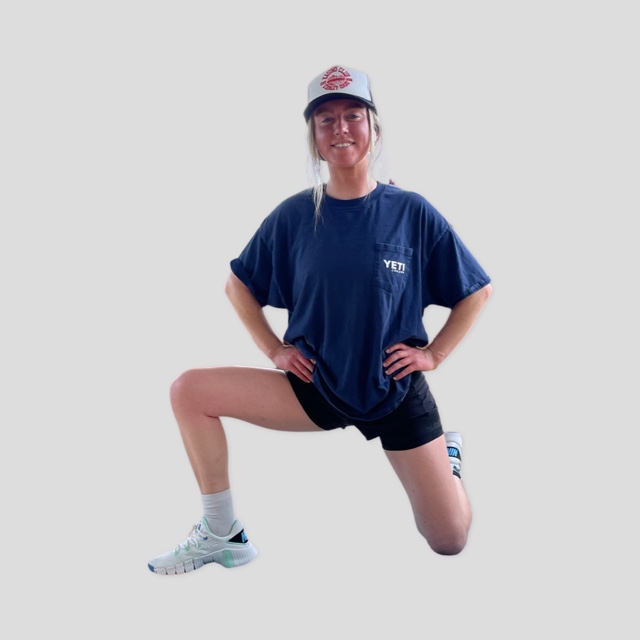
Kneeling hip flexor stretch

How to:

  • Kneel down, with one foot forward. Pad your knee if needed.
  • Keep your hips tucked in and under.
  • Tighten the glutes and abs isometrically during the stretch.
  • Gently change arm angles to further target hip flexors.
  • Hold for 15-20 seconds, 2-3 cycles.

Taking just a few minutes a day to release and stretch tight fascia can dramatically improve your mobility, reduce pain and even boost performance. Small, consistent actions lead to big changes—so grab a tennis ball and start rolling your way to better movement. 

Published in the Idaho Mountain Express September 26, 2025 https://www.mtexpress.com/wood_river_journal/features/fitness-guru-move-better-feel-better/article_0b114c31-3afd-47c9-bacc-1f9ec9ec9b6f.html
Why you need inner leg work

A woman is stretching on the floor with another person.

All movement at the hip joint involves powerful muscles in the thighs. The hips are a ball and socket joint that allow us to flex and extend our legs in the forward swing of walking. Most of us train the quads, the most powerful of the thigh muscles, and the massive hamstrings muscles of the back of the thigh But the muscles of the inner thigh, the hip adductors, are often overlooked in training, or at best, managed at a machine like the Thigh Master or Pilates Ring. To develop strong muscles that function well, the adductors need exercises that are even better than ones done on a machine. That means performing exercises that lengthen the muscle, in the way that happens when lunging or with side-to-side moves.

The longest muscle in the human body runs across the front thigh and crosses both hip and knee joints. This long, slim muscle is called the sartorius. It originates in the upper leg at the iliac spine, and wraps like a sash across the front of the thigh, attaching below the knee. The name originates from the Latin word sartor, meaning tailor, and is often referred to as the way in which early tailor’s sat. If you sit in a cross-legged position, it’s easy to see or feel the muscle. If the muscle is tight, you probably are unable to lateral rotate the thigh properly to sit comfortably cross-legged. Though not part of the inner thigh group, it flexes and outwardly rotates the leg and flexes the knee.

Just inside the sartorius is a group of inner thigh, or adductor muscles. These muscles all work together to bring the hip and leg towards the midline, outwardly rotate the leg and also help to flex the hip and leg. The adductors also play an important role in preventing a tendency towards being knock-knee.

Inner thigh anatomy

The adductor group includes a small flat muscle called pectineus, the important adductor magnus , adductor brevis and longus, and the gracilis that crosses the knee joint and attaches just below the knee. Straining or overstretching this muscle group is called a “pulled groinâ€.

To avoid straining the adductors, here is a great daily hip adductor stretch.

Kneeling Side Lunge stretch

A woman is stretching on the floor with another person.

Kneel on the floor with one hip externally rotated so that the foot is pointed toward the side. Lean your body weight toward the supporting foot.

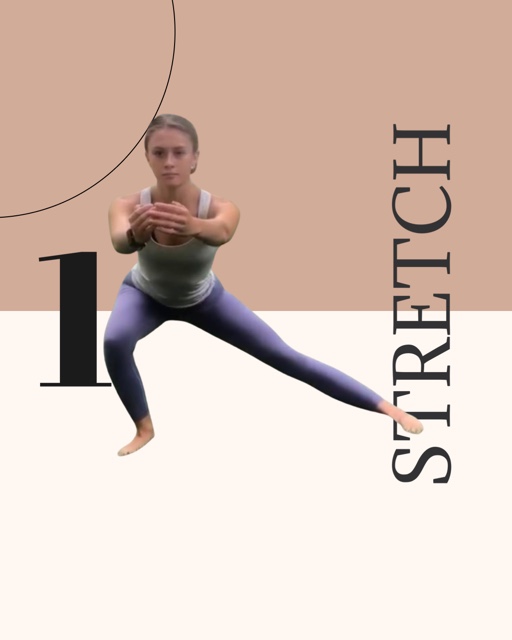
Here are 5 examples and variations of lunges and squats that strengthen the adductors:

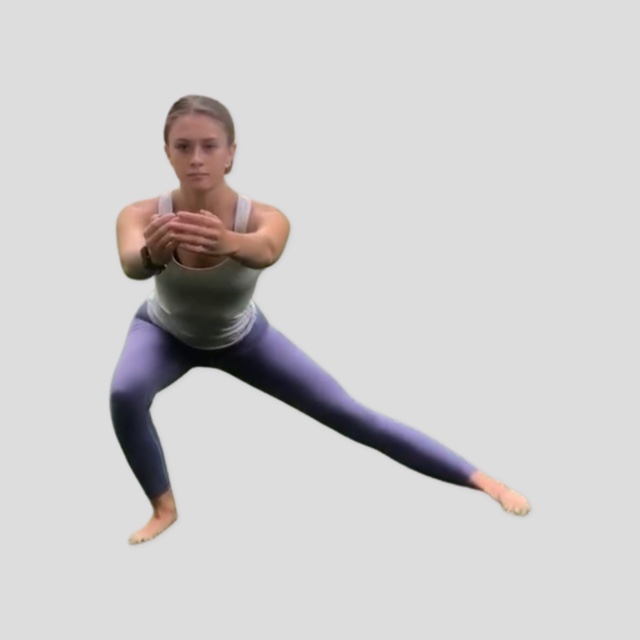
Side-to-side lunge

A woman is stretching on the floor with another person.
Side-to-side lunge

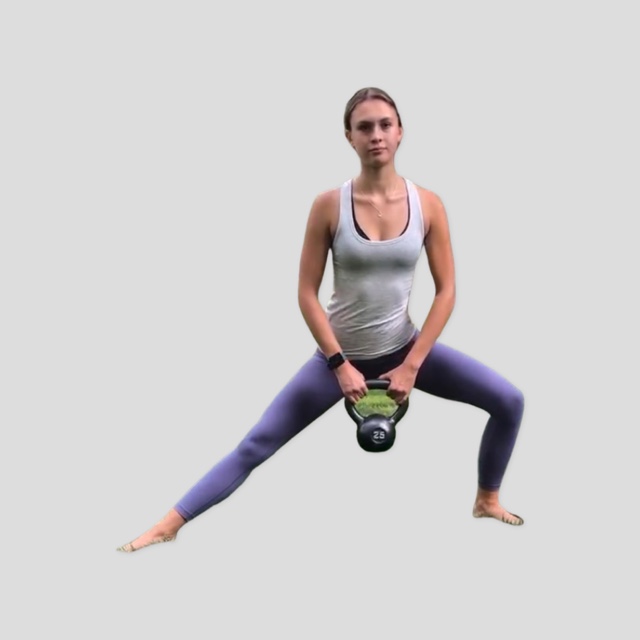
Side lunge with weight

A woman is stretching on the floor with another person.
Side lunge with weight

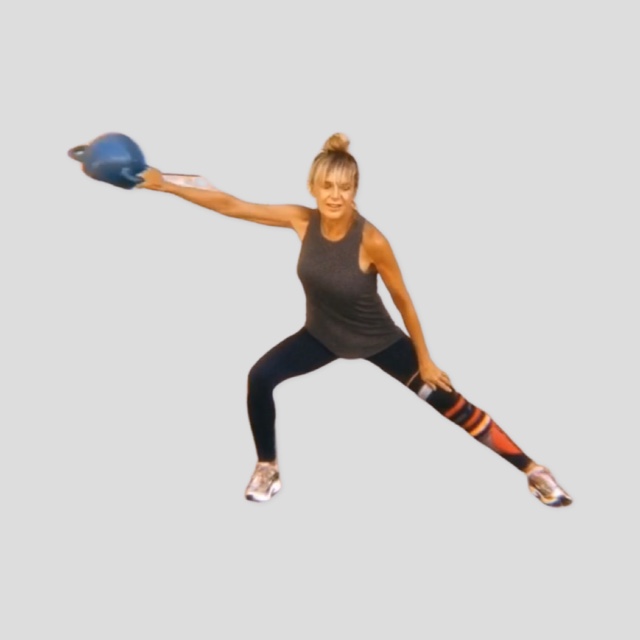
Side lunge with arm swing

A woman is stretching on the floor with another person.
Side Lunge with arm swing

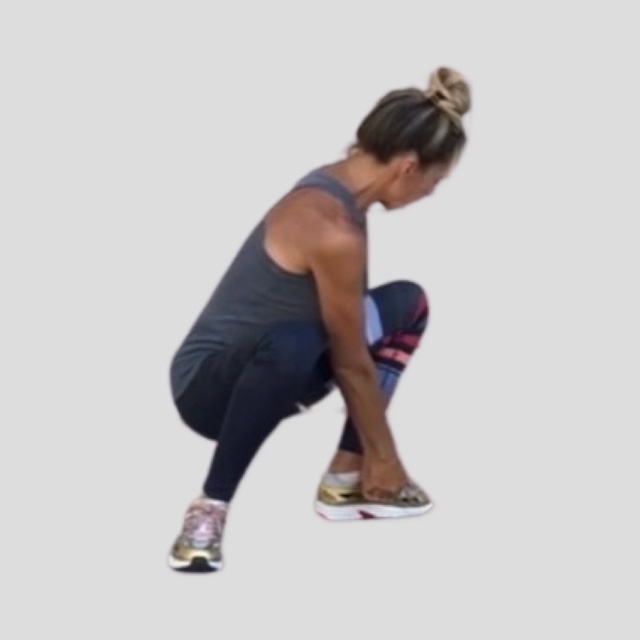
Four o’clock sumo lunge

A woman is stretching on the floor with another person.
4 -o’clock sumo lunge

Stand at 12 o’clock, with or without a weight.

Rotate into a sumo squat at Four o’clock. Keep both knees directly over second toes in your landing squat.

Skater bounds

A woman is stretching on the floor with another person.
Skater bounds

https://www.mtexpress.com/wood_river_journal/features/fitness-guru-why-you-need-inner-leg-work/article_146723f0-c8db-11ed-b14d-7feb425581b3.html

Fitness Guru: Stretch your hips like a pro

A woman is stretching on the floor with another person.
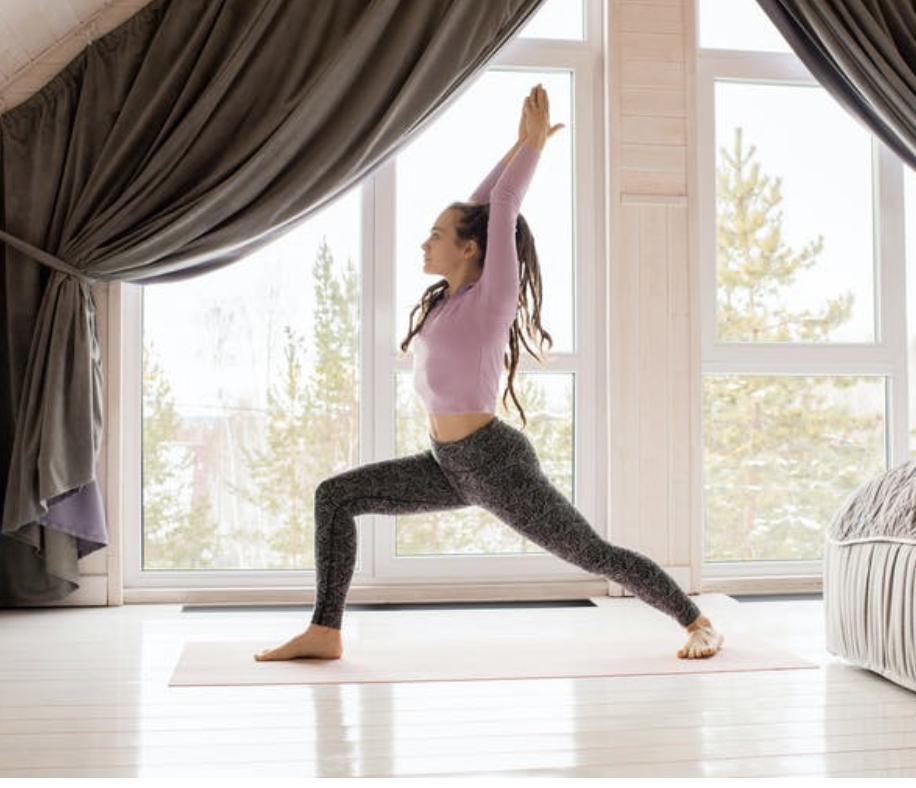
Warrior 1 involves leg strength and mobility.

By CONNIE ARONSON

Skiing, snowshoeing, yoga or walking requires strength and mobility. Consider the yoga pose Warrior 1, where you stand in a lunge position with your arms stretched straight up overhead, neck extended with the head back and eyes looking up. Doing this pose involves leg strength as you stretch your leg and hip muscles. Your spine extends, the chest opens, and the arms, shoulders, upper back and neck stretch! All in all, Warrior 1 strengthens and stretches you.

You need flexibility as much as cardio, as it enhances optimal movement and just plain old feels good.

If you feel stiff and tight lately, you might want to work on your flexibility for the health of your body. However, if you’re not quite ready for Warrior 1, let’s start with an essential hip flexor stretch.

Hips don’t lie

The hip flexors are a muscle group that can get chronically shortened from prolonged sitting at a computer.

If your hips are stiff and tight, it can lead to poor hip mobility and is associated with poor core and hip stability.

Tight hips also affect the health of the whole back, as they cause the pelvis to anteriorly tilt. If you picture your pelvis being a bowel of water, the water would spill out the front. When you stand in perfect alignment, the pelvis is naturally rotated about 10 degrees, meaning that the front of the pelvis is slightly lower than the back of the pelvis.

A & B: Tennis ball and hip flexor stretch

While it may sound technical, the technique referred to as self-myofascial release is easy to do, and is like self-massage. Self-myofascial release techniques are used to release and rejuvenate tight muscles and other soft tissues to prepare for later stretching and strengthening exercises.

There are 2 parts to this stretch:

A woman is stretching on the floor with another person.
Tennis ball roll on the hip flexor

Tennis ball roll on the hip flexor

Lie facedown, and place a tennis ball beside your belly button. This targets the psoas major muscle, which lies under the abdominals. Turn your foot in slightly, and scoot your body to move the ball to any sore spot all the way down to the top of the hip.

Try to relax on any tight areas for 20-30 seconds, for a total of 2-3 minutes on both sides.

Right after rolling, go into the hip flexor stretch as follows:

Kneeling hip flexor stretch.

Kneel down on one knee, and tuck the pelvis under using the glutes and abdominals. Raise your arm over your head on the same side as the kneeling leg, and reach over your head, toward the opposite side of the body.

Hold the stretch for 15-20 seconds, and repeat 2-3 cycles on each side once a day.

A woman is stretching on the floor with another person.
Kneeling hip flexor stretch with arm reach

https://www.mtexpress.com/wood_river_journal/features/fitness-guru-stretch-your-hip-flexors-like-a-pro/article_674f0d2e-7f28-11ec-9b9d-639bf6f49d52.html

The bicycle twist is a core move for the morning

A woman is stretching on the floor with another person.

Clients often tell me about their morning sequence to start their days, and I’m always proud that they take care of themselves. A morning core program can help maintain low back health, improve neuromuscular control, spinal stability, movement pattern efficiency, and injury prevention. But any ab or core exercise you choose needs to be effective, and not potentially lead to lower back pain.

A morning program is ideal for two reasons. First it’s typically the time in which your body is stiff, cold and most prone to injury. Having a routine prior to your busy day is like doing a pre-workout warm-up: It helps to increase soft-tissue blood-flow, warmth and pliability, facilitates neurological awareness and helps develop a psychological readiness for the day ahead. Second, a morning routine gives us another chance to make our habits stick, and if you miss doing it, you have another opportunity to do it later in the day.

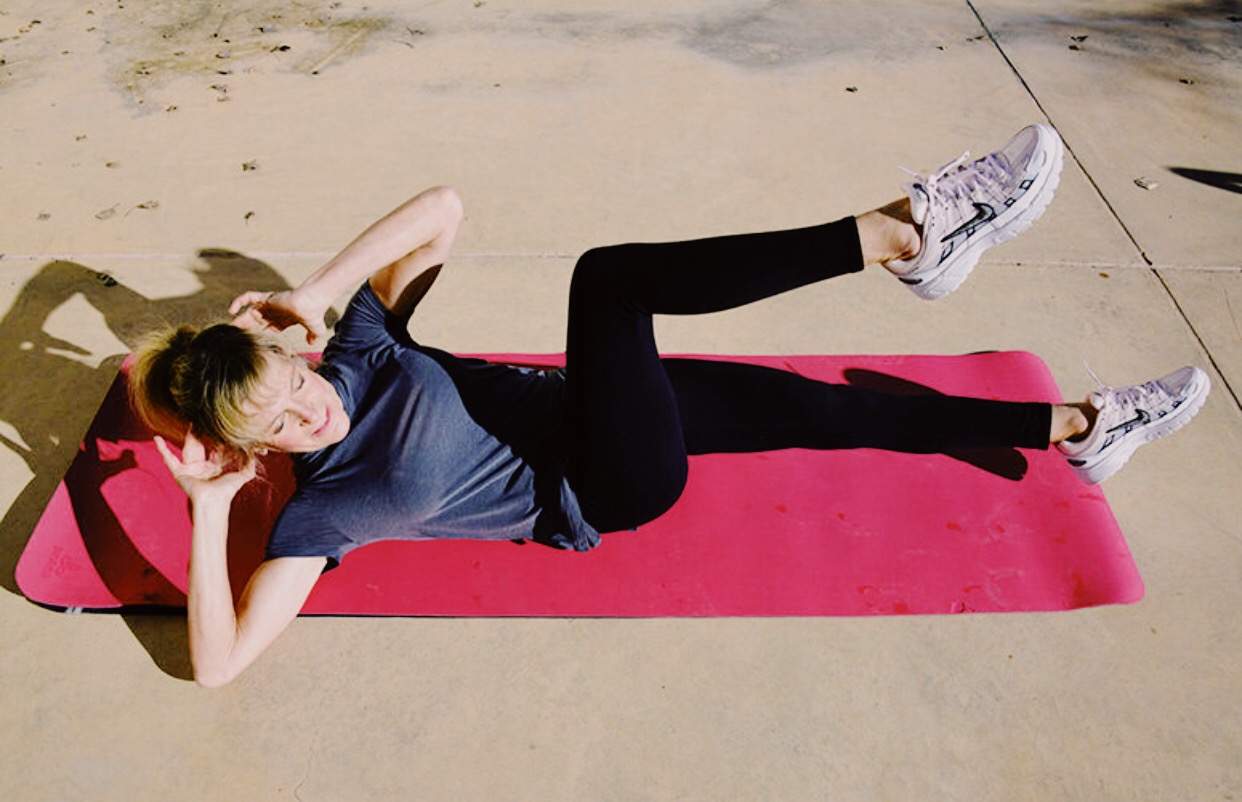
The Bicycle Twist is a big external oblique winner.  

If you need a little help in choosing where to start, add Bicycle Twist to your routine, one of the best core exercises. Compared to a crunch, electromyography ( EMG ) shows that this exercise is 9 % more effective at targeting the rectus abdominis and 310 % more effective at targeting the external obliques.

It’s an ab exercise that many people know, also known in Pilates as Criss-Cross, and a go-to in yoga class.

Let’s include a brief anatomical overview of the ab muscles that this exercise targets. Four abdominal muscles hold the contents of the abdomen in place; the rectus abdominis, aka “six-packâ€, which stabilize the pelvis and rib cage with respect to each other, transverse abdonimis, a deeper muscle that maintains intra-abdominal pressure, and is not involved in movements of the trunk, and the external and internal obliques that work together to help decelerate the spine as it arches backwards, rotates, and side bends. The external and internal obliques store potential energy, as in a follow-through in a golf swing.

The Most Common Mistake 

The Bicycle Twist targets the abs, yet most people do it wrong, and use the hip flexors. Stop using your hip flexors! They are typically stronger than the abs in trunk flexing movements; hip flexors bring the legs and trunk toward each other. Beyond 30 degrees, in the Bicycle Twist, crunches, or sit-ups, the powerful hip flexors begin to take charge of the movement. In real life, they are more likely to be strong, as you use them to create energy to help swing your leg forward in walking and running.  

Pilates mat exercise studies using EMG found that the hip flexors in Criss- Cross work at an intensity of 41 %. In other words, when you bring your knee towards your torso, the Criss-Cross, or Bicycle Twist becomes an ineffective exercise for the abdominals. The goal of ab training is to maximize the involvement of the abdominals, and minimize the hip flexors. 

Getting it right 

Keep your knees at 90 degrees, instead of flexing the hip to pull your knee in toward your elbow. This will give the back extra support and help target the obliques. 

Connie Aronson is an ACSM Exercise Physiologist and Corrective Exercise Specialist (TBBM-CES )  Visit her at www.conniearonson.com and  Instagram@conniearon

https://www.mtexpress.com/wood_river_journal/features/fitness-guru/article_a62eb6d4-61a6-11eb-bcfb-3f5fb75e1f4c.html