Why single-leg strength matters more than you think

If you’ve ever noticed that one side of your body feels stronger than the other—whether you’re skiing, running, or lifting —you’re not alone. Uneven hip strength is extremely common and can unfortunately affect performance, balance and long-term joint health. Fortunately, targeted exercises can help correct these imbalances and improve how your body moves as a whole.

One of the most effective exercises for addressing side-to-side differences is the single-leg Romanian deadlift (RDL). This movement strengthens the glutes while also acting as a corrective tool, revealing weaknesses that may go unnoticed during traditional two-legged exercises. Because many daily activities and sports require you to stabilize on one leg at a time, training this pattern is key.

The single-leg RDL works from the ground up. It begins with creating a stable base through the foot while the glutes and hips work to keep the pelvis level as the opposite leg reaches back. When the pelvis stays even, movement becomes more efficient. When it doesn’t, the body compensates—often leading to reduced performance or discomfort in the lower back, hips or knees.

Before loading this movement, here’s a way to prepare the muscles and joints with mobility work and a simple progression.

Foam roll the glutes

Tight or shortened glute muscles can limit hip motion and disrupt pelvic alignment, especially for people who sit frequently or tend to overarch the lower back.

Foam rolling the gluteus maximus and piriformis, a deep hip rotator, helps rejuvenate tissue and circulation, allowing the pelvis and hips to move more freely.

  • Lie (or sit) on a foam roller and shift your weight slightly to one side. Place your arm or hands on the floor for support. Roll slowly back and forth over the muscle. Roll for 30 seconds to two minutes per side at least once per day.

TRX single-leg reaching Romanian deadlift

This upright, supported variation reinforces proper hip hinging while developing balance and control. Pressing into the handles engages the anterior core and encourages proper glute activation. The gluteus medius, a key stabilizer of the pelvis, works alongside deep core muscles to maintain alignment, playing a critical role in efficient movement.

  • Hold the straps, set at mid-length, with arms extended at chest height. Stand on one leg with a slight bend in the knee and hinge forward at the hips while extending the free leg back. Keep the pelvis level and return to standing. Perform eight slow repetitions per side.

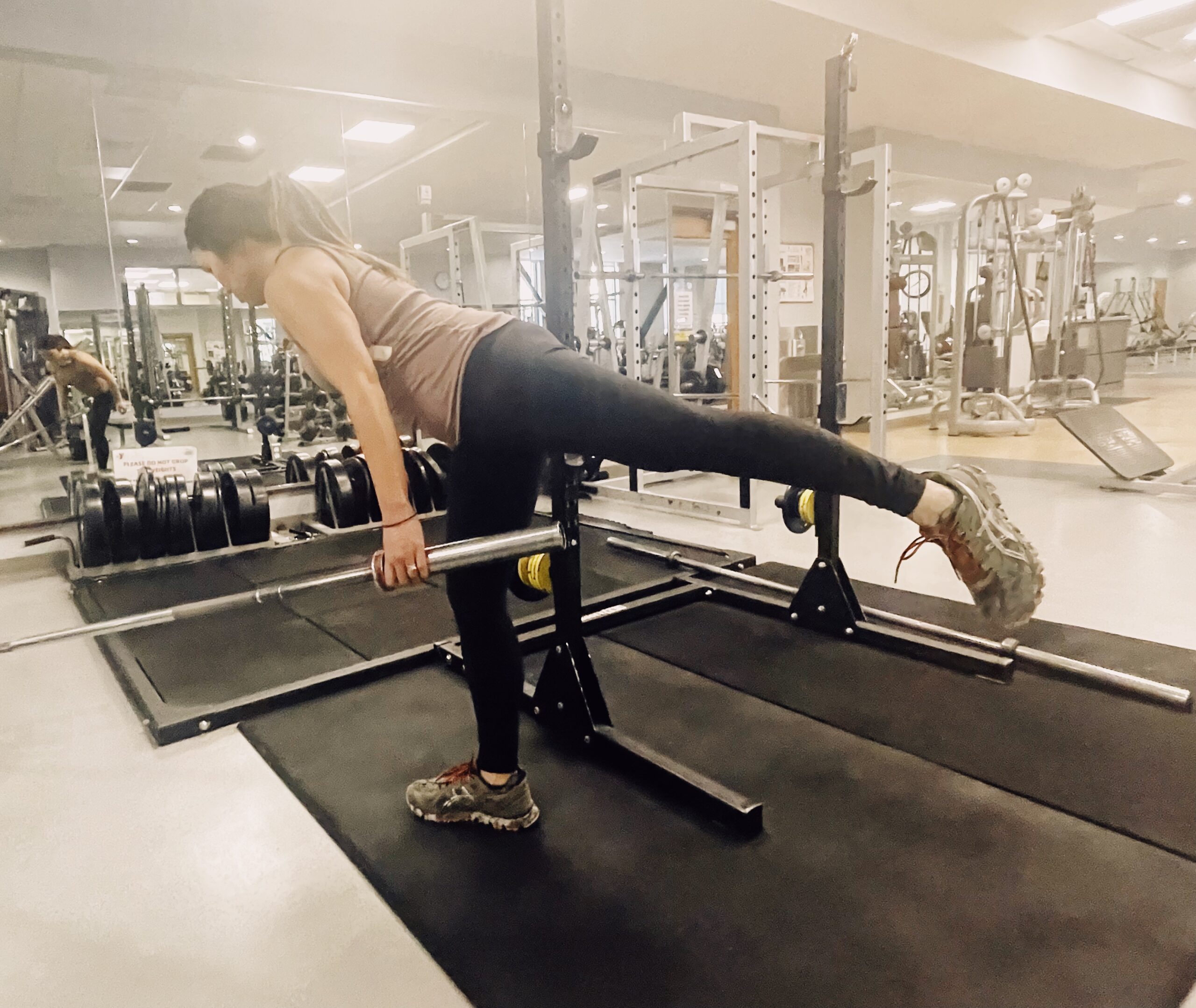
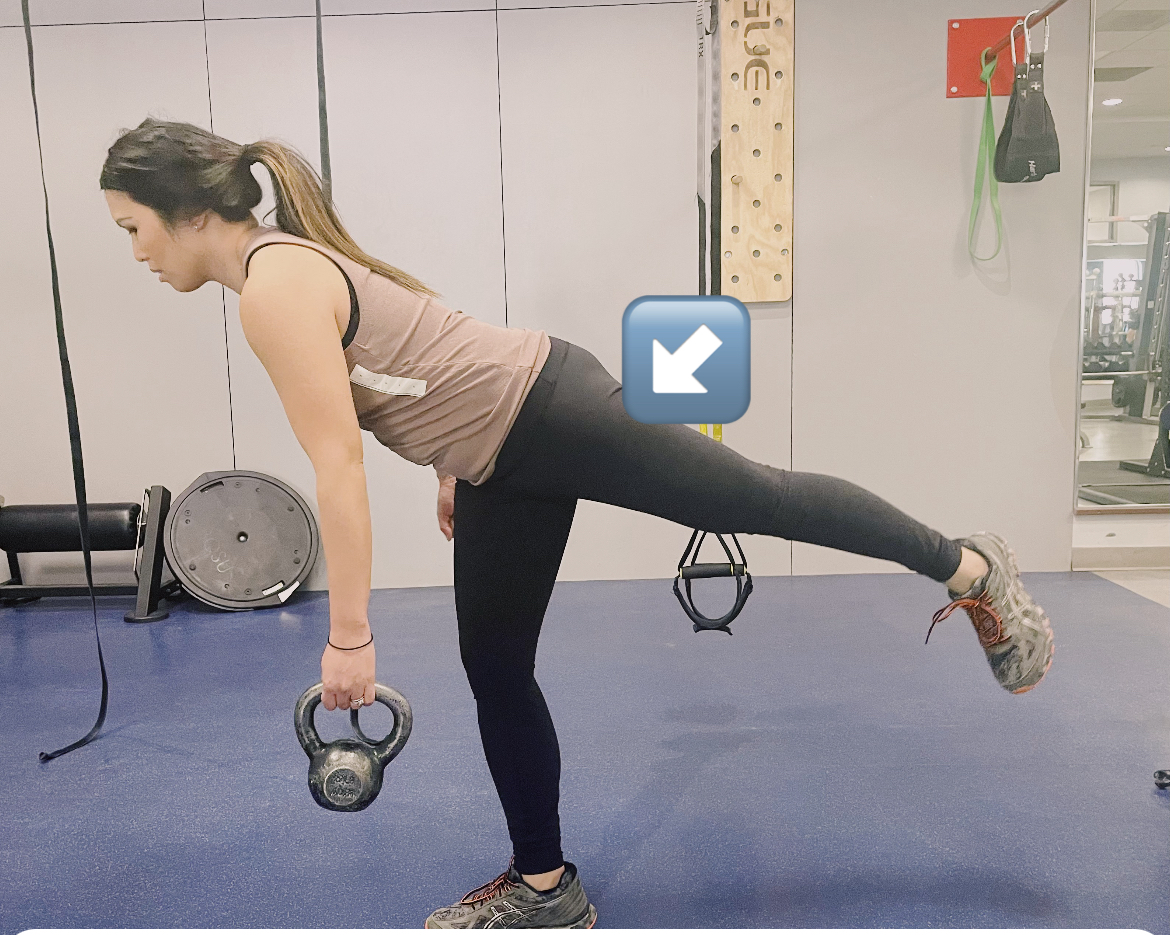
Single-leg Romanian deadlift

Single -leg Romanian deadlift

🔹Flex at hip while maintaining slightly bent kneeo of the targeted leg;
keep straight torso.
🔹Reach the free leg back as the chest moves forward, keeping the movement long and horizontal.
🔹Return to start.
🔹Touch the ground between reps to regain balance.

.

The single-leg Romanian deadlift is one of the most effective exercises for strengthening the glutes. Training one side at a time improves balance and pelvic stability, helping the body move more efficiently and confidently in both daily activities and athletic pursuit.

Published in The Idaho Mountain Express February 13, 2026

https://www.mtexpress.com/wood_river_journal/features/fitness-guru-why-single-leg-strength-matters-more-than-you-think/article_bb49a02e-426e-4053-80ba-9e50cf590a31.html

Move better, feel better: the power of myofascial release

Our bodies are built to handle incredible forces thanks to bones, muscles, tendons and fascia working in harmony. But when pain or recurring injuries strike, we often overlook one key player: fascia. This dense, connective tissue weaves throughout the body like an intricate network, influencing how we move and feel.

Ever peeled the skin off a chicken before cooking it? That slippery, white film you see is fascia—it’s the same tissue that wraps around your muscles, organs and bones. In fact, the fascia that lines your bones is what gives structure and support to the entire body.

Justin Price, a leading corrective exercise specialist, compares fascia to a spider’s web: When a fly gets caught in one part of the web, the spider senses the change in tension throughout the entire structure. Similarly, when something’s off in your body, the entire system feels it. A tight calf, for example, might affect not only your ankle but your knee’s alignment and even the way you walk.

When fascia becomes restricted due to injury, repetitive stress or tension, it forms adhesions. These adhesions can limit range of motion and cause compensations in other muscles and joints, explains Price. Learning effective self-myofascial release techniques can help you target these adhesions, rejuvenating the soft tissue and restoring your body’s natural movement patterns.

So how do you keep your fascia healthy and flexible? Self-myofascial release. These simple techniques help relieve tension, break up adhesions and restore mobility—no fancy gear required. A few basic tools, like tennis balls, a baseball, a golf ball or a foam roller can work wonders to release tension in restricted areas. Combined with specific stretches right after rolling, you’ll effectively target tight spots.

Tennis or golf ball foot roll

Tennis or golf ball foot roll

Target: Plantar fascia and lower leg

Tools: Tennis ball, golf ball or any small ball

How to:

  • Place the ball under your foot.
  • Roll back and forth to find tender spots.
  • Pause and apply pressure on sore areas.
  • Roll for 30 seconds to 1 minute per foot.

Pro tip: Keep a ball near your desk or couch as a reminder to roll daily.

Foot and toe wall stretch

Target: Foot and ankle flexibility

Foot and toe wall stretch

How to:

  • Keep the ball of your foot and base of your toes on the floor.
  • Press your toes and knee gently against a wall.
  • Slowly roll your foot and ankle inward toward the wall.
  • Hold for 15-20 seconds.
  • Repeat twice daily.

Target: Psoas and hip flexors

nis ball hip flexor release
Tennis ball hip flexor release

Target: Psoas and hip flexors

How to:

  • Lie face-down.
  • Place the tennis ball just to the side of your belly button.

Gently roll to find tender spots between your belly button and hip.

  • Pause on sore spots for 20-30 seconds.
  • Total time: 2-3 minutes per side

Pro tip: Internally rotate your leg to deepen the stretch.

Follow with a hip flexor stretch

Target: Hip flexors

Kneeling hip flexor stretch

How to:

  • Kneel down, with one foot forward. Pad your knee if needed.
  • Keep your hips tucked in and under.
  • Tighten the glutes and abs isometrically during the stretch.
  • Gently change arm angles to further target hip flexors.
  • Hold for 15-20 seconds, 2-3 cycles.

Taking just a few minutes a day to release and stretch tight fascia can dramatically improve your mobility, reduce pain and even boost performance. Small, consistent actions lead to big changes—so grab a tennis ball and start rolling your way to better movement. 

Published in the Idaho Mountain Express September 26, 2025 https://www.mtexpress.com/wood_river_journal/features/fitness-guru-move-better-feel-better/article_0b114c31-3afd-47c9-bacc-1f9ec9ec9b6f.html

Why you need anti-rotational moves

2.jpg

Medicine ball chop slam.

  • Courtesy photo by Connie Aronson

4.jpg

Half-kneeling medicine ball chop.

  • Courtesy photo by Connie Aronson

Most sports involve some type of rotational movement. Golf, tennis, baseball, skiing and hockey all involve rotation.

Up to 84% of athletes have experienced a low back injury during their sport. In training, it is key to increase stability of the spine. Developing high levels of rotary torque is not a task for your lumbar spine and abdominal muscles; movement should be through the hip and shoulder joints. For athletic performance, learning to transfer high levels of rotary torque from the lower body to the upper body is the task of the trunk muscles.

Anti-rotational exercises can enhance your core stability and overall functional strength. In tennis, for example, the wrist, elbows, shoulder, hip, knee, ankle and toes all exhibit a rotational aspect during a simple forehand stroke. However, a limiting factor in creating more acceleration is the inability to control, or decelerate, the rotational action.

Even everyday movements, such as lifting and carrying, benefit from anti-rotational exercises, as they train the core to function as a unified system. This core stability is essential for maintaining proper posture and alignment in life and athletic endeavors.

Medicine ball chop slam

Tip: For both of the following exercises, choose a medicine ball light enough to be thrown hard but heavy enough to provide resistance. (Test a toss beforehand!)

  • Stand upright with your feet parallel and spread slightly wider than shoulder width.
  • Hold the medicine ball by your midsection away from the wall, with both hands.
  • Tighten your glutes; brace your abdominals.
  • Throughout the exercise, maintain a straight line in your body and don’t rotate your torso.
  • Perform a set of slams; repeat on the opposite side.

Half-kneeling medicine ball chop

  • Kneel on a foam pad or gym mat perpendicular to a wall.
  • Tighten your glutes and brace your core. Throughout the exercise, maintain a straight line through your body.
  • Hold the medicine ball with both hands, away from the wall, at hip height.
  • Slam the ball for a set number of repetitions; repeat on the opposite side.

Connie Aronson is an ACSM exercise physiologist and corrective exercise specialist (TBBM-CES). Visit her and her golden retriever, Josie, on Instagram @conniearon.

Fitness Guru: 6 key daily exercises for core and flexibility
  • By CONNIE ARONSON #fitnessguru

Daily habits can be powerful. Routine builds structure, helps us stay on track and use our time wisely. Adding a simple mini exercise program to your day is one way to succeed. For many of us, we’re missing some key exercises that can keep us flexible, injury-free and improve function. Here are six top core and flexibility exercises that will enhance your athletic performance. Whether you are a seasoned athlete, or simply just enjoy being active and don’t want to get injured, incorporate these moves into your day.

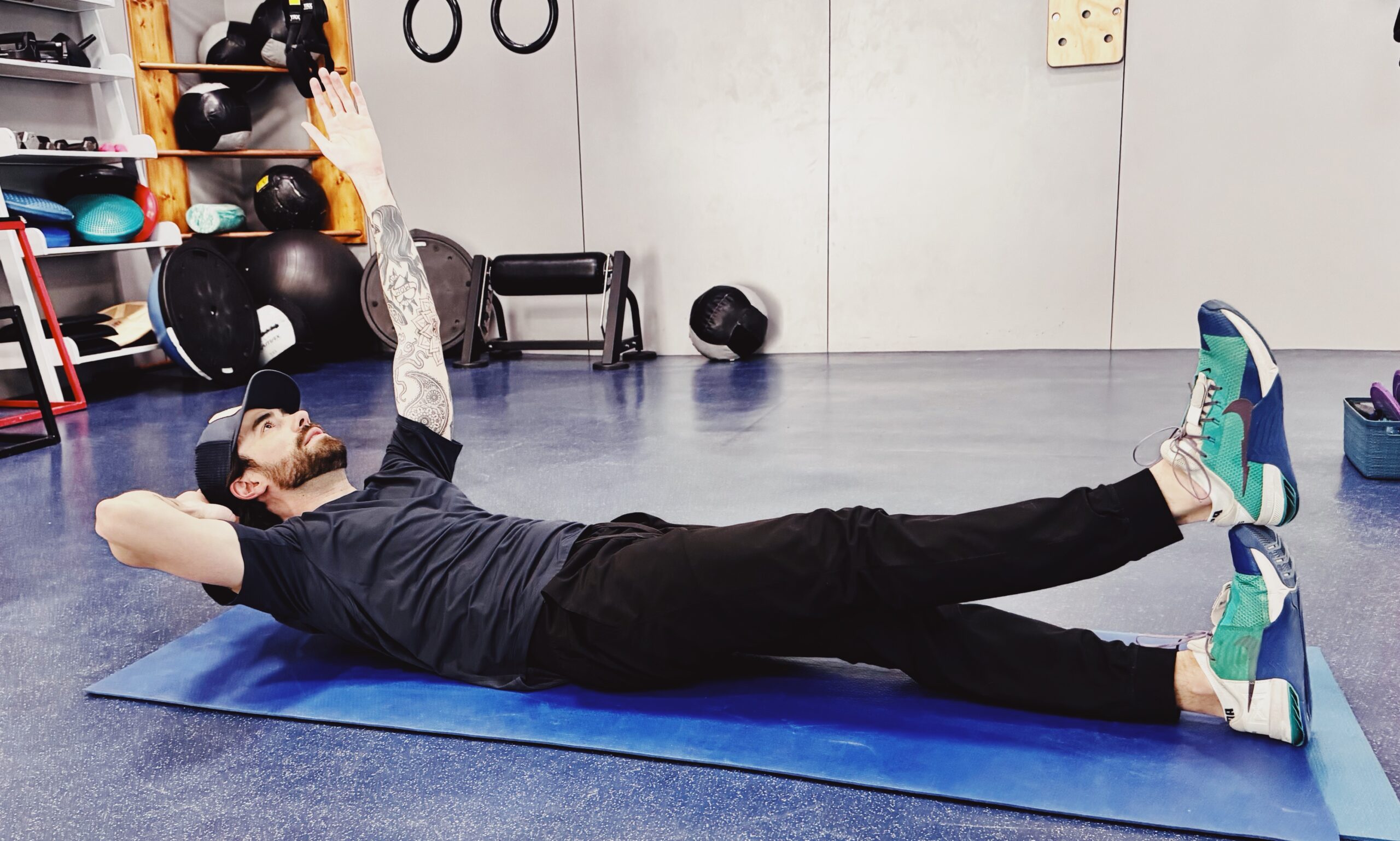
Activate the core: Heel-on-toe crunch

A woman is stretching on the floor with another person.
The heel-on-toe crunch targets the abdominals while limiting spine movement.
Photo courtesy of Connie Aronson

The core muscles help stabilize the spine and support movement. The following two core exercises build muscular fitness, have minimal movement, and are far more effective than a standard sit-up. To a viewer, it might not look like you’re doing much of anything, writes Stuart McGill in his book, “Back Mechanic,†but with proper technique, you should feel like you’re working.

  • Begin with your legs straight, left heel on top of right foot.
  • Bring your left hand behind your head for support, and lift your right arm straight up from your shoulder.
  • Curl up, raising your head, neck and shoulder blades off the mat, tightening your abdominals.
  • Hold for 10 seconds.
  • Slowly return to the start position. Six reps.

Side-lying hip lift

A woman is stretching on the floor with another person.
Side-lying hip lift. If you have a sensitive spine, bring the top foot ahead of the bottom foot.
Photo courtesy of Connie Aronson
  • To regress the move, lift from bent knees.
  • Lying on your right side with your top leg stacked, place your right elbow under your right shoulder.
  • Exhale and lift your right hip off the floor.
  • Hold for 10 counts.
  • Slowly lower to start. 6-8 reps. Switch sides.

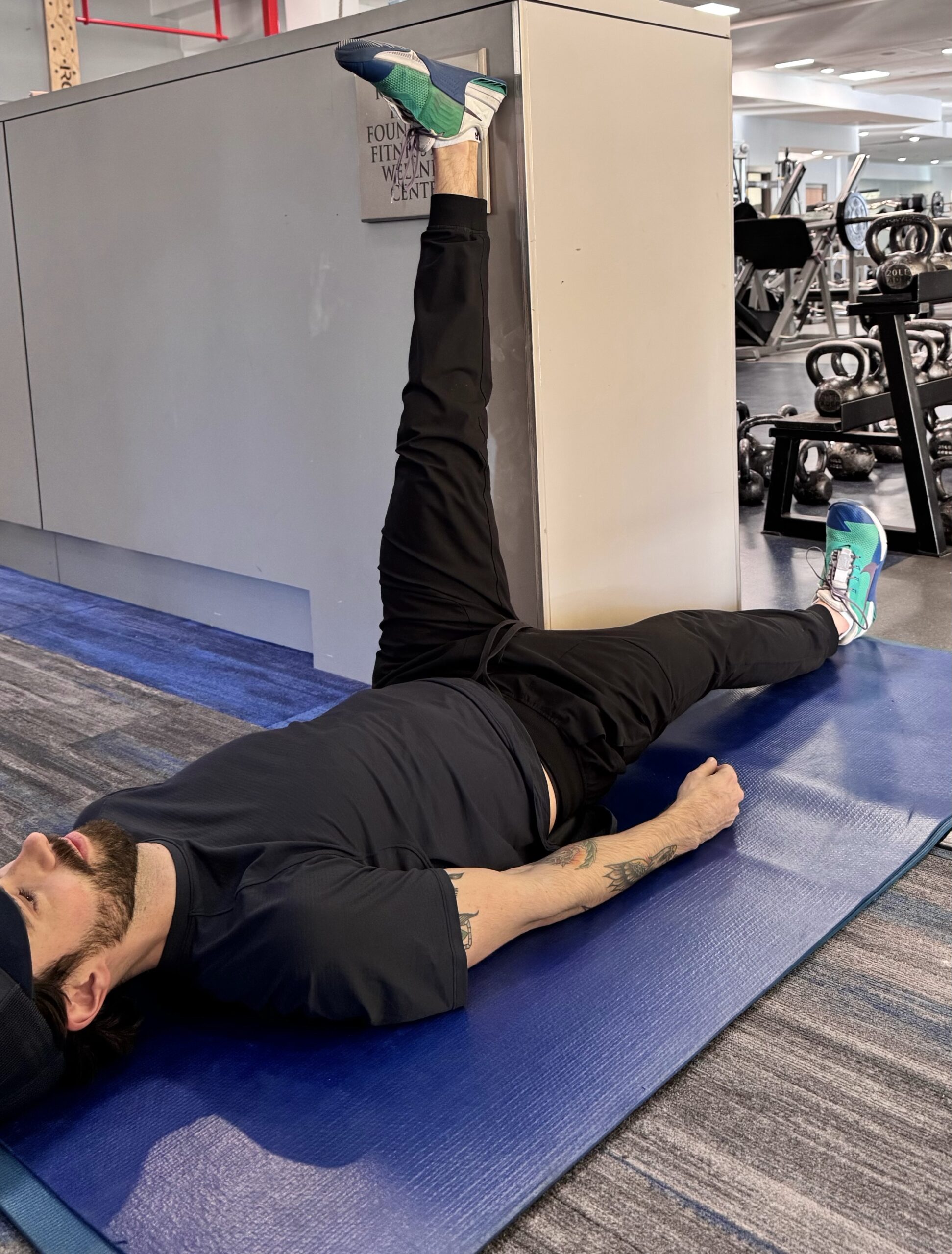
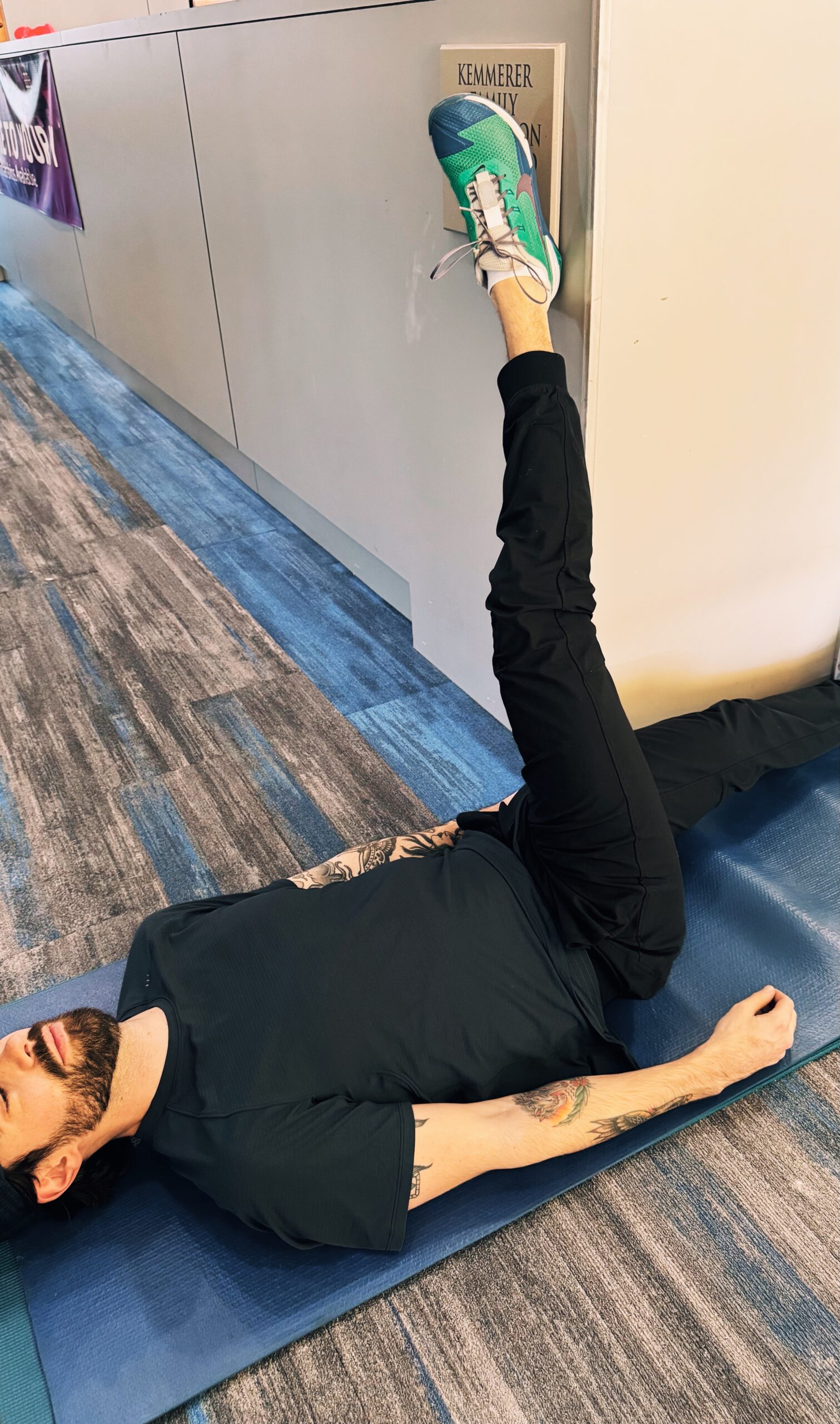
Wall hamstring stretch

A woman is stretching on the floor with another person.
Wall hamstring Stretch. Slide the hips further down the wall for a greater range of motion.
You can increase the stretch, and involve more gastrocnemius, by taking the outside leg across the body.

The wall hamstring stretch is an effective way to stretch your hamstrings. The stability of the wall and prone position help you relax deeper into the stretch, and you can easily adjust the intensity by moving your hips further or closer to the wall. Tight hamstrings may be a sign of imbalances, such as an anterior pelvic tilt or tracking problems of the knee. The hamstrings start at the sit bones and attach on either side of the lower leg. The muscles act as guide ropes on the legs as the foot rolls inward or outward (pronation and supination).

  • Lie on the floor with the stretching leg on the corner of a wall or doorframe, with the other leg flat on the floor, heeled flexed.
  • Use a pillow for your neck if needed.
  • Move the hips closer or further from the wall to adjust the intensity.
  • Keep the bottom leg straight. If you can’t, bend the bottom knee.
  • Hold the stretch for 30 seconds and repeat two to three cycles on each leg. Tip: Squeezing the quads will increase the stretch.

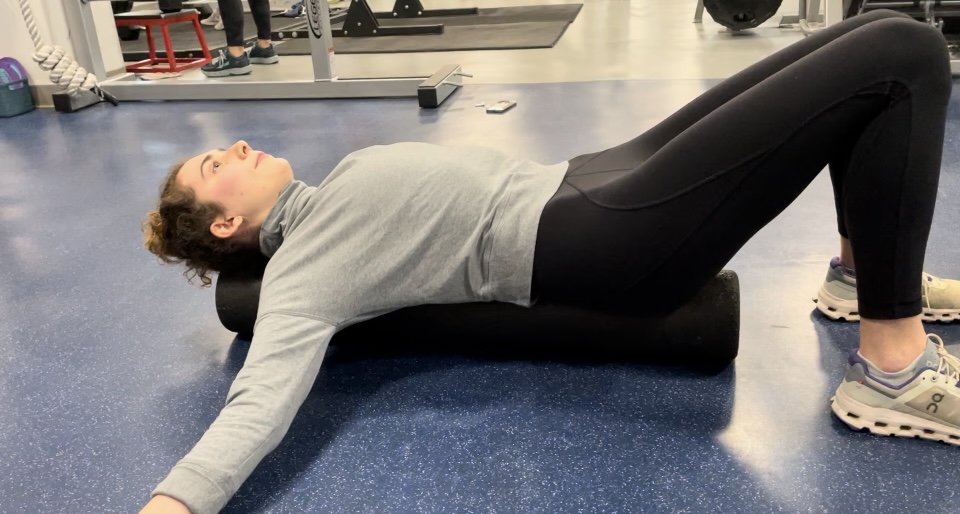
Foam roller alignment

A woman is stretching on the floor with another person.

Reset your alignment every day by lying on a foam roller.

Lying lengthwise on a foam roller not only feels good but encourages good spinal length. If you’re hunched over with age, or are guilty of bending forward while scrolling on your phone, it can result in a “forward head.†For every inch that your head is forward, there’s 10 more pounds of pressure on the neck. Lengthening the lumbar erector spinal muscles helps encourage neutral alignment and good posture.

  • With your knees bent, lie on a roller, head supported and neck in a neutral position.
  • Tighten the abdominals.
  • Gently roll side to side for 20-30 seconds, two to three times.

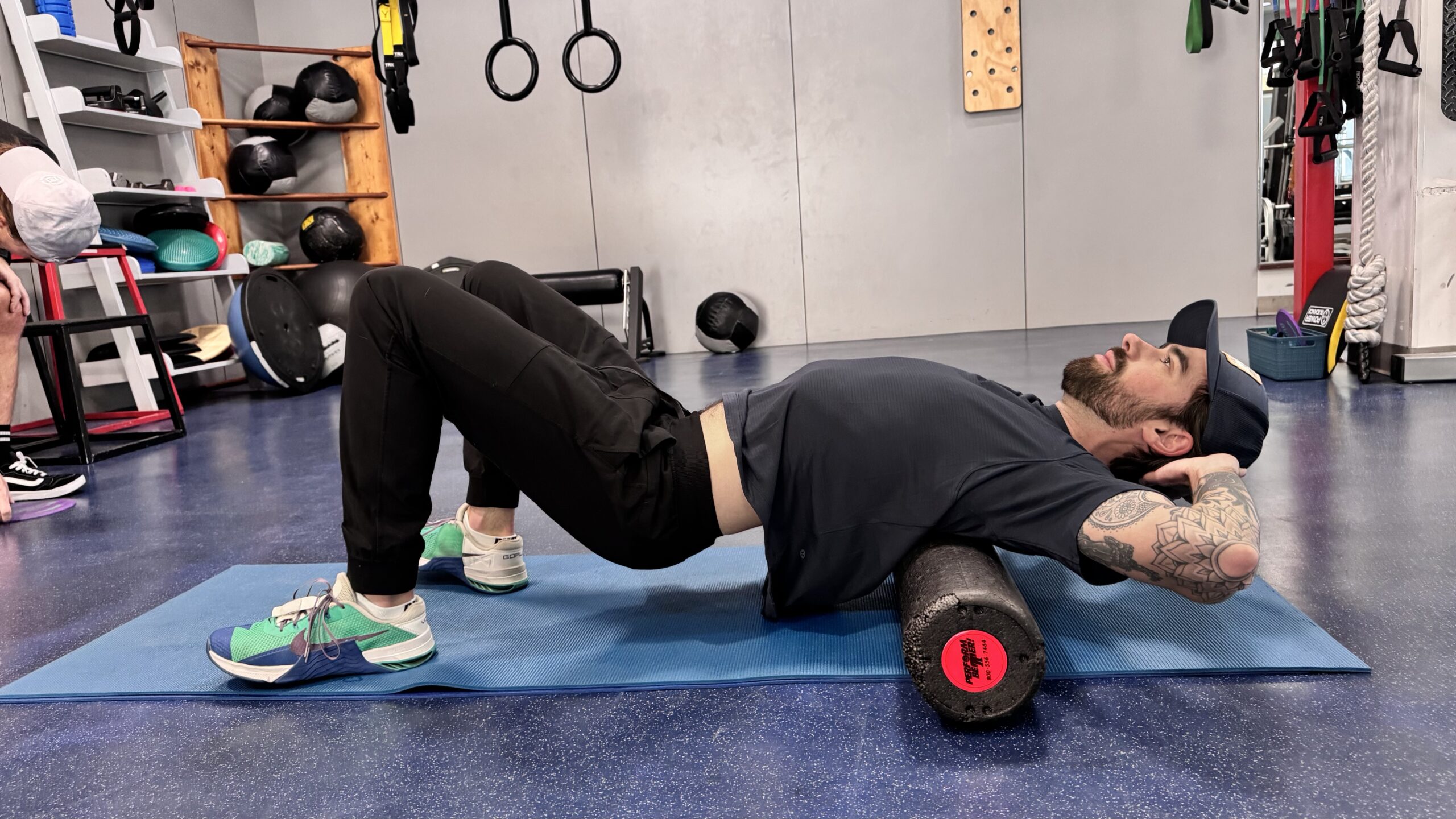
Foam roller thoracic spine

A woman is stretching on the floor with another person.
Foam roller thoracic spine Photo courtesy of Connie Aronson

Using a foam roller on your thoracic spine helps upper back stiffness, as you can target the rhomboids and trapezius muscles. Rolling is a self-myofascial release technique that immediately relaxes sore spots and movement restrictions, allowing soft tissue and inflamed joints to rest and recover.

  • Place a foam roller under your shoulder blades or at bra height.
  • Support your head and tuck your chin.
  • Bend your knees, tilt the pelvis slightly and lift your hips and pelvis off the floor.
  • Gently roll on any tight or sore spots for 20-30 seconds.

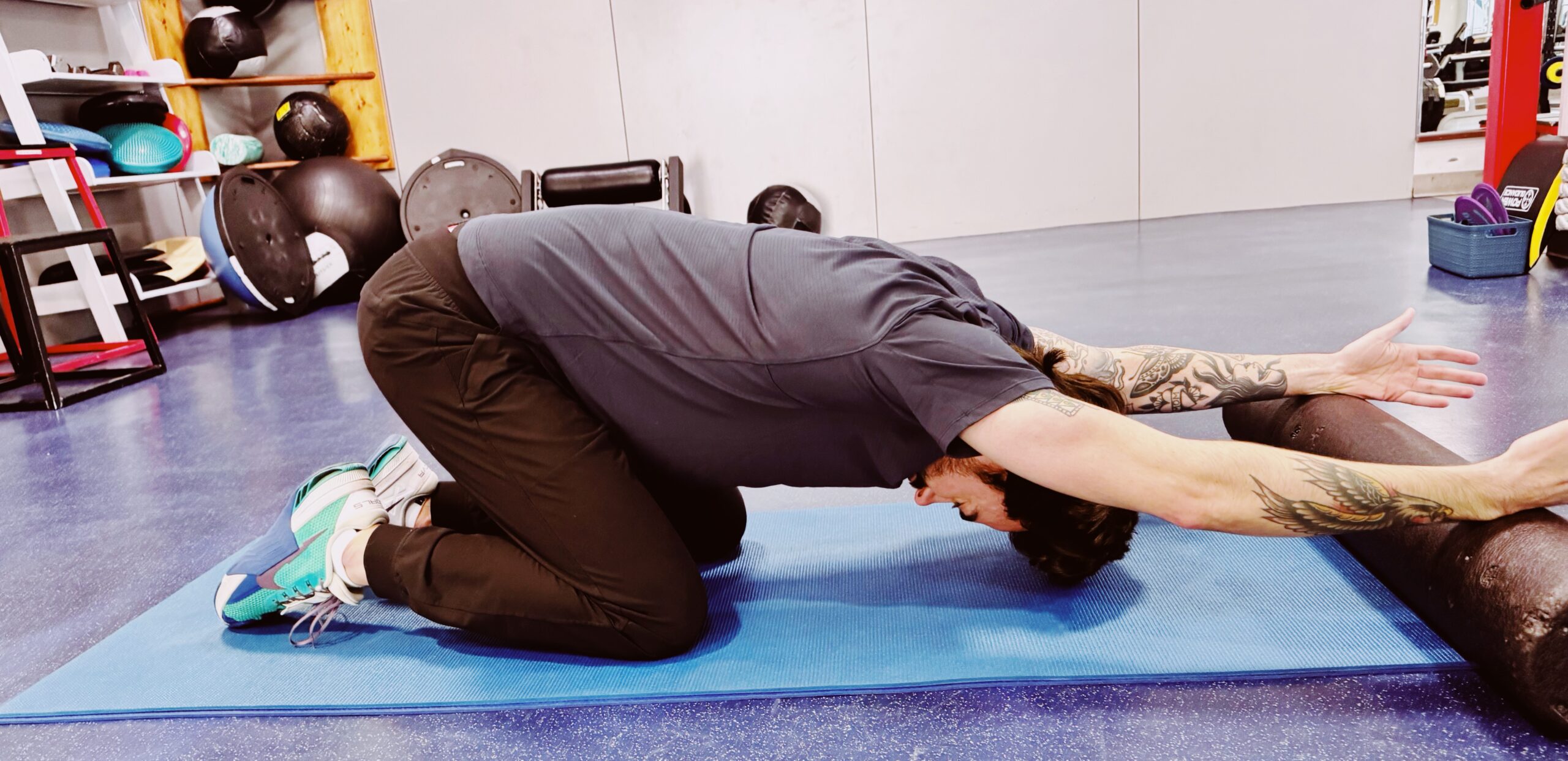
Prayer stretch

A woman is stretching on the floor with another person.
Prayer stretch . Perform prayer stretch immediately after you’ve finished foam rolling any sore spots on the upper back. Photo courtesy of Connie Aronson
  • Kneel on the floor with your hands on a roller.
  • Slowly extend your arms forward, letting your chest move toward the floor.
  • Relax in the stretch for 20-30 seconds and repeat two to three times.
  • If you don’t have a roller, walk your hands forward, fully extending your arms, allowing your head to rest gently on the floor.

Check out https://www.mtexpress.com/wood_river_journal/features/fitness-guru-6-key-daily-exercises-for-core-and-flexibility/article_41acafc6-df2f-11ef-b349-9fac77851449.html

Fitness Guru : Spare your spine with smart core core work

A woman is stretching on the floor with another person.
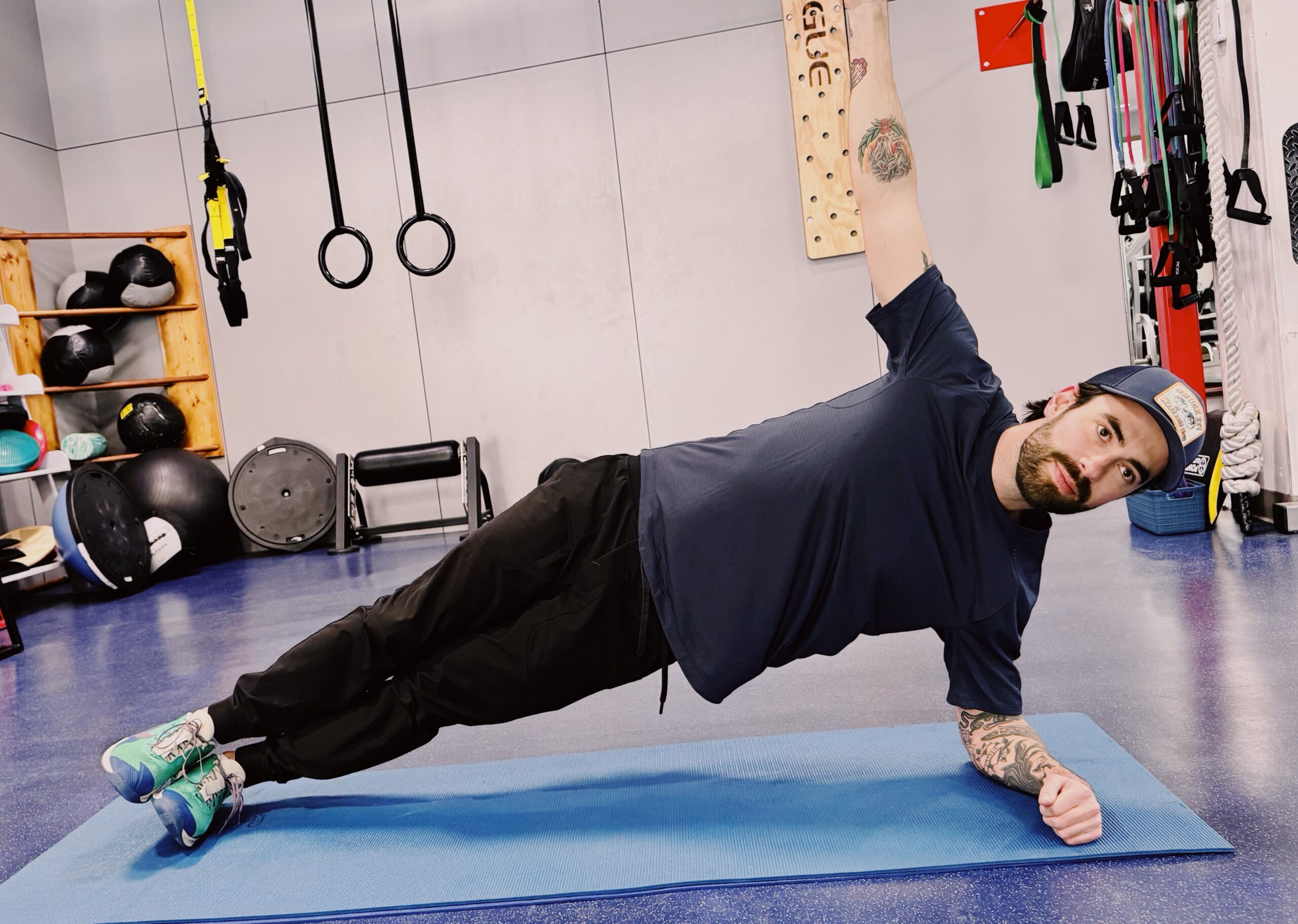
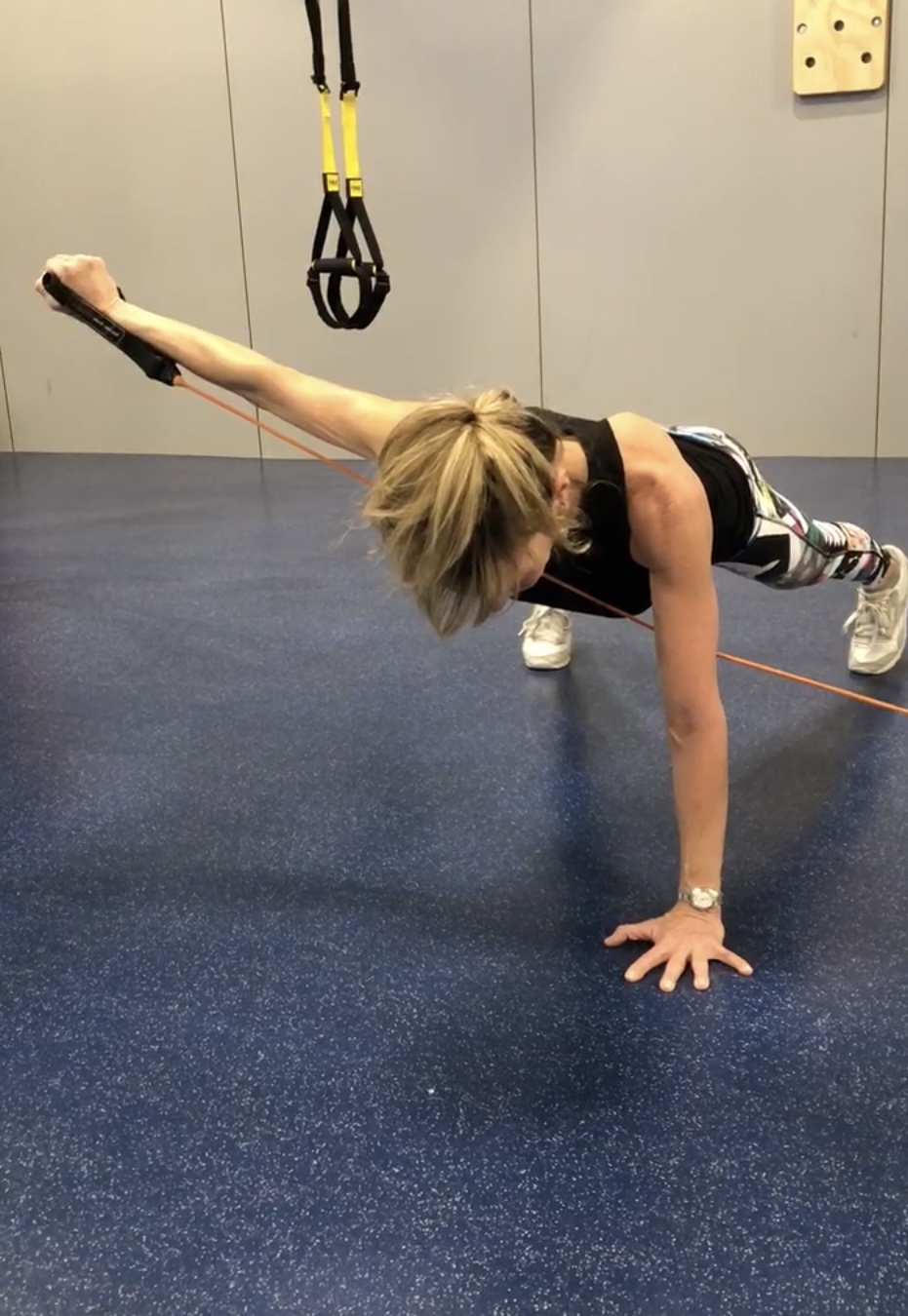
Plank with shoulder abduction- an example of a smart core exercise that spares the spine and creates “core stiffness”.

When you’re working on your core, choose exercises that enhance spine control and increase muscle endurance. Don’t make the mistake of using only exercises that move the spine, like sit-ups or roll-downs.

Social media is loaded with core workouts, but are mostly concerned with having ripped abs, and often ignore the real role of the core. Consider training the core differently than you might have been coached or are used to, in that you want to limit spine motion.

Your spine is very different from every other joint in your body, as it allows both movement and stability. The spine allows for tremendous mobility, as it has 33 individually stacked bones, each separated by a disc. But the spine is not a free-standing pillar. Rather, it is more like a radio tower composed of guy wires to stabilize it. The function of these guy wires is similar to that of the numerous muscles and ligaments that wrap around our spinal column: They provide tremendous strength and support, notes Dr. Stuart McGill, one of the most widely acclaimed spine researchers in the world.

Each muscle of your core, all 29 of them, must provide a certain amount of tension and stiffness for the spine to remain strong and resilient. It’s not that spine movement is bad, but we want to limit it when lifting or loading a flexed back. You’ll diminish chances of your spine buckling or getting injured by incorporating spine stiffness in your core work.

I’ve worked with numerous athletes who appear strong, yet when it comes to performing functional strength moves, their core foundation is actually quite weak. Elite athletes all over the world all rely on core stiffness as the center of power. Enhance your overall core strength and posture by sparing excess bending of the back, in your core work, and throughout the day.

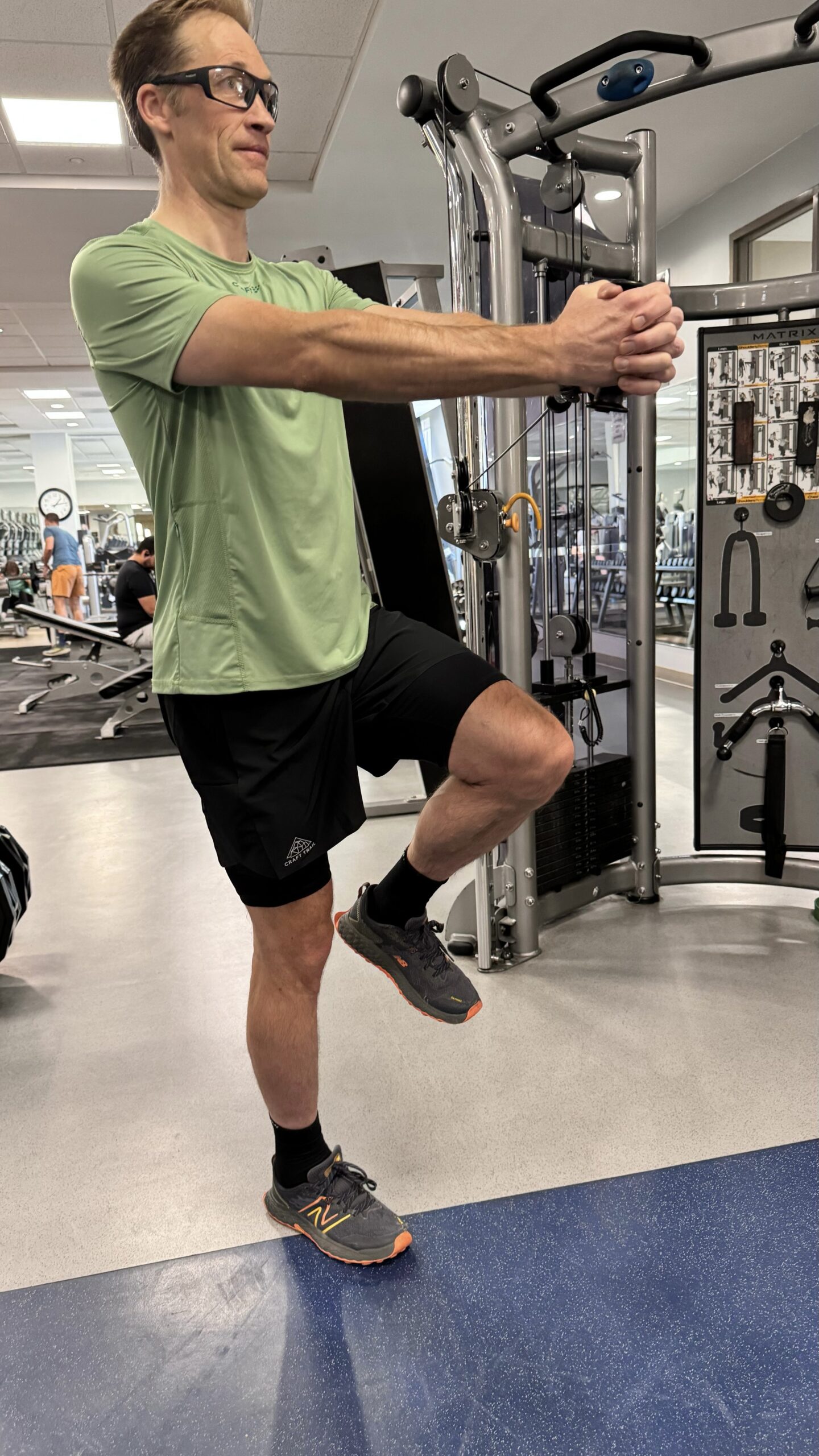
Pallof Press with isometric hold

The Pallof Press starts with a load held isometrically at arm’s length. In this move, using a cable machine, the arms extend and retract throughout the movement, gradually changing the length of the lever arm, then adds a 2- or 3-second isometric hold. A top-notch move, this exercise increases the involvement of the stabilizers of both the shoulders and the core. The Pallof press is an excellent example of multiplanar core movement, unlike the days of only training muscle isolation.

  • Preset the cable’s line of pull to shoulder’s height and set the weight to a reasonable resistance.
  • Stand on one leg, perpendicular to the cable line of pull.
  • Grasp the handle with both hands and hold in front of the chest.
  • Brace the core , depress the shoulders, and extend the hands in front of the body and back toward the body. 8-12 reps; adding a 2- to 3-second hold at full arm extension.
A woman is stretching on the floor with another person.
Pallof Press, using a cable machine; standing on one leg. There are many variables in this move, such as performing it in a kneeling position, or in a neutral stance.

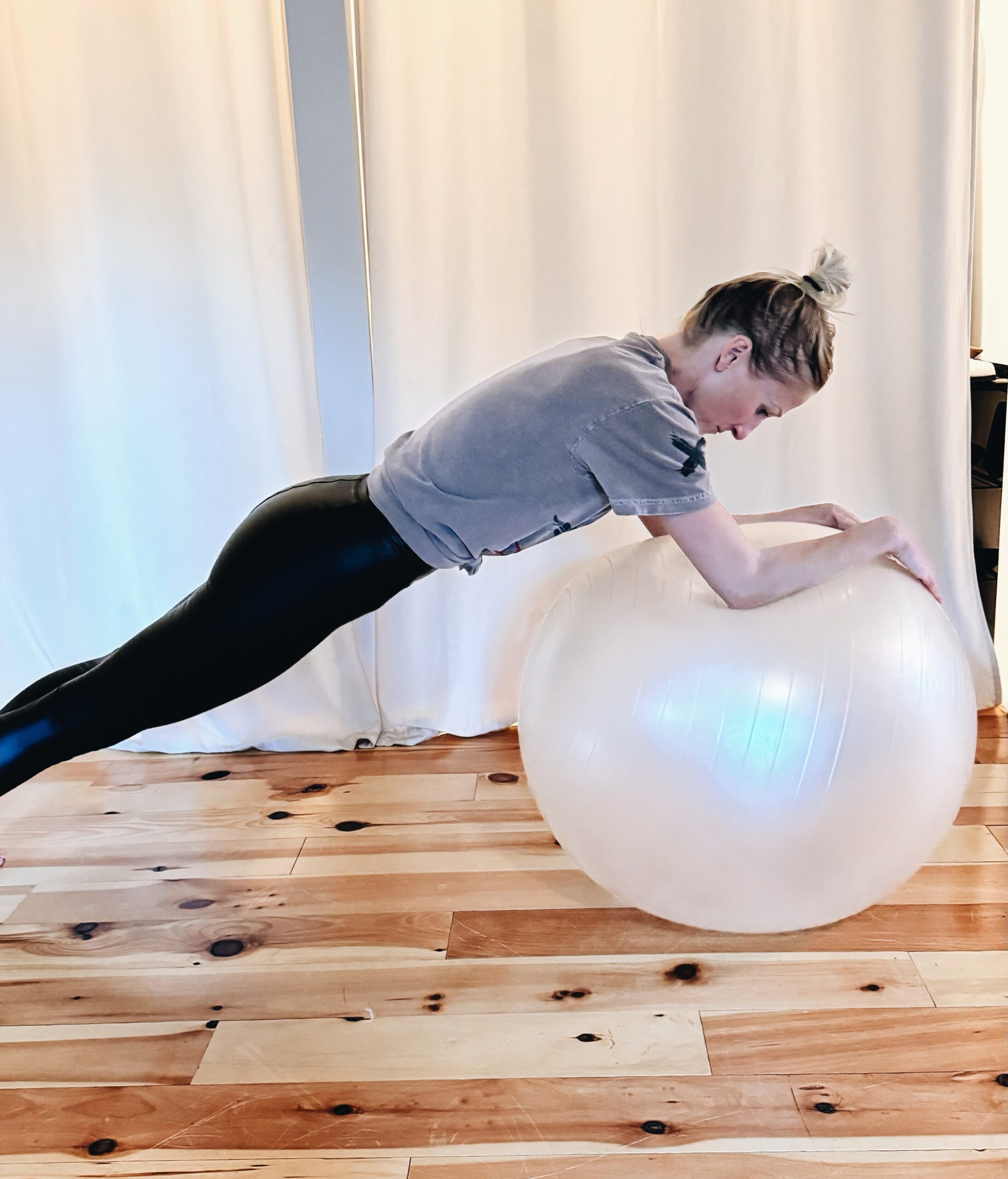
Stir the Pot

  • Start in a plank position, with your forearms securely resting on a physioball, hands flat.
  • Brace the core, and extend the arms out and away from you, and back again, as if you were stirring a big spoon in a pot.
  • Circle the ball in one direction for 30 seconds,
  • Rest, and circle the ball in the other direction for 30 seconds.
A woman is stretching on the floor with another person.
Stir the pot. Variables include making bigger circles with your arm drive, or “shaking” the ball back and forth.

Published in The Idaho Mountain Express, November 15, 2024

https://www.mtexpress.com/wood_river_journal/features/fitness-guru-spare-your-spine-with-smart-core-work/article_9970b89c-a208-11ef-a9be-5f37a072142a.html

Can you stand on one leg? Amazingly, it can affect longevity

If your core is strong, you typically have good balance. Standing on one leg engages the core, and that ability is an indicator of overall well-being.

One-leg balancing involves using all 29 muscles of the core, called the lumbo-pelvic hip complex. But did you know that standing on one leg for 10 seconds can predict longevity? A recent study shows that the link between balance and longevity is an indicator of survival among middle-aged and older adults. Those that couldn’t do this simple task faced a higher mortality risk over seven years, emphasizing the critical role of balance for our health as we age.

Losing your balance as you get older is no joke. Research has shown that the ability to stand on one foot drastically decreases after the age of 60, along with a rapid increase of falls and injury. The ability to stand on one leg is imperative for gait and function.

Practicing the single-leg balance also improves your proprioception, or your body’s awareness of its position in space. Many daily movements involve being on one foot, even briefly, such as climbing stairs, putting pants on and stepping into a tub. Having better balance means daily activities that require coordination don’t have to result in falls or missteps.

You might think standing on one leg is a simple movement, but the ankles, lower leg, thighs, hips and core work together to make it happen. Try the following moves to test your skills!

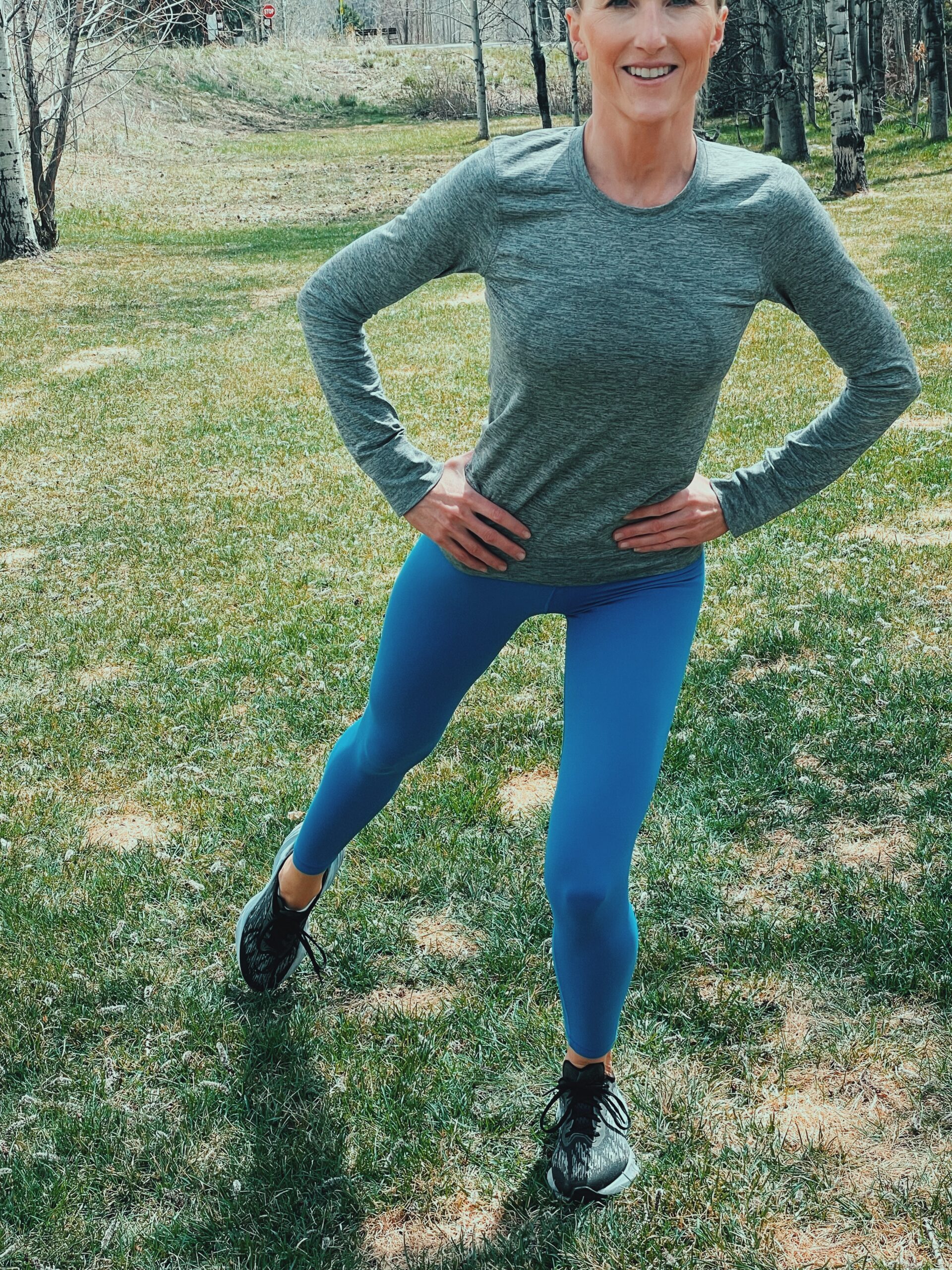
Single-leg balance

A woman is stretching on the floor with another person.
Single leg balance
Photo by Connie Aronson
  • Stand tall with your shoulders retracted. Feet are parallel and pointing forward. Hands are on the hips.
  • Brace the core, and flex the hips and knees slightly.
  • Lift one foot off the floor, keeping the toe of the raised foot pointed upward (dorsiflexed) and shift the center of your weight over the foot on the ground.
  • Maintain the slightly squat position for 10 seconds.
  • Return to the start; repeat on the opposite leg.
  • Tip: Keep the chin pushed back, with the head tilted neither forward or backward.

There are countless exercises to train balance. The following variation targets the gluteals and is a total body movement.

Single-leg balance and reach

A woman is stretching on the floor with another person.

Efficient movement requires appropriate levels of stability (standing on one leg), while simultaneously having appropriate levels of mobility (extending your leg outward). During this move you have to engage the stabilizers for good postural control as you move your leg. Because it is multiplanar (dynamic planes of motion), it correlates to movements in sports and daily activities.

  • Begin in a three-quarter squat, single-leg position as described for single-leg balance.
  • Maintaining balance, reach forward with the up leg and tap the floor with that foot.
  • Return back to neutral position.
  • Maintaining balance, reach out laterally with the same foot as far as possible, without compromising form. Tap the floor.
  • Return back to the start position.
  • Lastly, open your hip and reach to the side and behind you. Tap the floor and return to the starting position.
  • Continue with the same leg for four repetitions.
  • Repeat on the opposite leg.
A woman is stretching on the floor with another person.

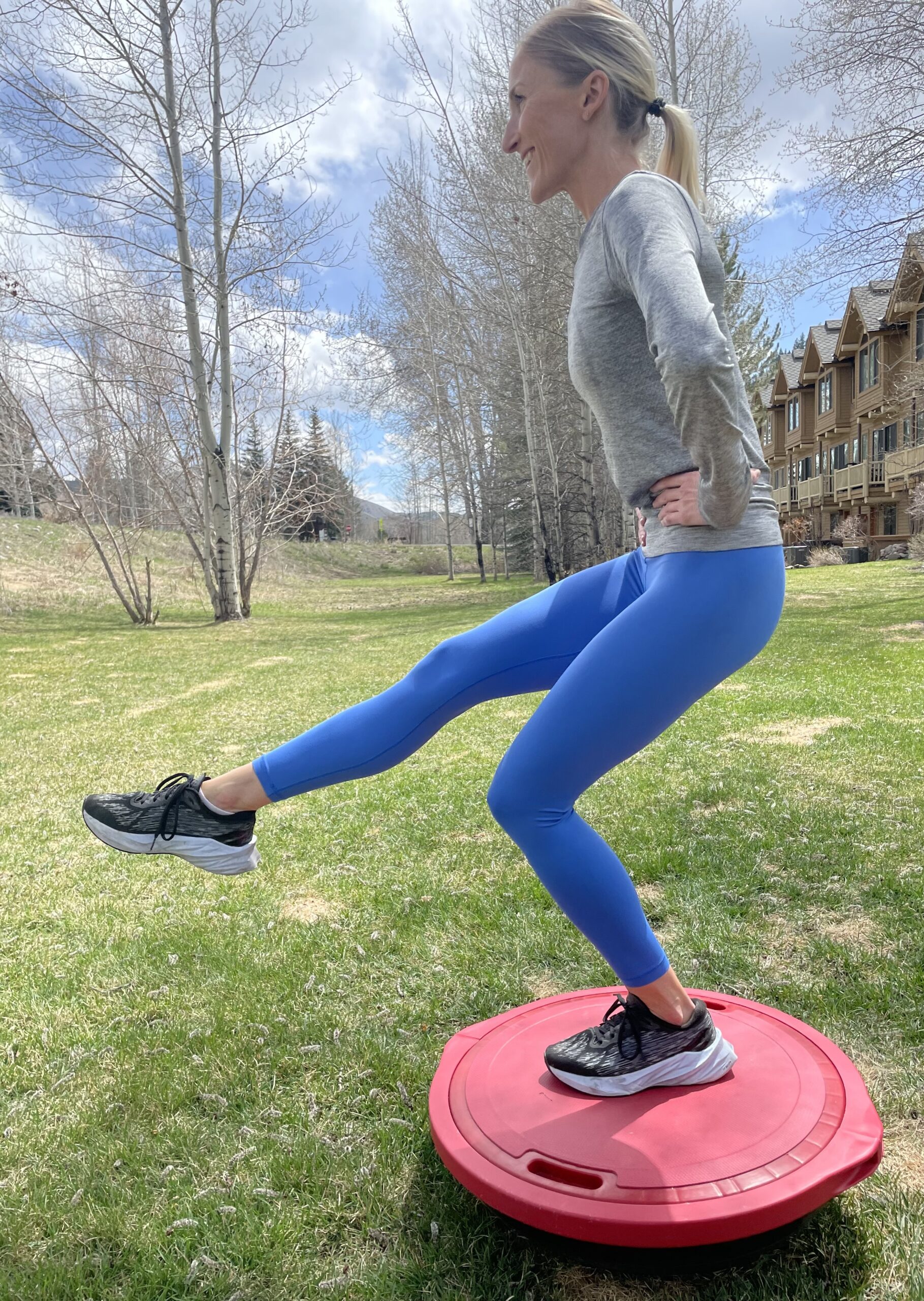
Single leg balance on an unstable surface ( BOSU )

*Tip-try to keep the flat side of the BOSU level. This means that your weight is distributed throughout your whole foot

https://www.mtexpress.com/wood_river_journal/features/can-you-stand-on-one-leg-amazingly-it-can-affect-longevity/article_e1ed9822-083b-11ef-a7f2-278d85a49540.html

Fitness Guru-How to find tight neck and shoulder relief

Featured

If your neck and shoulders are chronically tight, not only does it feel bad, but neck and shoulder limitations affect the biomechanics of your body.

Conversely, when you have balance and alignment in everyday life, you establish a great starting point for exercise. Rolling on balls has become an increasingly popular way to target areas of your body that are restricted and tight. Ball exercises can target areas in the neck and upper back that are otherwise not easily accessible. Using a ball specifically for these troublesome areas allows you to hit tender points and virtually melt them out of your body.

If you consider that your head weighs anywhere between 9 and 12 pounds, a forward position of the head can wreck havoc on your neck and shoulders. Consider that the weight of the head effectively doubles for every inch forward of its optimal alignment. Not only does this create neck and shoulder tension, but the position of the head and neck affects the alignment of the whole body.

Furthermore, internally-rotated arms, caused by rounded posture—a result of looking at a computer screen throughout the day—or elevated shoulders, increase the likelihood of upper back discomfort. Rolling a tennis ball along the neck and shoulders penetrates deep into the musculature, helps pull your head back into neutral and gives you gentle extension in your upper back.

Another benefit of ball rolling on your upper back is that you are creating a ball bearing between your body and the floor. This allows more extensive movement on the floor, so that your upper back will feel more spread out and relaxed.

Tennis ball on the shoulder blade

A woman is stretching on the floor with another person.
Tennis ball on top of the shoulder blade

Rejuvenate and mobilize the upper back and shoulder blades with tennis ball rolling. This exercise targets the muscles in the upper back that have become chronically lengthened by internally-rotated arms: the infraspinatus and teres minor and the trapezius muscles.

Lie on your back and place a tennis ball on top of your shoulder blade. Use a pillow under your neck for proper head alignment.

Hug the opposite shoulder in order to increase pressure on the ball.

Push with your feet to move the ball, finding a tender spot. Try to relax while breathing normally. Hold for 20-30 seconds.

Gently move your body up, down and sideways to find additional sore spots.

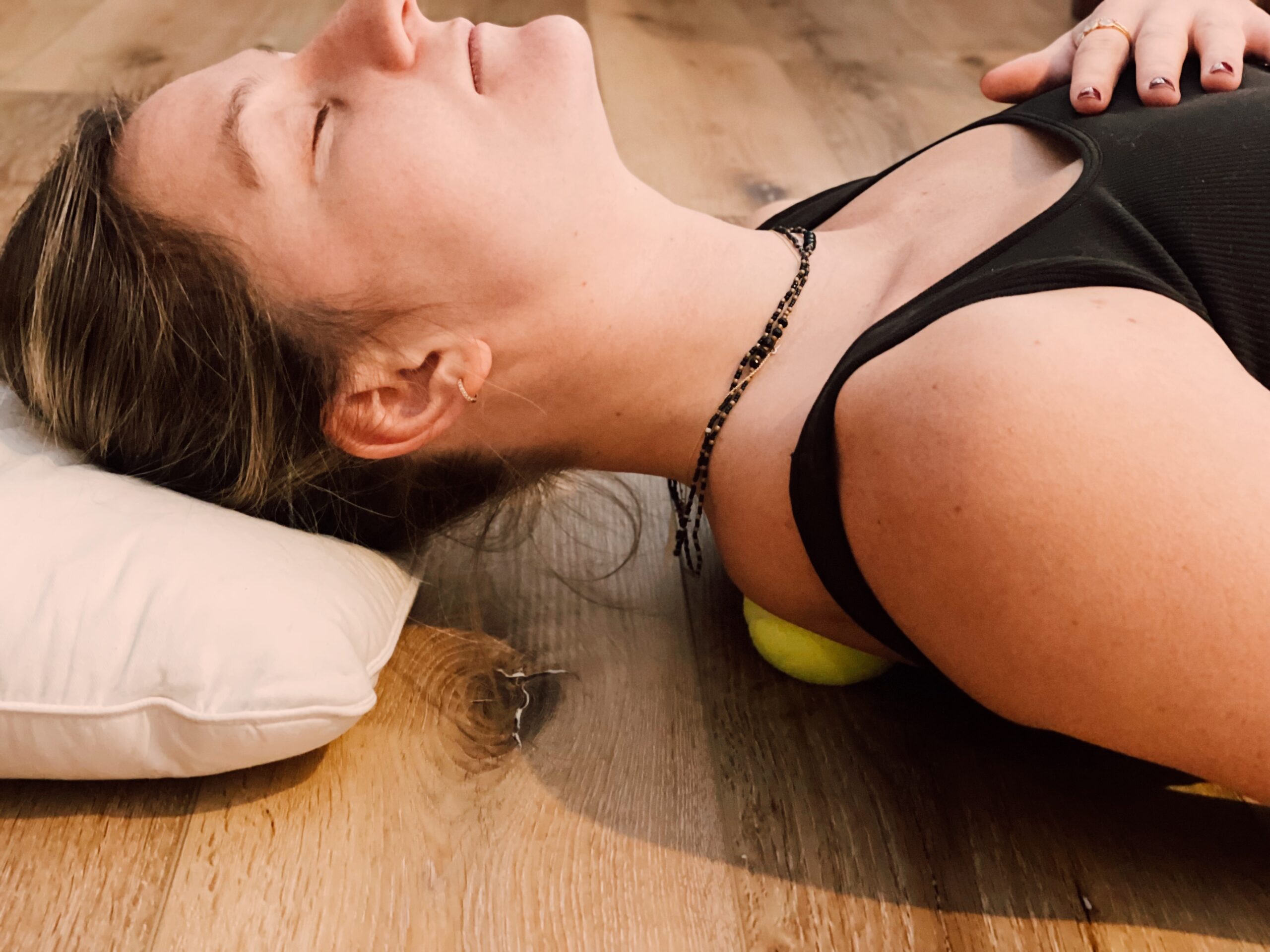
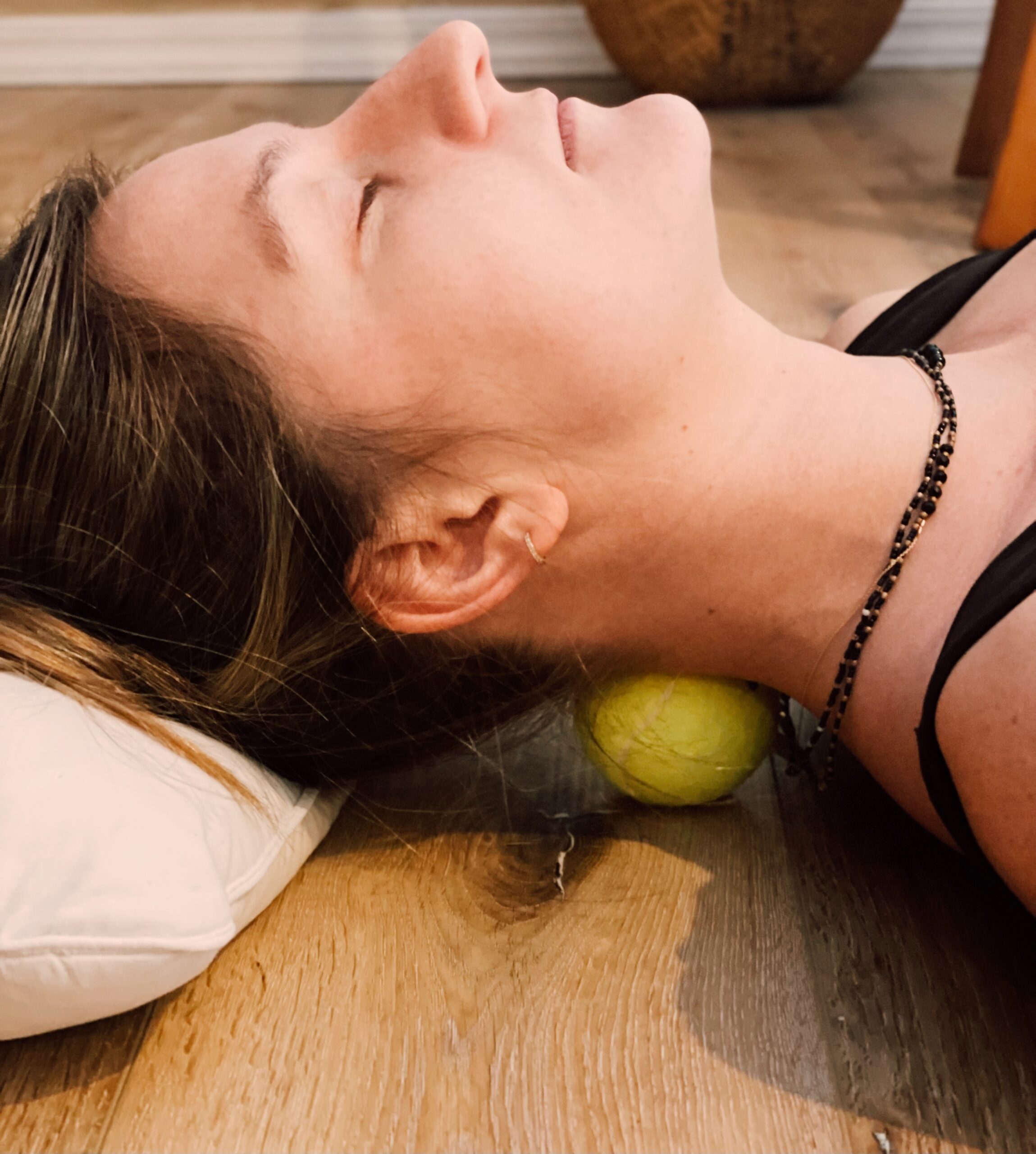
Tennis ball on the back of the neck

A woman is stretching on the floor with another person.
The “Tennis ball on the back of the neck” exercise can ne used to target specific tight or sore spots.

This exercise helps regenerate the tissues of the neck—so that the neck can flex more easily—and allows the head to move back into better alignment.

Lie on your back and place a tennis ball under your neck. Use a pillow or towels to support your head.

Apply pressure for 20-30 seconds at each sore spot, for a total of 2-3 minutes.

Next, perform the following stretch:

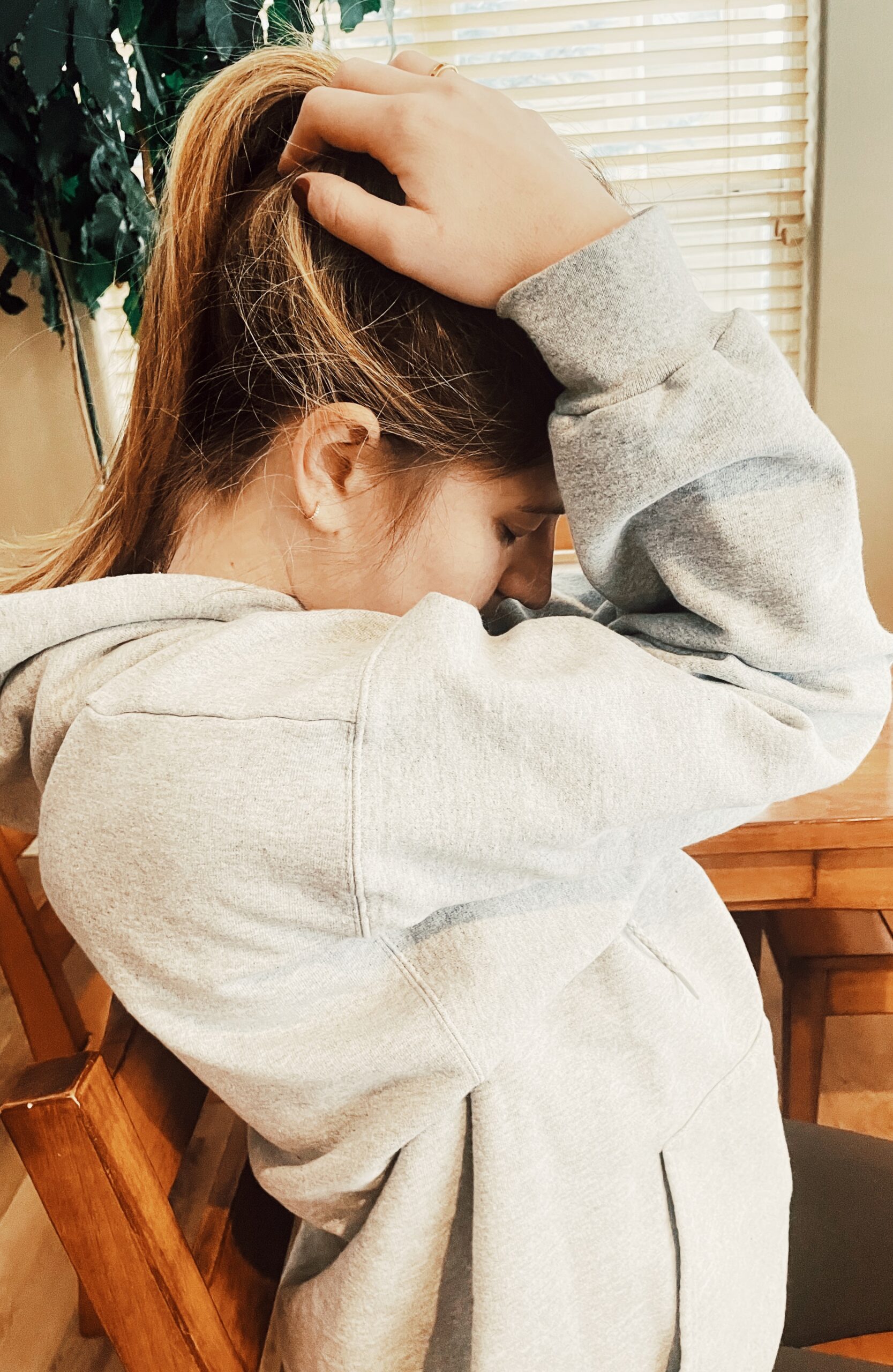
Back of neck stretch

A woman is stretching on the floor with another person.
Neck stretching can help provide relief from tension and pain.

The muscles of the neck have a natural curve to help maintain stability and maintain alignment over the body. When this curve is overstretched or exaggerated in any way, it can become quite uncomfortable. This stretch helps release tightness in the neck.

Place your hands on top of your head, keep your elbows together, and pull your shoulders down using your mid-back muscles.

Pull your chin to your chest to feel the stretch in the back of your neck and shoulders.

Hold for 20 seconds, and repeat the cycle three times.

Published in the Idaho Mountain Express Jan.5, 2024.

https://www.mtexpress.com/wood_river_journal/features/fitness-guru-how-to-find-tight-neck-and-shoulder-relief/article_07ce84f8-ab2a-11ee-a9ff-a7fbfeece97e.html

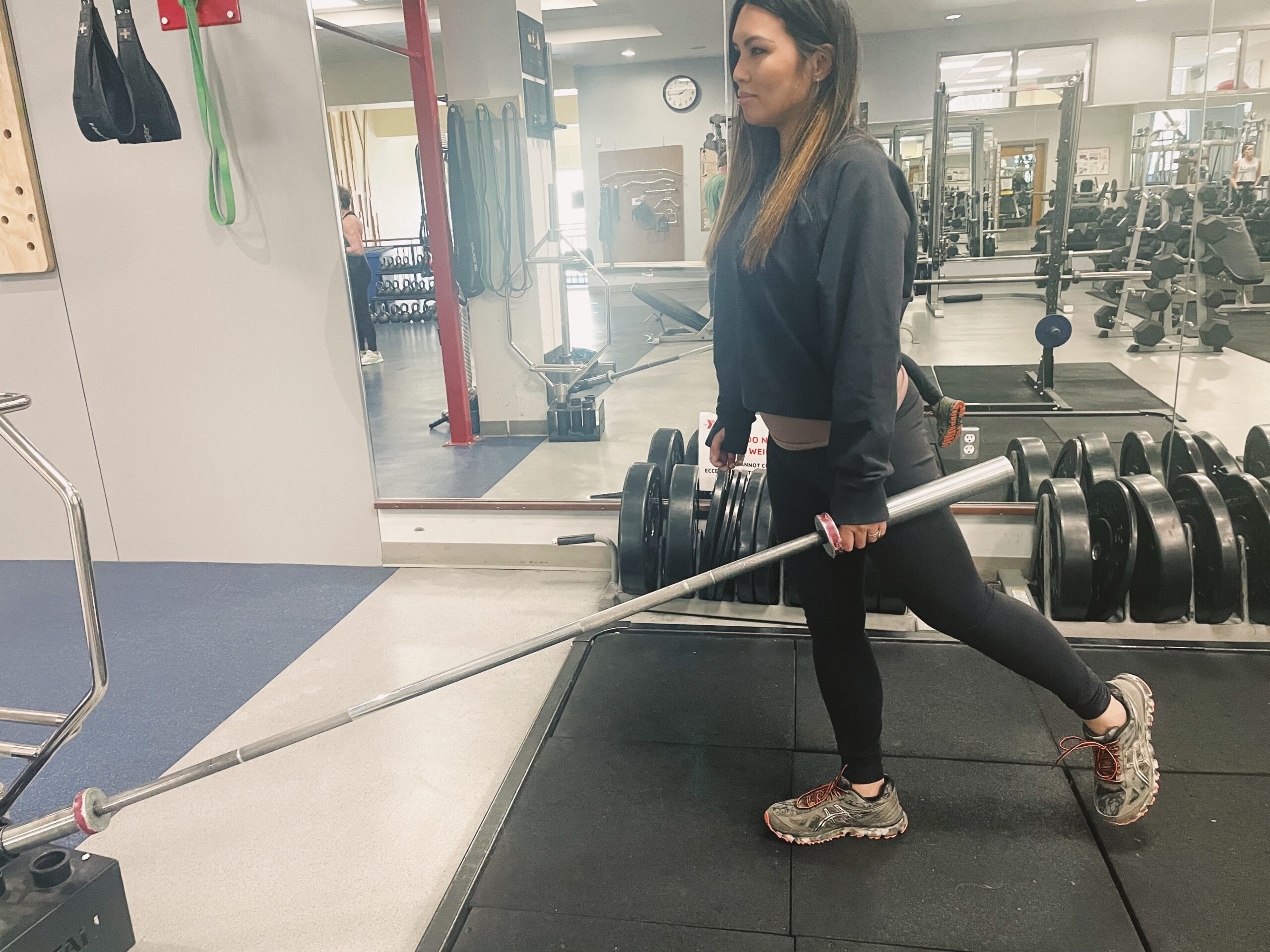
Train like an athlete with the landmine single-leg deadlift

A woman is stretching on the floor with another person.

You know you could always use a little extra strength. Strong legs, in particular, will help you excel in activities such as running, hiking, tennis and skiing.

More importantly, strength is a key component to avoiding injuries. If you are looking to up your game and need a leg and core strengthener, try the landmine single-leg Romanian deadlift. Don’t be intimidated by the name!

If we break it down, the base move—a deadlift—is a bend-and-lift movement. It’s simply picking up a stationary weight off the floor, with no momentum. The landmine single-leg Romanian deadlift will target your posterior chain; the hamstrings, gluteal muscles and the core. It’s a unilateral movement that builds stability, strength and power throughout the posterior chain. Performing it provides you a unique training effect because you combine elements of a free-weight and machine-based exercise. Furthermore, this particular lift will really activate the muscles located through the core to maintain proper form throughout the full range of motion.

Landmine deadlift is a type of deadlift that features a barbell placed in a Landmine attachment. This particular attachment safely anchors the barbell to the floor. If you don’t have access to one, simply wedge the barbell in the corner of two walls.

The biomechanics of so many sports involve the power and strength of one leg, (running, soccer and football) so developing unilateral strength is important. In reality, most time in daily life is spent on one leg or the other, with minimal time on both legs. Any time you perform a single leg exercise, the inherent instability is a wonderful training stimuli. A good coach or trainer uses varieties like this landmine squat not only to prevent staleness or overtraining in a program, but to encourage proper form. Train like an athlete, with proper alignment and stability of the spine in the deadlift and any other exercise you choose.

Starting position

A woman is stretching on the floor with another person.

Start in an upright position while holding the bar close to your body. Hold the hand opposite your planted foot at hip level.

Maintain a slight bend in the knee, and push through the heel of the standing foot.

Keep your shoulders relaxed, head and eyes up (or in line with your spine), and core engaged.

Lower the bar by flexing at your hips, as one leg lifts back up off the floor.

Tip: Focus on moving the rear leg and torso as one unit, maintaining postural control.

Return to the starting position

Once you reach the bottom of the move, quickly contract the glutes and hamstrings to drive the non-weight-bearing leg back to your starting position.

For newbies:

A woman is stretching on the floor with another person.

Start by practicing a traditional Romanian deadlift using a free weight. Make sure the hip doesn’t “open up†as the bar gets closer to the floor. 

https://www.mtexpress.com/wood_river_journal/features/train-like-an-athlete-with-the-landmine-single-leg-deadlift/article_166d1696-8f14-11ee-882e-53a650385d63.html

Break old habits to fix an achy back

Featured

Healing a sore back requires breaking some old habits and forming some new ones, says Dr. Stuart McGill. If you’re living with an achy back, getting your swagger back, as McGill, the most recognized spine researcher in the world, states, is different from a knee or shoulder problem. The knee and shoulder, particularly in the early stages of rehab, both do well with full range of motion exercises—think of arm circles. Fixing your low back pain is different and more nuanced, as your spine needs stability, not excess motion. This means that you don’t want excess curves in the spine. A goal for a healthy back is to maintain a neutral spine position during your prescribed program, as well as in daily activities.

The emphasis throughout the day and during workouts is to focus on proper spine stability, rather than more movement in the lower back. Do you slouch when you sit or have too much curve in your lower back while standing? Do you bend over to lift a large object, which is problematic for the posterior back disks? Poor movement habits, repeated throughout the day, can result in a sore back. Stretching and strengthening are important, but not the whole answer. A key to a healthy back is retraining how you position your back during activities, lessening excess spine curves.

Move mindfully with the abdominal brace

McGill likens the abdominal brace as a mild contraction of the abdominals as though you are preparing to get punched in the belly. But it’s not in extremes, like “sucking them in.†Like a dimmer switch gradually adjusts light levels in a room, the abdominal stiffness during your activities isn’t an on/off switch, but works in relationship to what you are doing. You would use less ab bracing during walking and more for lifting a heavy object, for example.

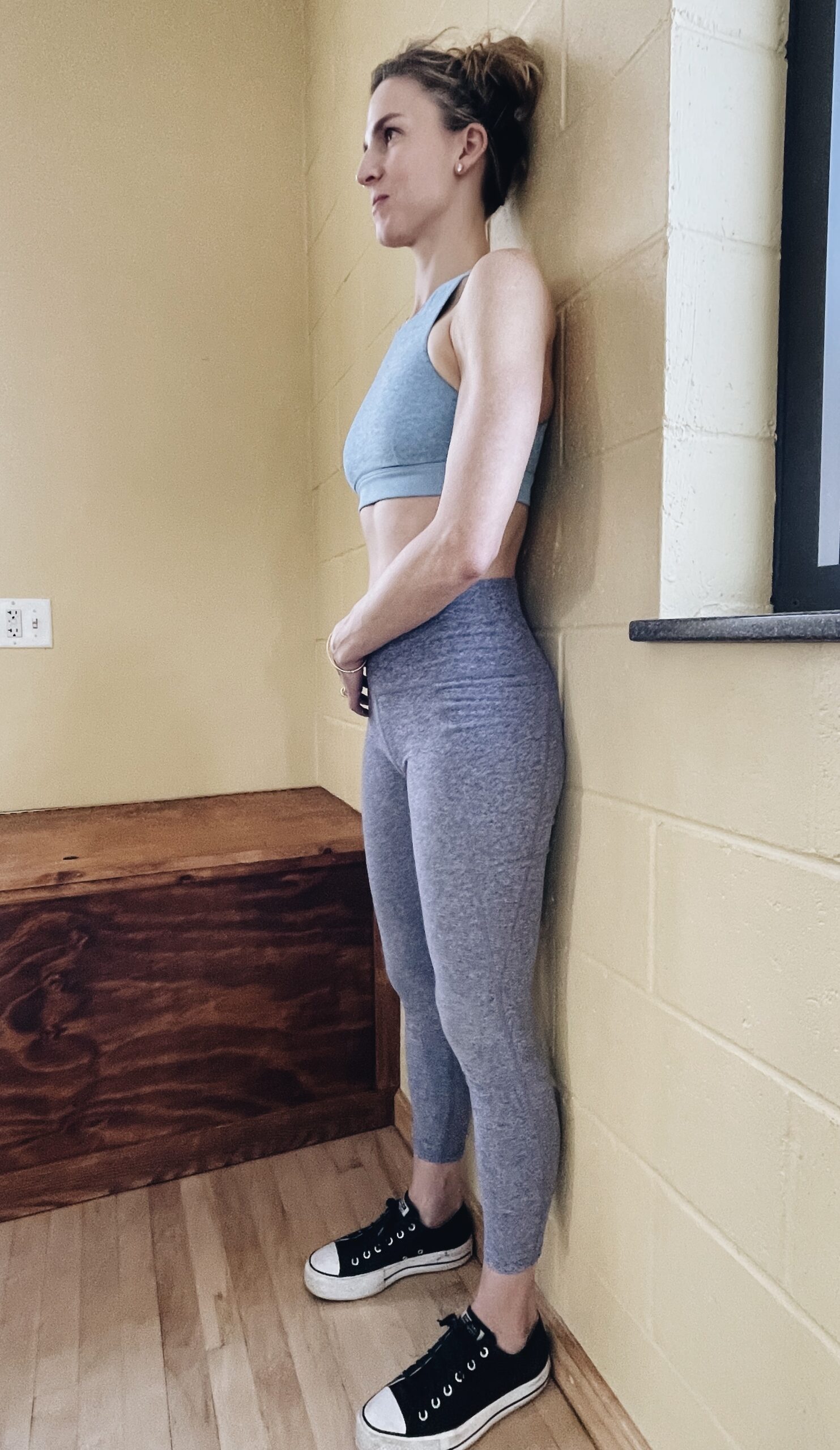
Wall test for excess low back curve

A woman is stretching on the floor with another person.
Photo by Connie Aronson
A woman is stretching on the floor with another person.
Try the wall test to check for excessive lumbar curve

The abdominal muscles connect your ribs to hips along the front and sides. When you use your abs, they pull the ribs and hips closer. When you stand up, for example, and don’t use your abs, you allow your ribs and hips to be too far apart, creating back sway. Over time, this can contribute to movement flaws, soft tissue stress, or disc problems.

If you can’t stand back with your back against a wall with your heels, hips, upper back and the back of your head lightly touching, without arching your back, you probably have weak abdominal muscles. Remember, our goal is to reduce the excess curves of the spine. Try this test at home.

• Stand with your back to a wall, with heels, butt, shoulders, and head comfortably touching the wall.

• Keep your feet in a neutral position and legs straight.

• Have a friend place a hand behind your low back, or use your hand.

Results: If you can put your whole hand behind the space in the lower back, you have too much back sway.

A woman is stretching on the floor with another person.
Ideally, if you know how to brace your core, you wouldn’t be able to put your hand behind lower back !

If you can only get the first knuckle in your hand behind the lower back, congratulations, you have excellent abdominal bracing skills!

https://www.mtexpress.com/wood_river_journal/features/fitness-guru-break-old-habits-to-fix-your-achy-back/article_b0a8b022-b336-11ed-9db5-5b0e14ef4dc1.html: Break old habits to fix an achy back

Quick fixes for your squats

Featured

A woman is stretching on the floor with another person.


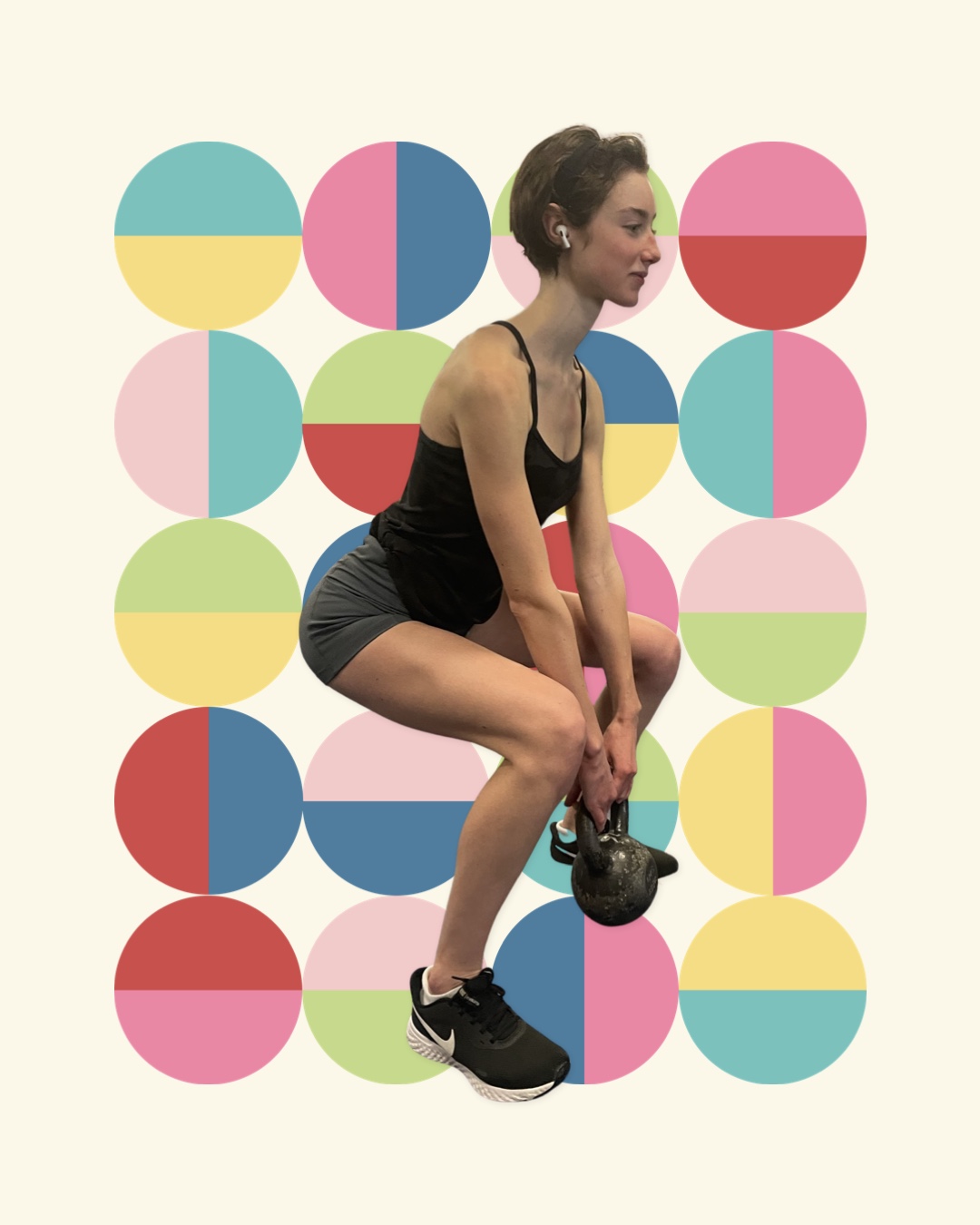
All winter sports require strong leg muscles, good balance and core support—all benefits of doing regular squats. The squat is one of the most common and basic exercises performed in strength training and offers a tremendous bang for your buck.

There are many reasons you should be doing squats, if you aren’t already doing so. Getting out of a car, climbing stairs, skate or ski, all depend on strong legs. Squats strengthen your leg muscles, especially the quadriceps, glutes, and core, burn calories and help prevent injury. The inner thigh, hamstrings and calves are all challenged. Additionally, the erector spinae serve as stabilizing muscles in a squat. They help strengthen your core and promote good posture.

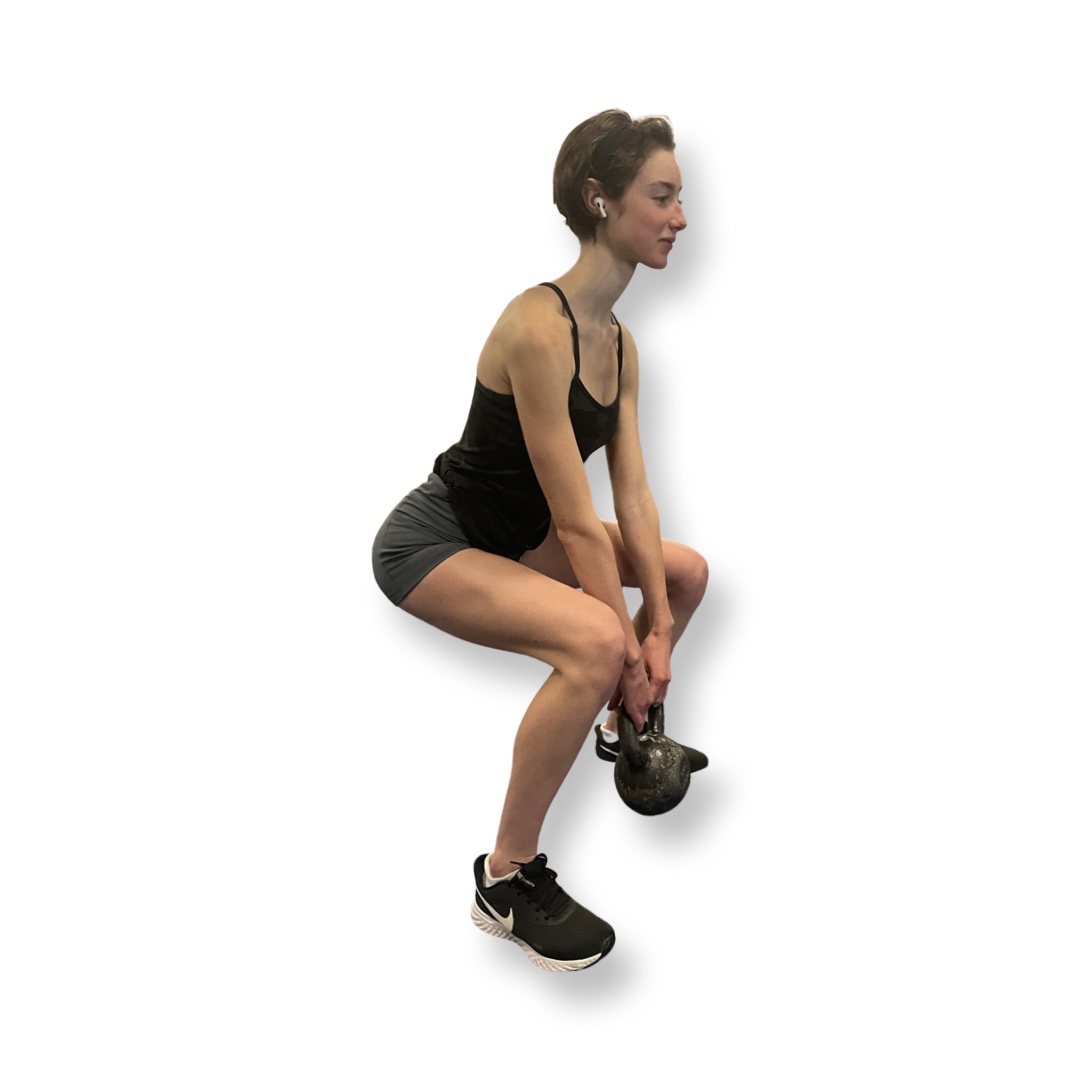
Form is so important in squats, and there are four common problems you often see; excessive forward lean, low back arching, low back rounding, or a lateral hip shift. Muscle imbalances, like tight hip flexors and calves, or weak core support, are often the culprits here. Lacking the mobility in your hips or ankles, forgetting to use your core muscles, or weak gluteal strength all contribute to problematic squats.

A fun and humbling test to improve your squat would look like this: Crawl on the floor for a few paces, rock forward, and without using your hands, stand up. This effectively demonstrates ankle and hip mobility, and core and lower body strength needed to transfer your weight up into standing. This drill exemplifies strength and mobility, important qualities in a squat.

Let’s look at two quick fixes to improve your squat technique.

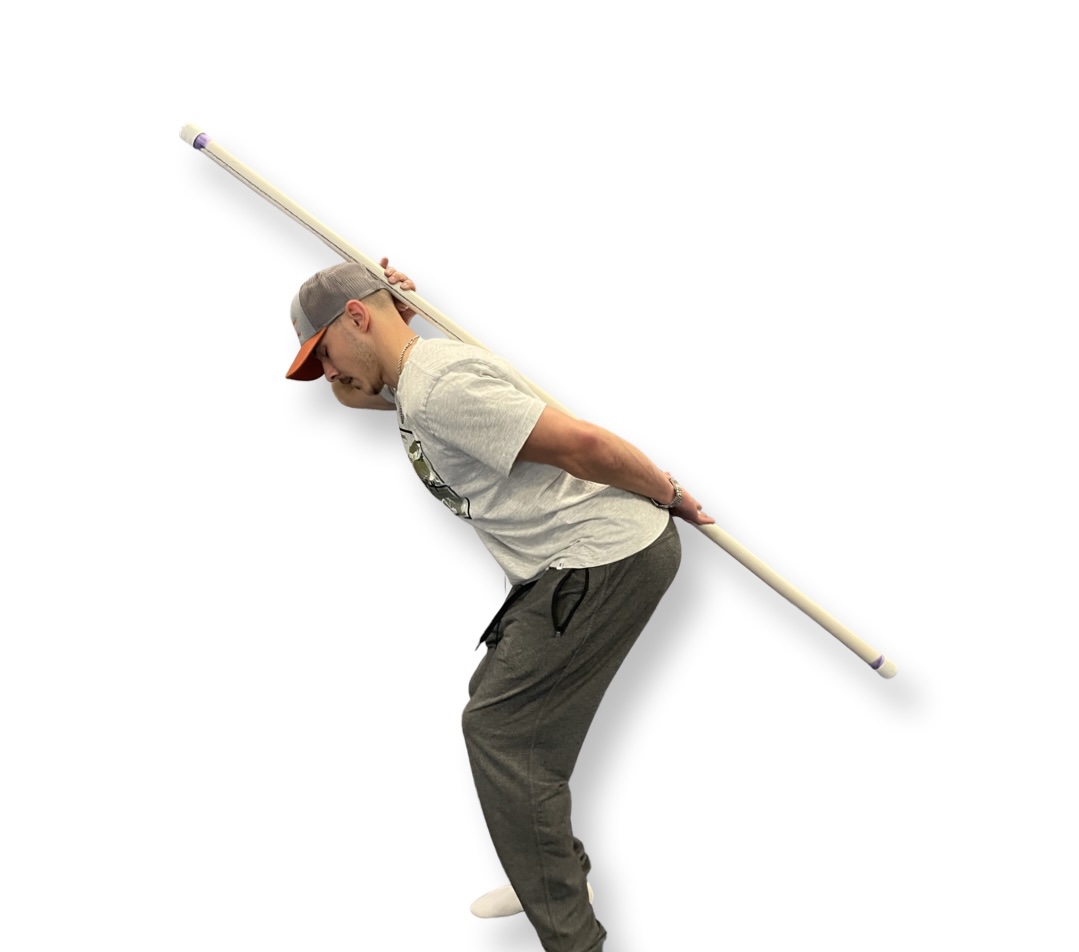
Hip hinge with Dowel

The hip hinge is one of the most important cues to think of when you perform a squat. Hinging at your hips, in any type of squat, saves the spine stress and strain, as the motion is focused on the hips, not the back. The dowel teaches you to maintain a tall spine, without the head falling forward, a common mistake. The dowel exercise also helps correct excessive forward lean, or the lower back rounding.

A woman is stretching on the floor with another person.
Hip hinge with dowel
Photo by Connie Aronson
A woman is stretching on the floor with another person.
The dowel must remain in contact with these 3 points throughout your hip hinge range.

• Place a dowel, or broom stick on the base of your skull, the thoracic spine –your upper back, and the sacrum.

• The dowel must remain in contact with these 3 points throughout your hip hinge range.

• Think of sinking your hips backwards, and return to start position.

• Your legs can be straight or a slight knee bend.

• Do 8 x, slowly.

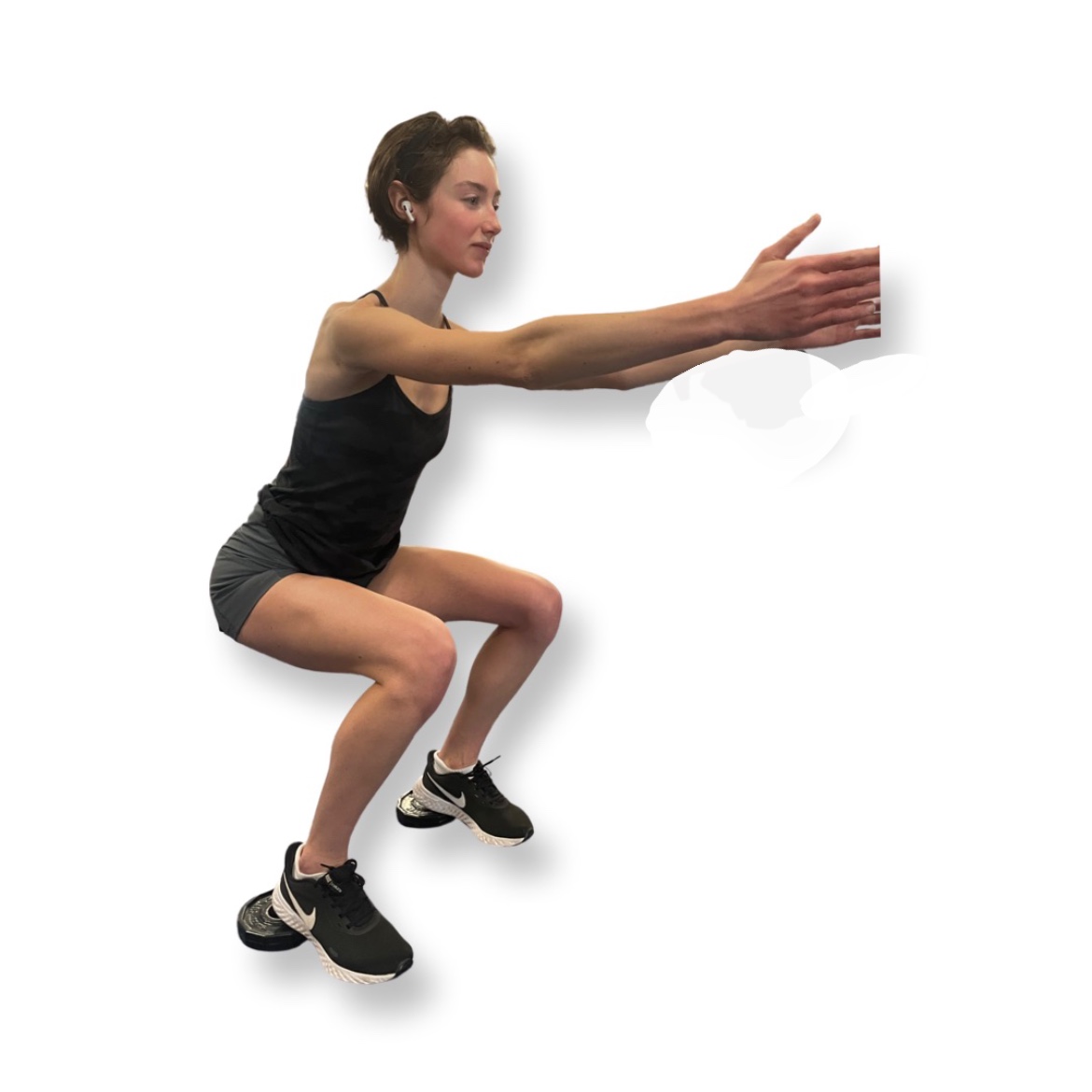
Squat with heel lifts

A woman is stretching on the floor with another person.

If your calves are tight, or you lack ankle mobility, try placing gym plates or a wedge under you heels in a squat. This will help you bend at the ankles (ankle dorsiflexion) an action that brings the shin over the foot. Improving your ankle flexibility will also help you flex into your ski turn more dynamically!

A woman is stretching on the floor with another person.
Squat with weight
Photo by Connie Aronson
A woman is stretching on the floor with another person.
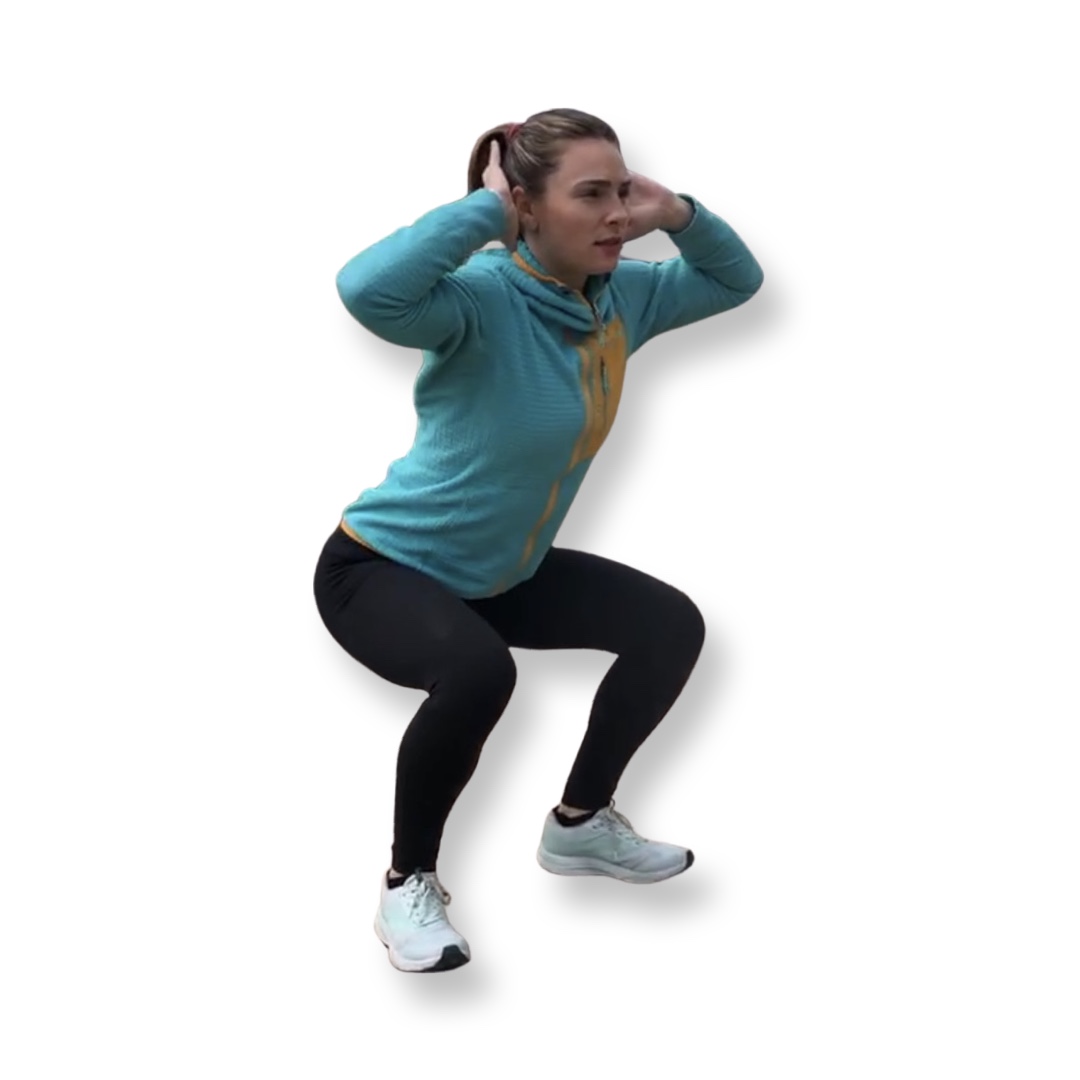
Squat form: Squat down by bending hips back while allowing knees to bend forward, keeping back straight, knees in line with toes. Descend until thighs are parallel or just past parallel. To rise back up, contract glutes and pressure through whole foot. 
A woman is stretching on the floor with another person.
Perfect squat form ( with overhead arms )

https://www.mtexpress.com/wood_river_journal/fitness-guru-quick-fixes-for-your-squats/article_118dc396-9cdf-11ed-ac22-6babf844dcdc.html?fbclid=IwAR2w_aB0sjZrmDfKmS_PnBv4Rlz5oPKQ99yz3u1YrxdOMyVse5pkaAIcRbc