Welcome

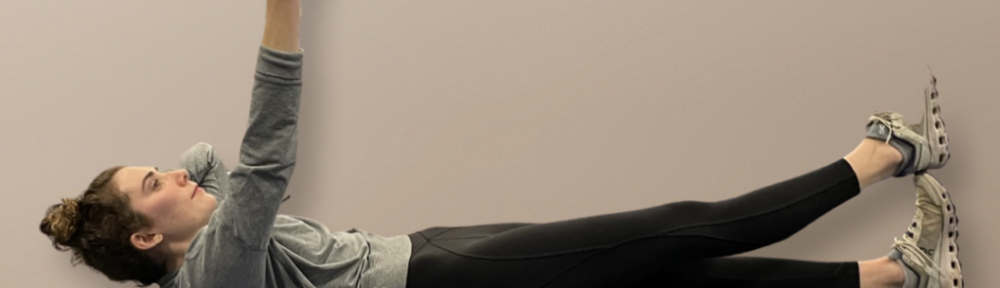
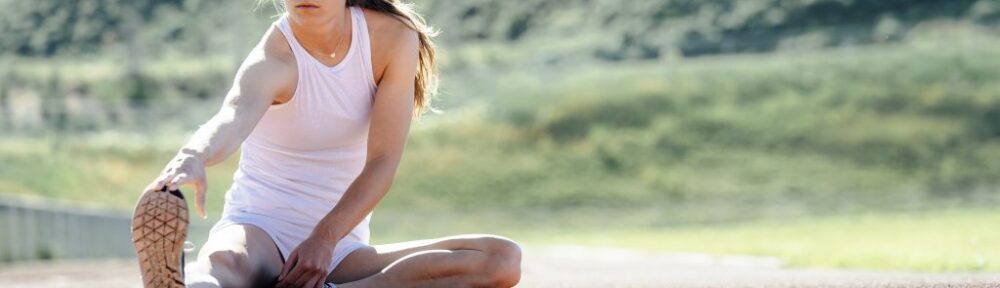
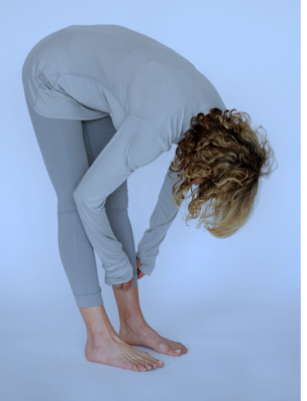
A woman is stretching on the floor with another person.

I learned to love the journey, not the destination. I learned that this is not a dress rehearsal, and that today is the only guarantee you get.-Anna Quindlen
Credit: SQNSport

Connie Aronson 

I have been coaching and helping people improve their fitness for over three decades. My passion is to help you become stronger for activities you love, and to guide you towards your specific goals. If you have recurring muscle and joint pain, I can help you identify musculoskeletal imbalances that are either causing or contributing to your pain, so you can enjoy life to the fullest.

I work with top-level athletes in the sports-oriented town of Sun Valley, and regular amazing folks. I also know from experience the challenges we face when rebounding from injuries, surgeries or chronic conditions.

In 2004 I was struck with spondylolisthesis, a painful slipped disc in my lower back. I was living with chronic pain. After undergoing surgery to fix my back I continued to focus and expand my education on the lumbo-pelvic-hip complex, and how to manage and prevent back pain. Flash forward to the present, I am now a recognized Corrective Exercise Specialist in The BioMechanics Method ( TBMM-CES ).

Since 2000 I have also studied yoga with world-renowned yoga teachers, so if you train with me, you will surely do some yoga. Balance is huge for people over 40. So is the necessity of bringing together muscles and mind to move more efficiently, to relax when we need to relax, and to be powerful when power is needed. For example, have you ever noticed that a great skier’s upper body is always relaxed?

When you first begin working with me, you will undergo a comprehensive musculoskeletal assessment. Results from this assessment then guides us to understand what muscles and other soft tissue are contributing to your condition. Each program is designed specifically for your needs and goals. We’ll look at any musculoskeletal imbalances and design a corrective exercise program to help you move better, if that’s what you are more interested in. If your goal is weight loss, we incorporate full body moves with high metabolic cost, as I want your time working out to be maximized.  Whether your goal is fat loss, feeling better, or returning to your favorite sport, I will bring abundant enthusiasm and the best programming to design your workout. ( If you train with me I can guarantee you that you will not be sore on the first day of ski season.)

As a former junior ski racer, my greatest passion skiing. I love to run, bike, practice yoga, and rock climb, taking me to the cliffs of the Greek Islands, Sardinia, Italy, Spain, Mexico and Thailand. Hiking with our Golden Retriever, Izzy, is also high on my list of things I love to do.

Here is a list of my credentials:

  • Corrective Exercise Specialist in The Biomechanics Method ( TBMM-CES ), the industry’s highest-rated CES credential.
  • American College of Sports Medicine ( ACSM ) Certified Exercise Physiologist 
  • American Council on Exercise (gold level)
  • Cooper Institute for Aerobics Research
  • Active Isolated Strengthening Therapist (a method of fascia release used to facilitate stretching)
  •  International Dance Exercise Association Elite Level Personal Trainer  ( the highest level of achievement in the personal fitness training industry)
  • TRX Suspension training coach.
  • Author of the Essential Core Poster ( click on link front page ! )
  • 30 year author of a popular monthly health and fitness column ” Fitness Guru ” for the Idaho Mountain Express
  • Yoga training with www.judithlasater.com, www.seanecorn.com, and www.erich schiffman.com
  • YMCA Group Exercise Leader
A woman is stretching on the floor with another person.

Recent Posts

Ski Strong This Season: Don’t Let the Holidays Slow You Down

During the holidays, the priority should be to maintance training.

For alpine and nordic skiers, the holiday season arrives just as winter routines are taking shape—when consistency begins to matter more than ambition. With travel, packed schedules, and parties, structured training is often the first thing to disappear. It’s tempting to pause workouts and rely on skiing alone. Sports science suggests that approach comes at a cost.

Consistency, even at reduced volume, is one of the strongest predictors of in-season performance. Strength, power, and aerobic capacity begin to decline sooner than many athletes expect. Research shows minor dips in neuromuscular performance can occur within two weeks of reduced training. For alpine skiers, this can mean decreased force production, earlier fatigue, and increased injury risk. For nordic skiers, reductions in strength and aerobic efficiency can compromise technique and late-race performance. The solution isn’t training harder—it’s not skipping your routine.

During the holidays, the priority should be maintenance training. Studies consistently show that maintaining intensity while reducing volume—often to 30–40 percent of normal load—is sufficient to preserve strength and power. Two short strength sessions per week, focused on the lower body, trunk, and upper-body pulling, can support both disciplines. These sessions don’t need to be long or elaborate; they just need to happen.

Skiing provides an important sport-specific stimulus, but it doesn’t fully replace structured training. Alpine skiing places repeated eccentric stress on the quadriceps, which builds endurance but doesn’t fully preserve maximal strength.  Nordic skiing, while highly aerobic, often lacks the strength stimulus needed to preserve upper-body power and hip stability. Skipping off-snow training can leave athletes feeling strong early in the season but struggling as fatigue accumulates.

Consistency also supports movement quality. Staying  strong improves coordination, balance, and force transfer—key elements for edge control in alpine skiing and technique durability in nordic skiing. These qualities fade quickly when training becomes sporadic.

Recovery also matters. Active recovery exercises, like stretching, foam rolling, and easy spinning  help you recover with less soreness. Sleep and fueling play a role as well; poor sleep and under-fueling increase perceived effort and make workouts easier to skip. Regular meals, adequate carbohydrates, and hydration—especially in cold environments—support energy and training quality.

The holiday season is also a time for gratitude. Being able to train and ski through winter reflects robust bodies worth taking care of. You don’t need long workouts—just consistency. Aim for two short strength sessions each week. Keep intensity up and volume manageable. Fuel regularly, hydrate, and protect your sleep when you can. Do the basics well. Small, steady efforts now preserve performance and help you move through the rest of the season feeling strong and resilient on snow.

Connie Aronson is an Exercise Physiologist and Corrective Exercise Specialist ( TMMB-CES ) Visit her at the Y, www.conniearonson.com , and Instagram @Josie_the golden 

  1. Fitness Guru: The posture shift that changes everything Comments Off on Fitness Guru: The posture shift that changes everything
  2. Move better, feel better: the power of myofascial release Comments Off on Move better, feel better: the power of myofascial release
  3. Why Your Triceps Routine May Be Holding You Back Comments Off on Why Your Triceps Routine May Be Holding You Back
  4. Mountain Flow:Why Outdoor Yoga in the Summer Offers a Reset Comments Off on Mountain Flow:Why Outdoor Yoga in the Summer Offers a Reset
  5. Why you need anti-rotational moves 1 Reply
  6. Supercharge your core- The bird-dog meets the pilates reformer, no springs attached Comments Off on Supercharge your core- The bird-dog meets the pilates reformer, no springs attached
  7. Fitness Guru: 6 key daily exercises for core and flexibility Comments Off on Fitness Guru: 6 key daily exercises for core and flexibility
  8. Fitness Guru : Spare your spine with smart core core work Comments Off on Fitness Guru : Spare your spine with smart core core work
  9. Get flexible with the TRX deep squat Comments Off on Get flexible with the TRX deep squat