
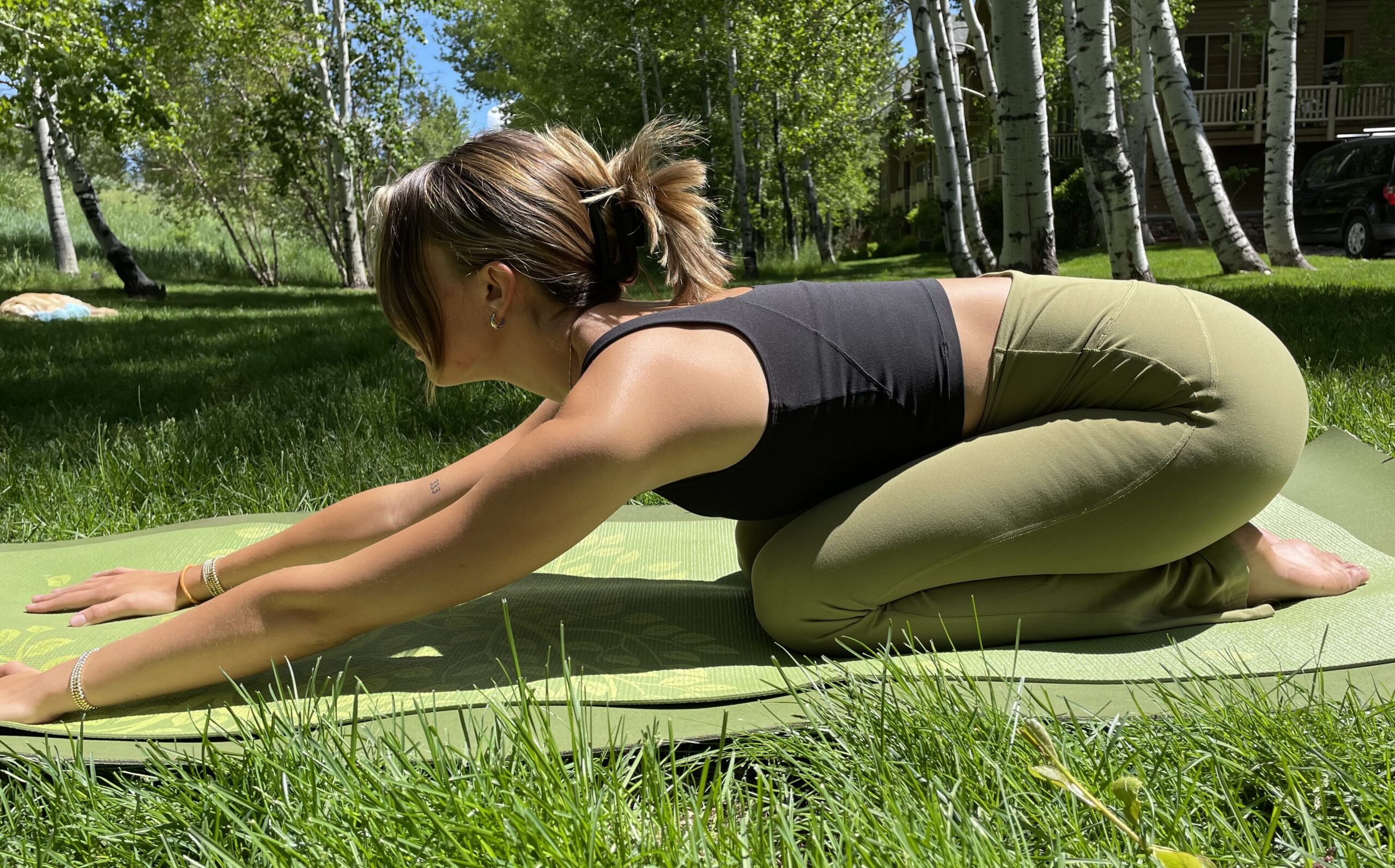
As summer takes hold in our mountain town, it’s the perfect time to bring your yoga practice outside. Whether you’re stretching in your backyard, on the porch, or in a quiet clearing, being in nature shifts how your body and mind respond. The aspen-filtered light, open air, and uneven ground offer something the studio can’t: a reset.
Here’s why practicing yoga outdoors—especially in the mountains—offers something new:
1. Fresh Air, Clear Mind
The crisp mountain air is the perfect backdrop for a yoga practice. Every breath you take fills your body with oxygen, and boosts energy. Whether you’re starting your day with a slow flow or unwinding with a sitting meditation, the natural environment around you amplifies the calming benefits of breathwork. The power of the outdoors isn’t just in what you can see—it’s in how you feel when you’re breathing deeply in a natural, open space.
2. Ground Your Practice, Strengthen Your Body
The real benefit of practicing yoga outdoors comes from the terrain. Grass, or irregular terrain naturally challenge your balance. Unlike a studio floor, uneven ground prompts your body to engage stabilizing muscles.
For example, in standing poses, yoga teaches you to spread your toes and distribute your weight evenly between the ball of each foot and the heels. Your feet contain 26 bones, 33 joints, and over 100 muscles, tendons, and ligaments. Standing on uneven ground activates small muscles in your feet, ankles, and core, strengthening your lower body, improving your balance, and enhancing proprioception (your body’s awareness of its position in space). This makes every posture feel more engaged and adds depth to your practice.
3. Posture, Flexibility, and Stress Relief
Yoga improves posture, flexibility, and overall strength, and doing it outdoors heightens those benefits. Without mirrors or studio distractions, you rely on your body’s natural feedback to guide your alignment. From standing tall in Tadasana to stretching in Downward Dog under the open sky, practicing in nature encourages a deeper connection to your body.
The benefits go beyond the physical, too. Yoga incorporates diaphragmatic breathing, relaxation, and imagery techniques—all effective tools for managing stress. Studies show that simple stretching and breathing exercises can reduce anxiety and promote emotional well-being, making outdoor yoga a great tool for mental and emotional health.
4. Focus on How You Feel, Not How You Look
In mountain towns, there’s often a strong focus on fitness, and performance. But yoga offers a different kind of opportunity—it’s not about pushing your limits or hitting new milestones. It’s about tuning in to your body. Outdoors, without mirrors or the usual pressures, you can focus less on how things look and more on how they feel. Nature reminds us that it’s okay to simply be present.
5. The Mountains as Your Sanctuary
Practicing yoga outside is a grounding experience, both physically and mentally. The fresh air, open space, and connection to nature create an atmosphere that encourages stillness, focus, and reflection.
This summer, take your mat outdoors. Whether it’s by the river, or just in your backyard, the mountains can be the perfect backdrop for your practice. Let the natural world offer you the quiet and space needed for a reset.
Published in The Idaho Mountain Express, August 1, 2025.