Thank you for visiting conniearonson.com and your interest in Essential Core.
If you have any questions about your training, or any general inquiries, please feel free to contact me at connieessentialcore@gmail.com. I check my email daily and you should hear back from me soon!
Looking forward to hearing from you! Photo ||SQNsport || Tal Roberts Photography
The gluteal muscles are large, powerful muscles that cross the hip joint and play a critical role in nearly all lower-body movement. The gluteus maximus is the largest of these muscles and is responsible for extending and laterally rotating the … Continue reading →
Daily habits can be powerful. Routine anchors us and builds resilience and health. Adding a routine or mini-structure to your day so that fewer decisions need to be made is one way to succeed. When it comes to your health, … Continue reading →
If your neck and shoulders are chronically tight, not only does it feel bad, but neck and shoulder limitations affect the biomechanics of your body. Conversely, when you have balance and alignment in everyday life, you establish a great starting … Continue reading →
Can you think of a time when your problems seemed insurmountable? In a world where our happiness is so crucial to our overall well-being, behavioral tools can be helpful. If you’re struggling with goals like eating better, sleeping or exercising … Continue reading →
We all want to enjoy a healthy work-life balance and have more energy throughout the day. Regardless of your age, the habits of daily living become more important, whether you are in your 40s or 60s. The body, however, has … Continue reading →
Healing a sore back requires breaking some old habits and forming some new ones, says Dr. Stuart McGill. If you’re living with an achy back, getting your swagger back, as McGill, the most recognized spine researcher in the world, states, … Continue reading →
All winter sports require strong leg muscles, good balance and core support—all benefits of doing regular squats. The squat is one of the most common and basic exercises performed in strength training and offers a tremendous bang for your buck. … Continue reading →
Good habits contribute to optimum health. When it comes to your health, preventing injuries in any sport or activity you enjoy is crucial. No one likes being injured. With a New Year fast approaching, here are five injury-preventing moves to … Continue reading →
Early fall, ski-teamers are working on quad strength for their upcoming competitive season. You should be, too, if you are planning to ski this winter. Even if you’re not doing any type of physical activity, you should at least train … Continue reading →
The feet and ankles support and cushion the entire weight of the body and are crucial to keep your body balanced. Anyone that has to be on his or her feet all day knows that they bear a lot of … Continue reading →
We need sleep and it’s best in moderation, like most things in life. According to studies recently published in the journal Brain, there is a middle range to keep the brain sharp over time, and most adults need at least … Continue reading →
The human brain is a magnificent three-pound organ. It is the seat of our intelligence, initiates all our body movement and controls our behavior. As we all age, the incidence of neurodegenerative diseases is expected to markedly increase. Our health … Continue reading →
The Covid -19 pandemic has impacted everyone across the globe. It has affected our lives on both a small and large scale, particularly having to let go, for a while, of a pre-Covid world. Remember, there is nothing wrong about allowing … Continue reading →
Core stability is imperative for all facets of movement and performance, whether you’re a skier or skater. As a new ski season kicks off, core strength can be a great asset to ski at a higher intensity, for a longer … Continue reading →
Try this new six-move fitness routine to break your pandemic rut Did you ever imagine living through a pan- demic? More than ever, we’re all chal- lenged to be resilient. For many of us, our routines are shot and the new … Continue reading →
Wouldn’t it be nice if you could simply get rid of your belly fat with a few crunches and ab work? After all, wouldn’t all that hard work melt the fat away if you really put your heart into it? … Continue reading →
Fear and uncertainty are real right now, as each week brings even more uncertainty fighting COVID-19. Many of us are scared and lonely. But please don’t be so hard on yourself right now, because you already are doing something very … Continue reading →
Nothing beats a great pair of legs. We need the strength of them to walk us through our lives. If you’re a skier, you can appreciate how hard your legs have to work on a powder day, as your hips … Continue reading →
Could you comfortably sit in a deep squat for 30 seconds? If the answer is no, you’re not alone. As we spend more time sitting in chairs and less time moving, many of us lose one of the most fundamental human movements.
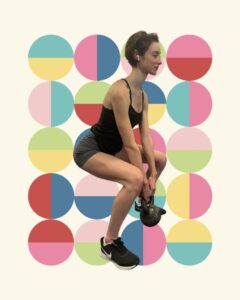
A deep squat—with your knees fully bent, hips close to the ground and heels planted firmly on the floor—is one of the most natural human movements. Around the world, people of all ages still use this position for eating, playing with children, gardening, socializing and household chores. While I’m certainly not suggesting you give up your favorite chair, practicing deep squats regularly is one of the best ways to improve hip mobility, ankle flexibility and lower-body strength.
Sinking into a low squat requires good mobility through the hips, ankles, hamstrings and glutes. It also demands strength in the lower legs, core and back to maintain proper posture. For most people with healthy knees, deep squats can strengthen the muscles, ligaments and connective tissues that support the joints while improving balance and functional movement.
One of the biggest limitations to a comfortable deep squat is restricted ankle mobility. To squat low, your ankles must bend—a movement known as dorsiflexion—which allows your shin to move forward over your foot. Limited dorsiflexion doesn’t just affect your squat; it can also impact walking, running, balance and overall athletic performance.
Two important calf muscles, the gastrocnemius and soleus, often become tight from prolonged sitting or repetitive activities. These muscles connect to the heel through the Achilles tendon and play a major role in ankle mobility. When they’re stiff, reaching a deep squat becomes much more challenging. Regular calf and ankle mobility exercises can make a noticeable difference in gait and movement quality.
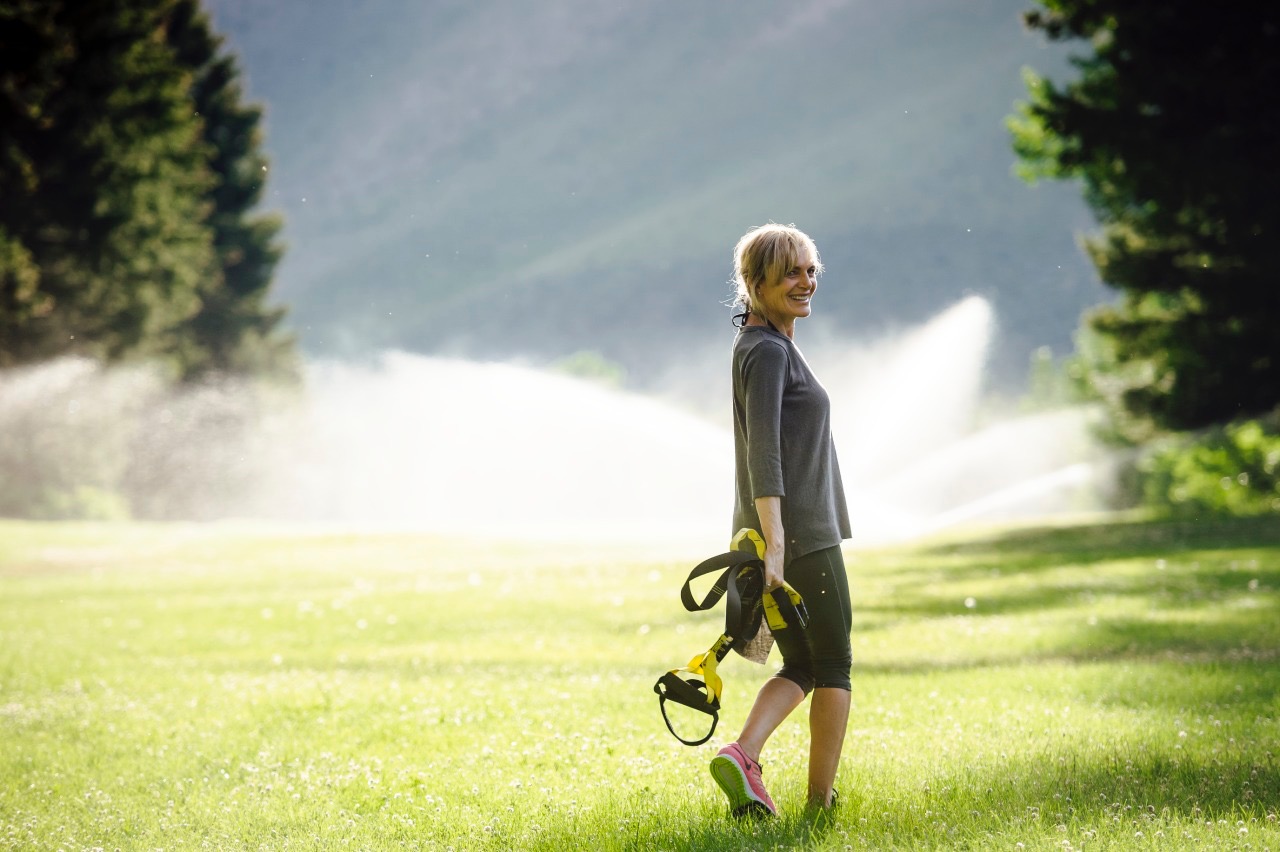
One of my favorite ways to improve squat depth is by using a TRX Suspension Trainer. Holding the straps provides support and balance, allowing you to relax into the position and explore a greater range of motion than you might achieve on your own.
TRX deep squat mobility warm-up
TRX Deep squat
Set the TRX straps to mid-length and hold the handles for support. Sink into a comfortable deep squat, keeping your heels on the floor. Gently sway side to side and shift your hips forward and back to encourage movement through the hips and ankles. Hold the position for 20–30 seconds, then stand and repeat 3–4 times.
Shift your weight forward and backwards to deepen the stretch and mobilize the ankles
The ability to move well is something we often take for granted—until it becomes difficult. Spending just a few minutes each day practicing the deep squat can improve mobility, make everyday activities easier and help you stay active for years to come.