Why Your Triceps Routine May Be Holding You Back

Why Your Triceps Routine Might Be Holding You Back 

If you want strong, defined arms—or maximum pressing power—how you train your triceps matters. Many people overlook key anatomy and biomechanics, which means their technique isn’t as effective as it could be. Research shows you can build more strength in the overhead position than with the classic pushdown alone.

The triceps are the primary extensors of the elbow and upper arm, made up of three heads: medial, lateral, and long. For balanced development, all three need to be challenged. Take the common bent-over “kickback,” for example. It’s often performed without fully lengthening or contracting the muscle—especially the long head—limiting the motion of the triceps’ prime movers. Instead, include exercises that work the long head in both its most stretched and contracted positions for full benefit.

Overhead triceps movements also rely on the shoulder stabilizers to maintain proper elbow alignment. If shoulder health is an issue, variations with cables or bands can be a safer, but still effective, alternative.

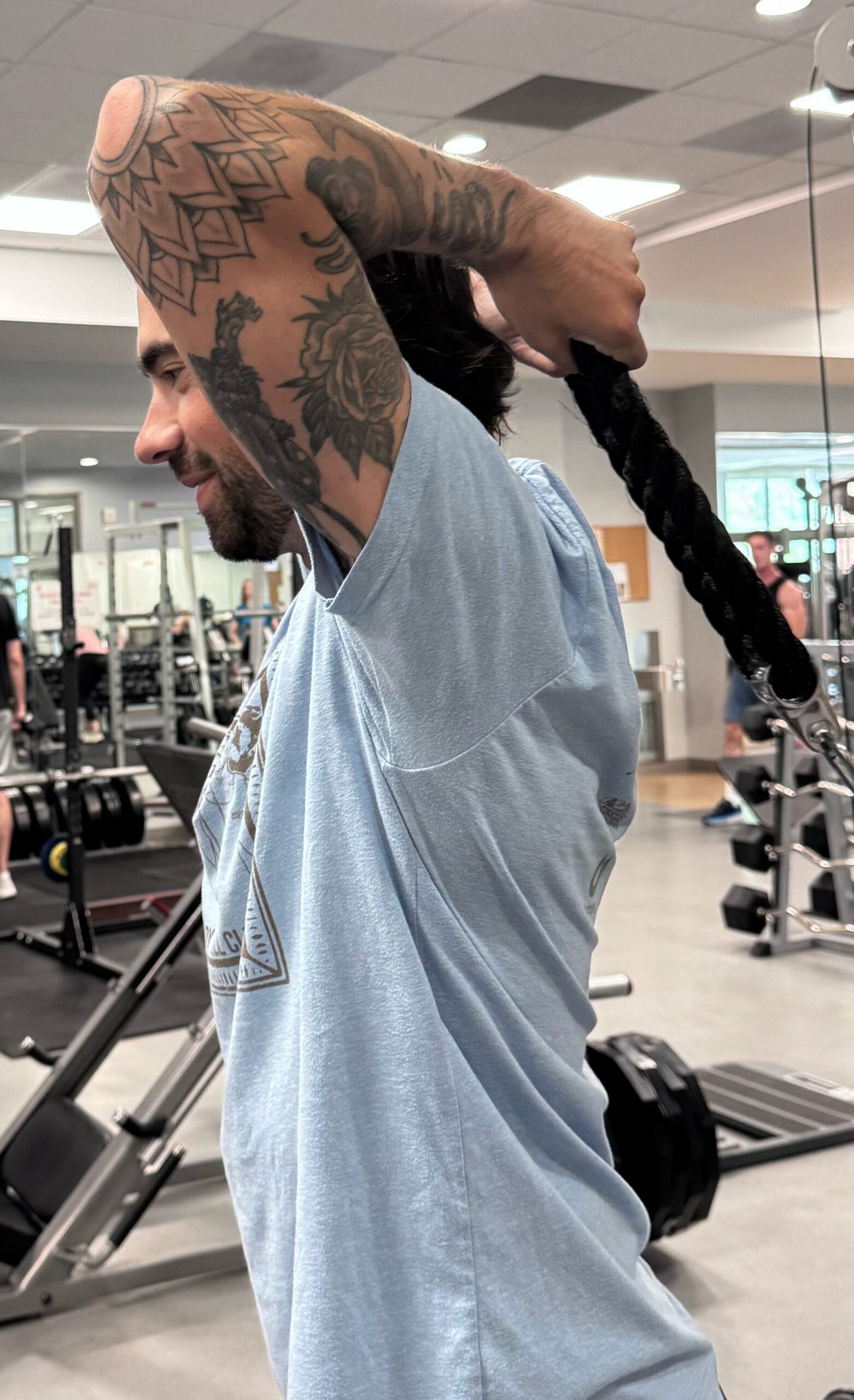
Cable overhead with rope or bar
Overhead tricep extension with rope

The cable overhead using a rope or bar targets the long head of the triceps. This tricep exercise places the long head of the tricep on high tension, as the long head crosses both the elbow and shoulder joint.

  • Move the cable setting to waist level.
  • If using ropes, grab the rope underneath so that your hands are facing forward.
  • Stand in a staggered stance, and make sure you keep a neural spine throughout the movement: don’t overarch your back.
  • Keep elbows pointed straight ahead.
  • Start with elbows fully bent; it’ll feel like a big stretch.
  • Extend the arms as you extend your chest upwards. 
  • Fully lockout at the top of the move, and return to start. 

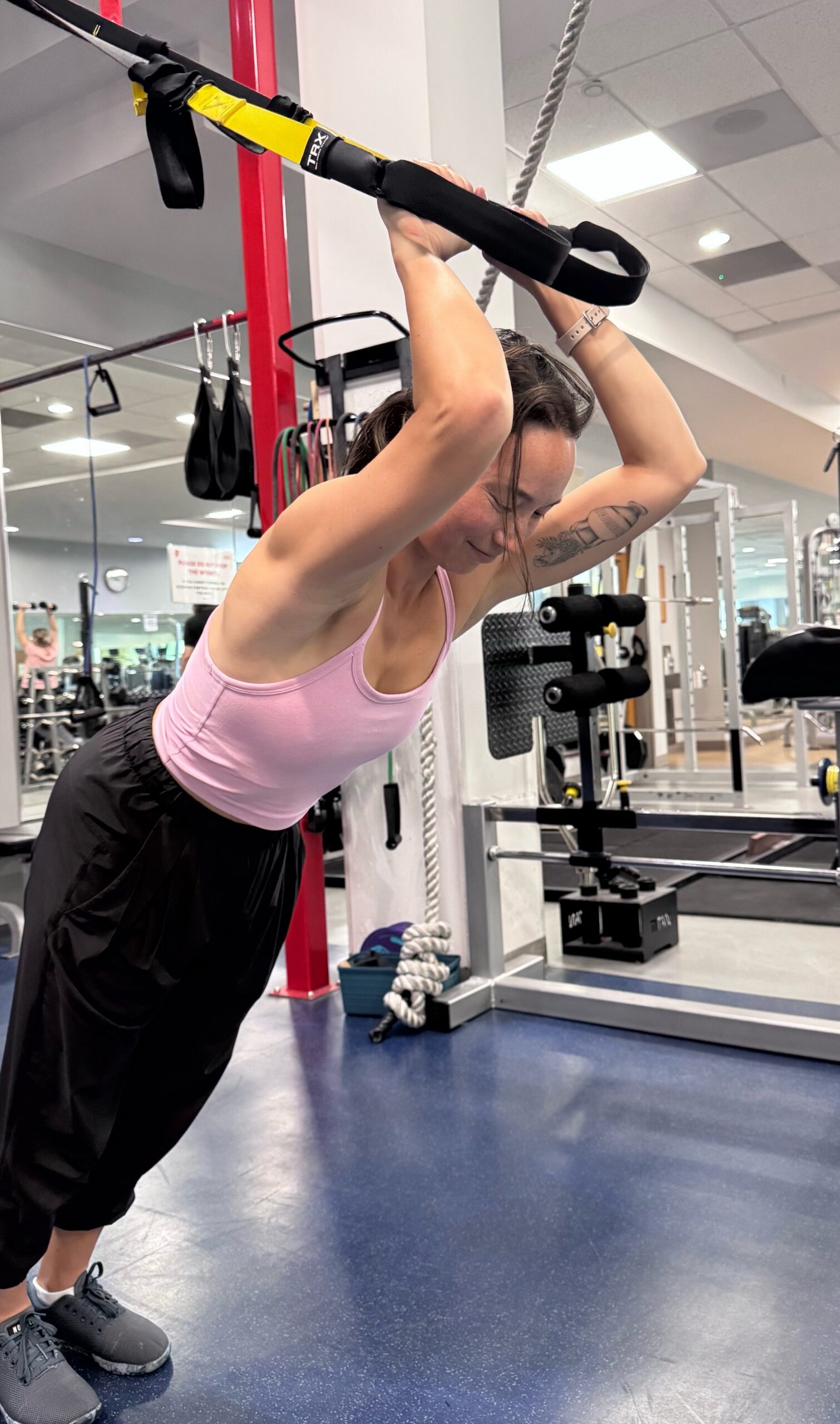
TRX Skull Crush
TRX skull crush

The TRX isolates and targets the triceps and includes isometric core stability. Using the TRX results in greater total body development than traditional barbell and dumbbell versions of this exercise. 

  • Set the TRX at mid-lenght.
  • Face away from the anchor, grab the handles, and lean forward so your torso is at least 45 degrees to the ground.
  • Position the arms in front of the chest, ( you will be in a plank position ) bend elbows to 90 degress. At this point, the hands should be at forehead height. 
  • Keep your trunk as stiff as a boad from head to heels,  and fully extend the arms.
  • 8-12 reps. 

Tricep Kickback 

Tricep kickback

Tricep kickback

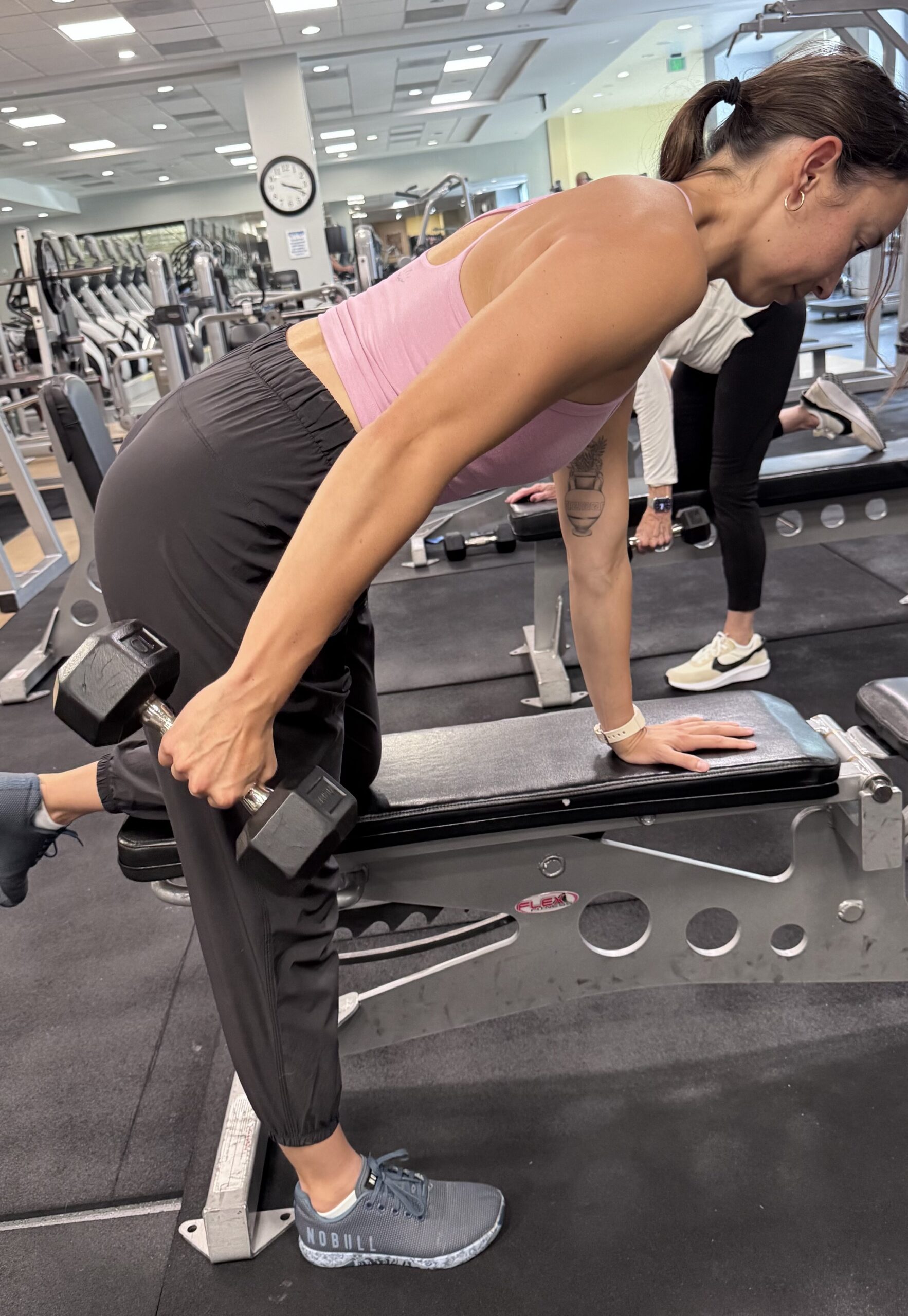
A common mistake, as seen in photo, is not holding the working arm high enough in order to create tension in the tricep, and not fully extending and shortening the arm.

Overhead triceps with a band
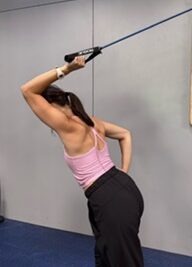
Overehead tricep extension with a band

Using a band is a great alternative if you don’t have a cable machine or are waiting for equipment at the gym. The band increases resistance as you extend your elbows, and you can adjust the tension by using different bands or changing the placement of your hand on the band. 
https://www.mtexpress.com/wood_river_journal/features/fitness-guru-why-your-triceps-routine-might-be-holding-you-back/article_268f1eab-a516-40b1-8c28-9eeaa16d8922.html

Mountain Flow:Why Outdoor Yoga in the Summer Offers a Reset

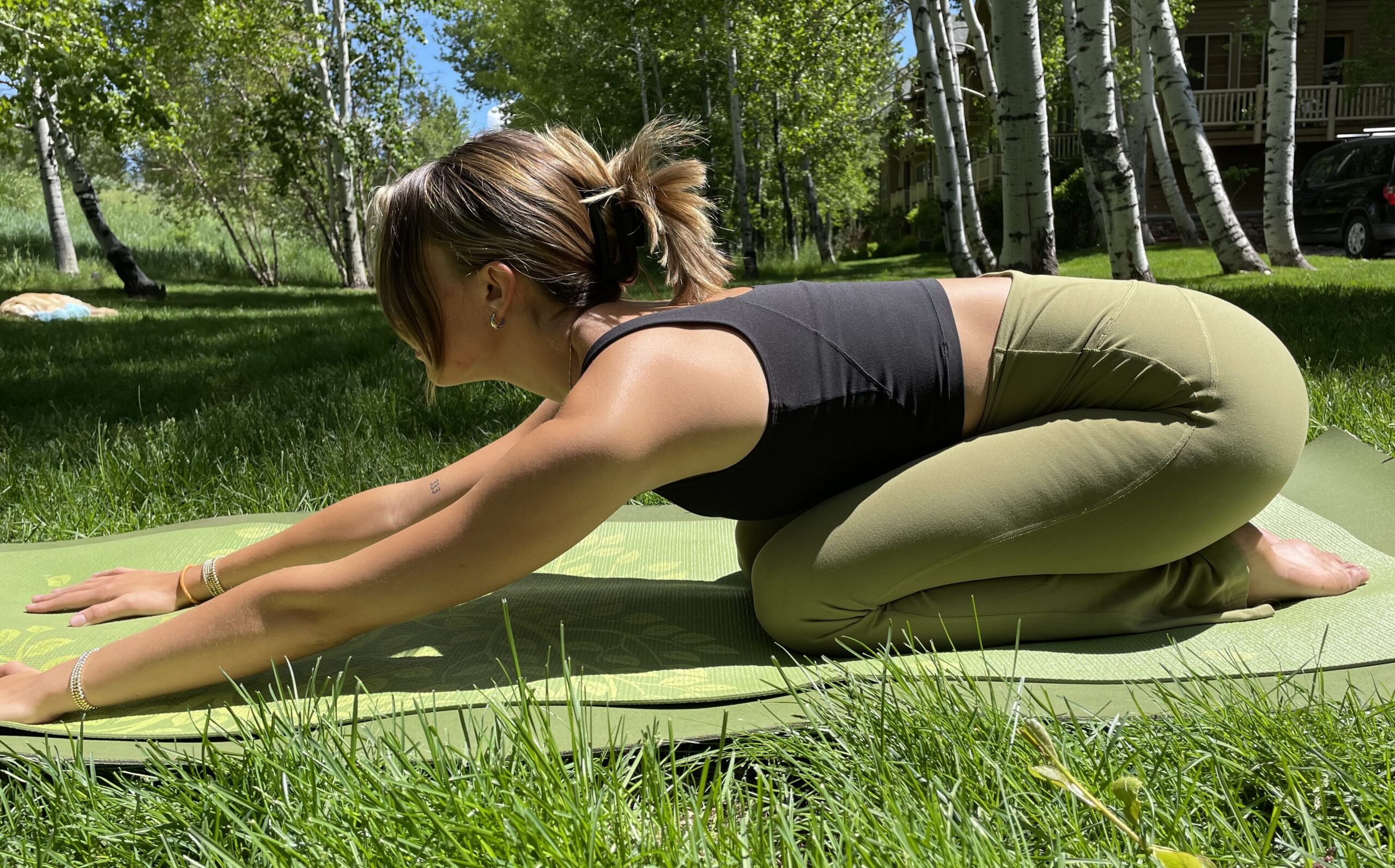
As summer takes hold in our mountain town, it’s the perfect time to bring your yoga practice outside. Whether you’re stretching in your backyard, on the porch, or in a quiet clearing, being in nature shifts how your body and mind respond. The aspen-filtered light, open air, and uneven ground offer something the studio can’t: a reset.

Here’s why practicing yoga outdoors—especially in the mountains—offers something new:

1. Fresh Air, Clear Mind
The crisp mountain air is the perfect backdrop for a yoga practice. Every breath you take fills your body with oxygen, and boosts energy. Whether you’re starting your day with a slow flow or unwinding with a sitting meditation, the natural environment around you amplifies the calming benefits of breathwork. The power of the outdoors isn’t just in what you can see—it’s in how you feel when you’re breathing deeply in a natural, open space.

2. Ground Your Practice, Strengthen Your Body
The real benefit of practicing yoga outdoors comes from the terrain. Grass, or irregular terrain naturally challenge your balance. Unlike a studio floor, uneven ground prompts your body to engage stabilizing muscles.

For example, in standing poses, yoga teaches you to spread your toes and distribute your weight evenly between the ball of each foot and the heels. Your feet contain 26 bones, 33 joints, and over 100 muscles, tendons, and ligaments. Standing on uneven ground activates small muscles in your feet, ankles, and core, strengthening your lower body, improving your balance, and enhancing proprioception (your body’s awareness of its position in space). This makes every posture feel more engaged and adds depth to your practice.

3. Posture, Flexibility, and Stress Relief
Yoga improves posture, flexibility, and overall strength, and doing it outdoors heightens those benefits. Without mirrors or studio distractions, you rely on your body’s natural feedback to guide your alignment. From standing tall in Tadasana to stretching in Downward Dog under the open sky, practicing in nature encourages a deeper connection to your body.

The benefits go beyond the physical, too. Yoga incorporates diaphragmatic breathing, relaxation, and imagery techniques—all effective tools for managing stress. Studies show that simple stretching and breathing exercises can reduce anxiety and promote emotional well-being, making outdoor yoga a great tool for mental and emotional health.

4. Focus on How You Feel, Not How You Look
In mountain towns, there’s often a strong focus on fitness, and performance.  But yoga offers a different kind of opportunity—it’s not about pushing your limits or hitting new milestones. It’s about tuning in to your body. Outdoors, without mirrors or the usual pressures, you can focus less on how things look and more on how they feel. Nature reminds us that it’s okay to simply be present.

5. The Mountains as Your Sanctuary
Practicing yoga outside is a grounding experience, both physically and mentally.  The fresh air, open space, and connection to nature create an atmosphere that encourages stillness, focus, and reflection.

This summer, take your mat outdoors. Whether it’s by the river, or just in your backyard, the mountains can be the perfect backdrop for your practice. Let the natural world offer you the quiet and space needed for a reset.

Published in The Idaho Mountain Express, August 1, 2025.

https://www.mtexpress.com/wood_river_journal/features/mountain-flow-why-outdoor-yoga-in-the-summer-offers-something-new/article_b791f3b7-bd9a-483a-965c-f34e5d6951c6.html