Perfect your squat

Featured

If squats are part of your regular workout, you’re building strength that carries over into everyday life. The squat is one of the most effective strength exercises because it develops the muscles you rely on every day. Strong legs aren’t just for the gym—they help you enjoy longer hikes, stronger rides, steadier footing on the trail and the active lifestyle that defines our community.

Better yet, stronger gluteal muscles can help reduce the risk of knee injuries and lessen stress on the hips over time. But there’s one catch—you have to perform the movement correctly. Some of the most common squat mistakes include leaning too far forward, rounding or over-arching the lower back, or shifting weight from one hip to the other. One simple concept can correct many of these problems: learning the hip hinge.

A hip hinge means bending from the hips while keeping your spine in a neutral position. Picture yourself closing a car door with your backside. Your hips move backward, your chest inclines forward, and your back stays straight. The motion comes from the hips—not the back.

Why does this matter? A proper hip hinge shifts the workload to the glutes and hamstrings, the powerful muscles along the back of your hips and thighs, while reducing unnecessary strain on the lower back. Research has shown that maintaining a neutral spine while loading the glutes and hamstrings creates a mechanical advantage, allowing these muscles to produce more force safely and efficiently.

Your gluteal muscles do much more than power your workouts. They help stabilize your pelvis, improve balance and generate the force needed for walking, climbing stairs, hiking uneven trails or getting up from a chair. Think of using your glutes and legs, rather than your back, next time you pick something up. Healthy glutes support better movement mechanics throughout daily life.

Regular squats strengthen both the glutes and hamstrings, helping maintain healthy pelvic alignment. Working together with your abdominal muscles, they provide the stability your body needs for efficient, pain-free movement.

The next time you squat, don’t just think about going lower. Think about sending your hips back first. Master the hip hinge, and you’ll build a stronger squat, a healthier back and a body that’s better prepared for whatever your day brings.
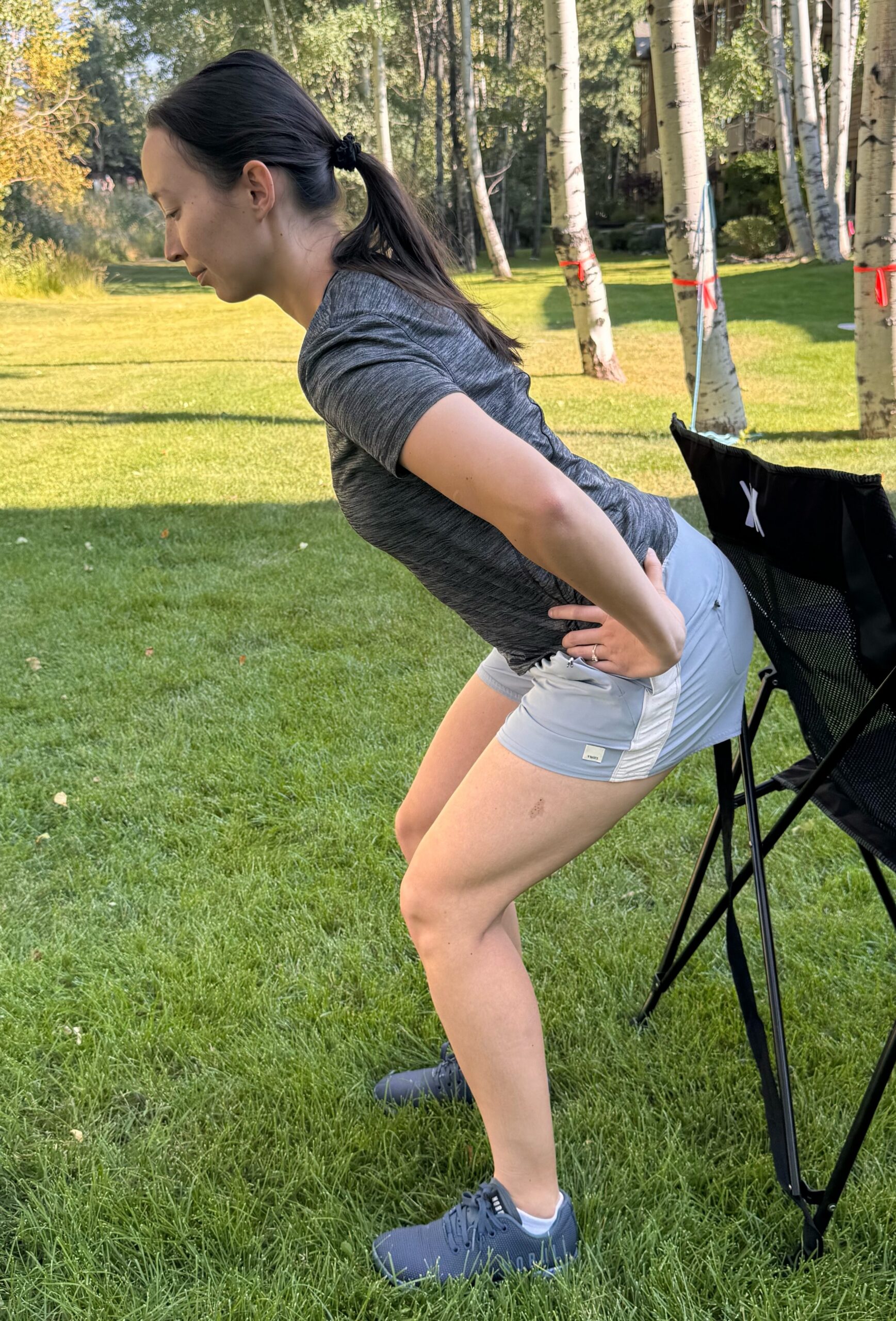
The hip hinge allowing glutes to touch chair or wall.
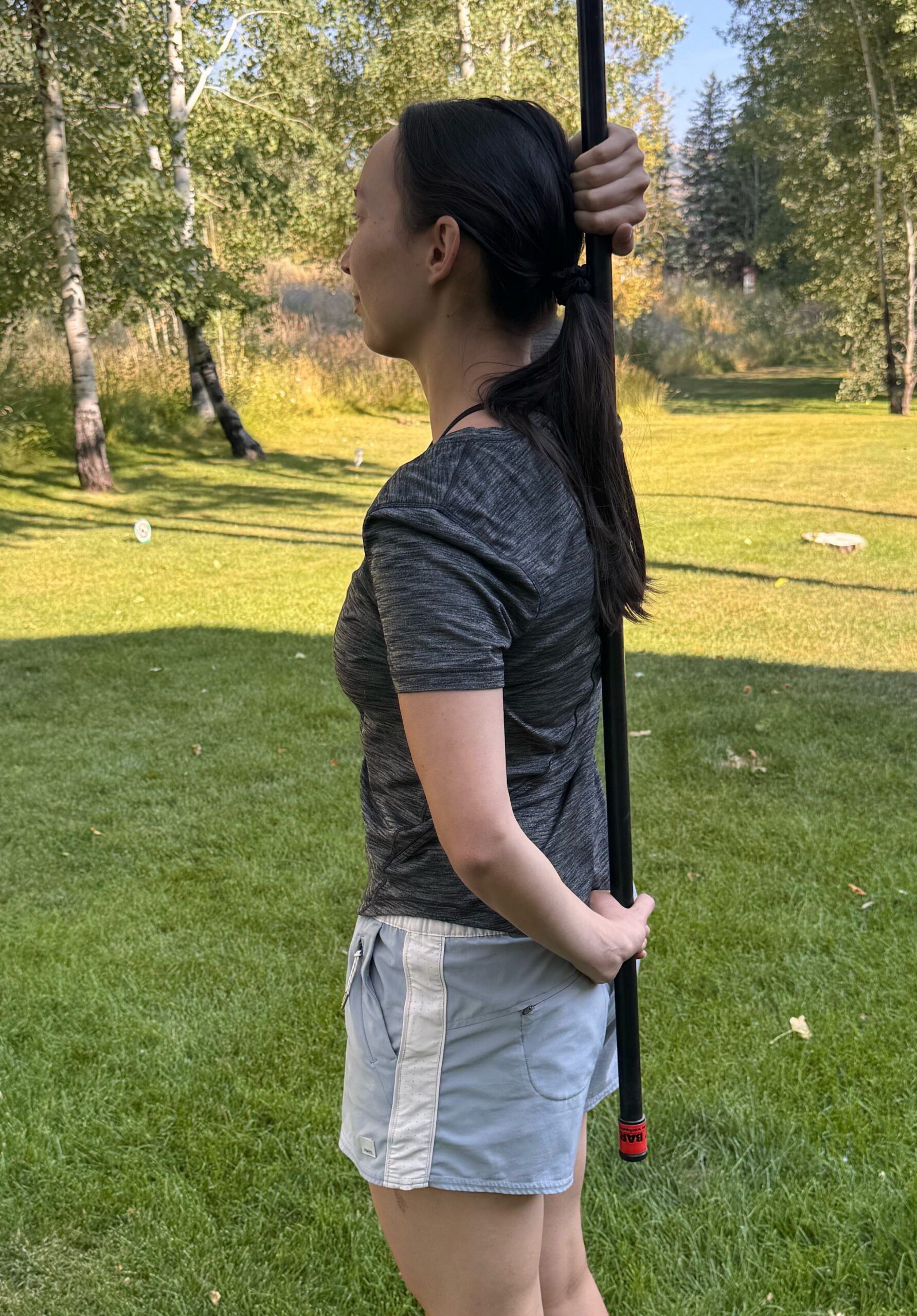
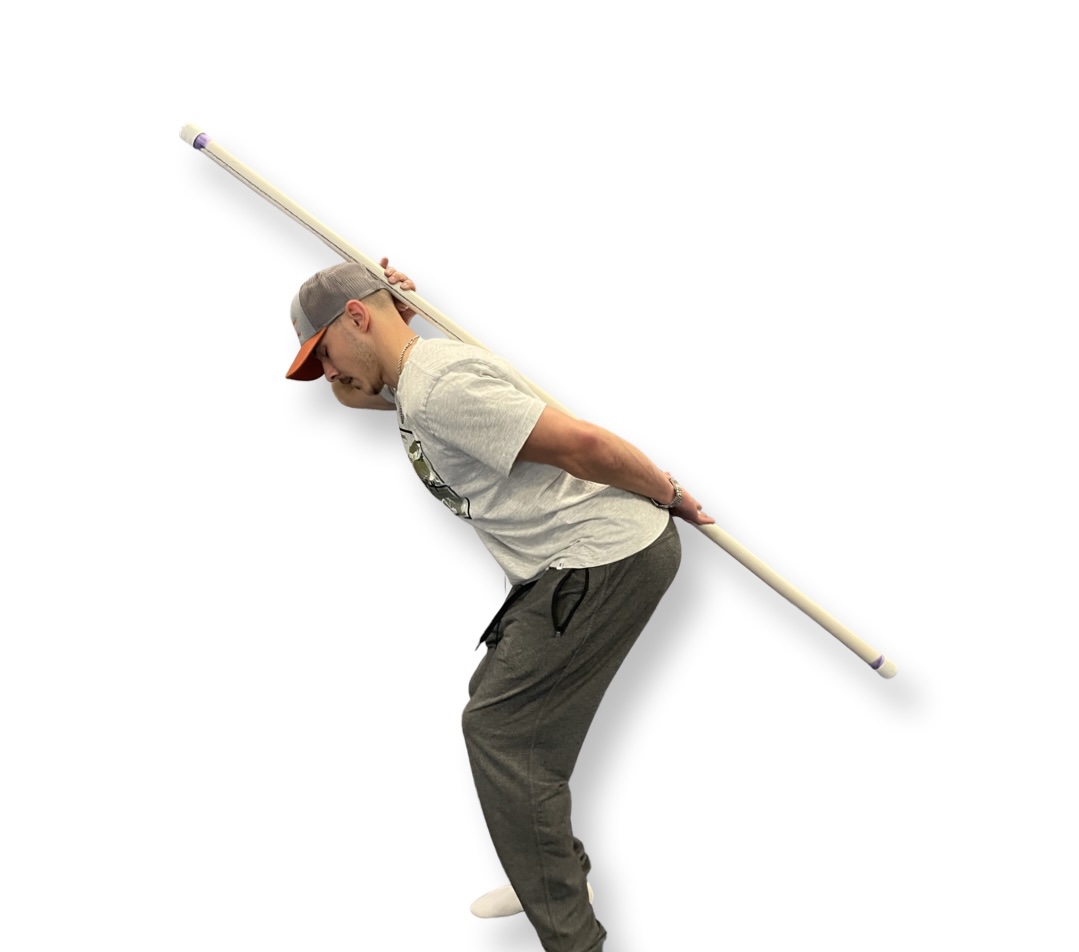
Hip hinge prep: Dowel lightly touching back of head, thoracic spine and tailbone.
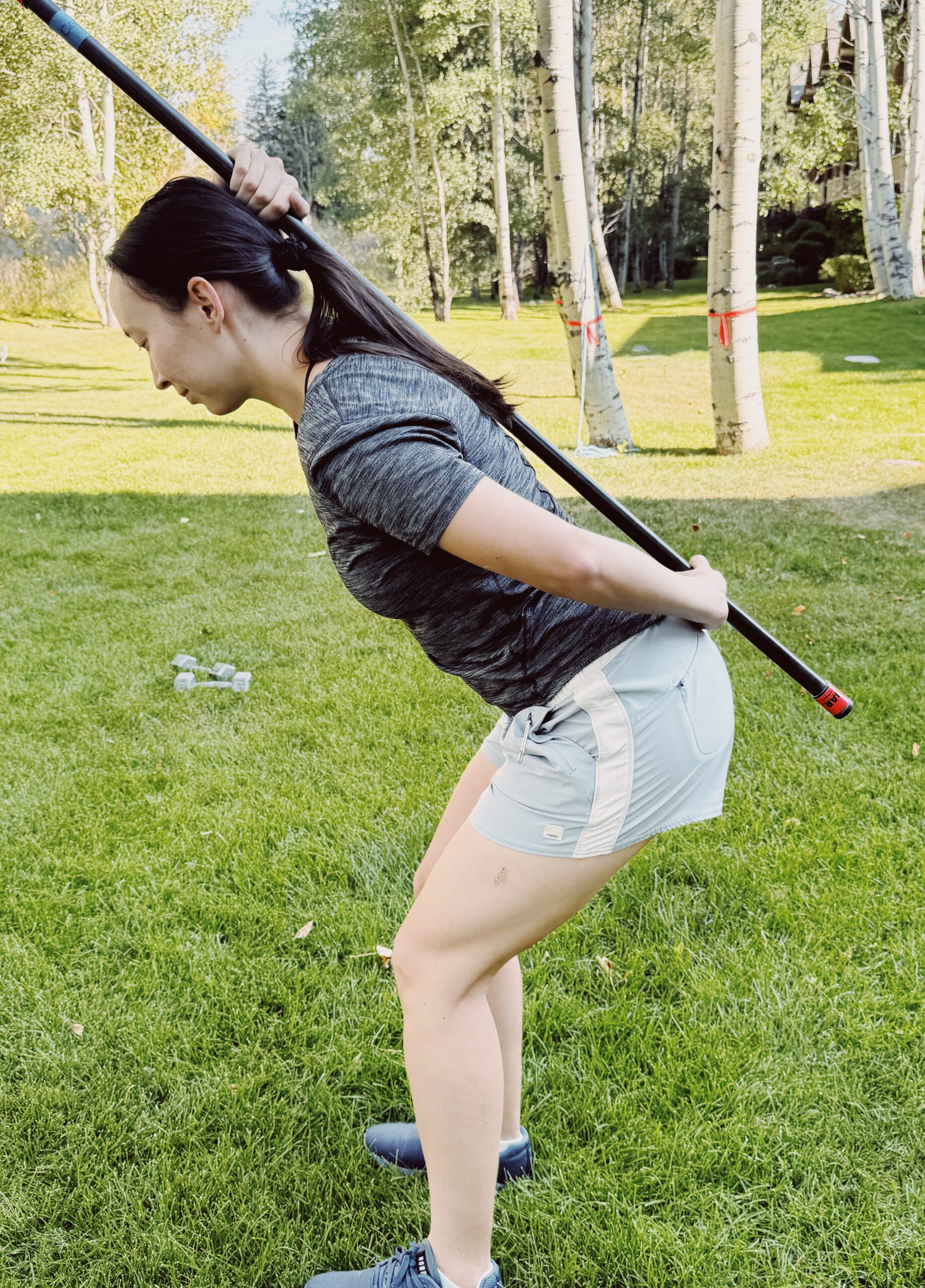
Hip hinge with dowel
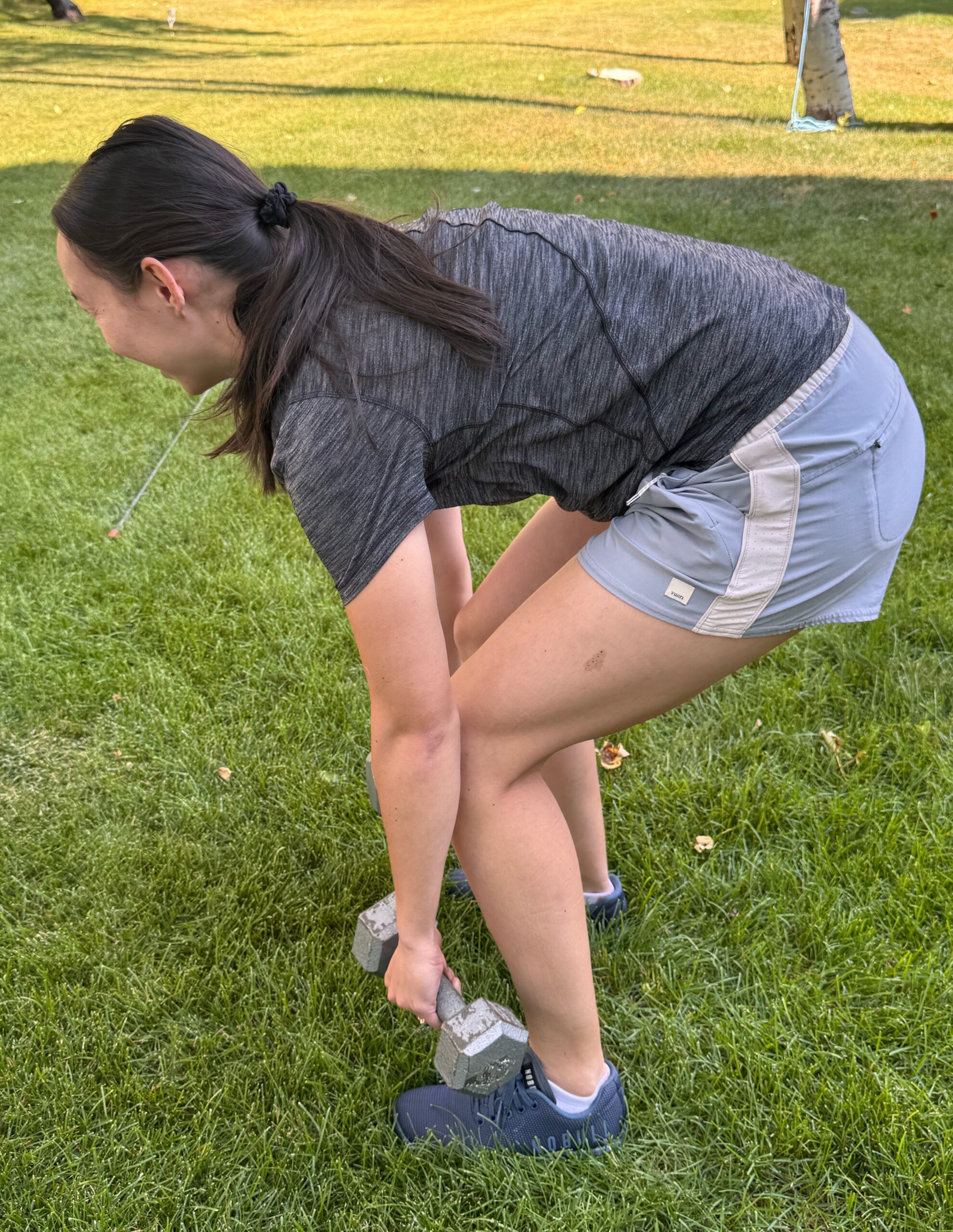
Rounded spine: the low back’s facets, discs and ligaments are compromised.

Published in The Idaho Mountain Express August 7, 2026.
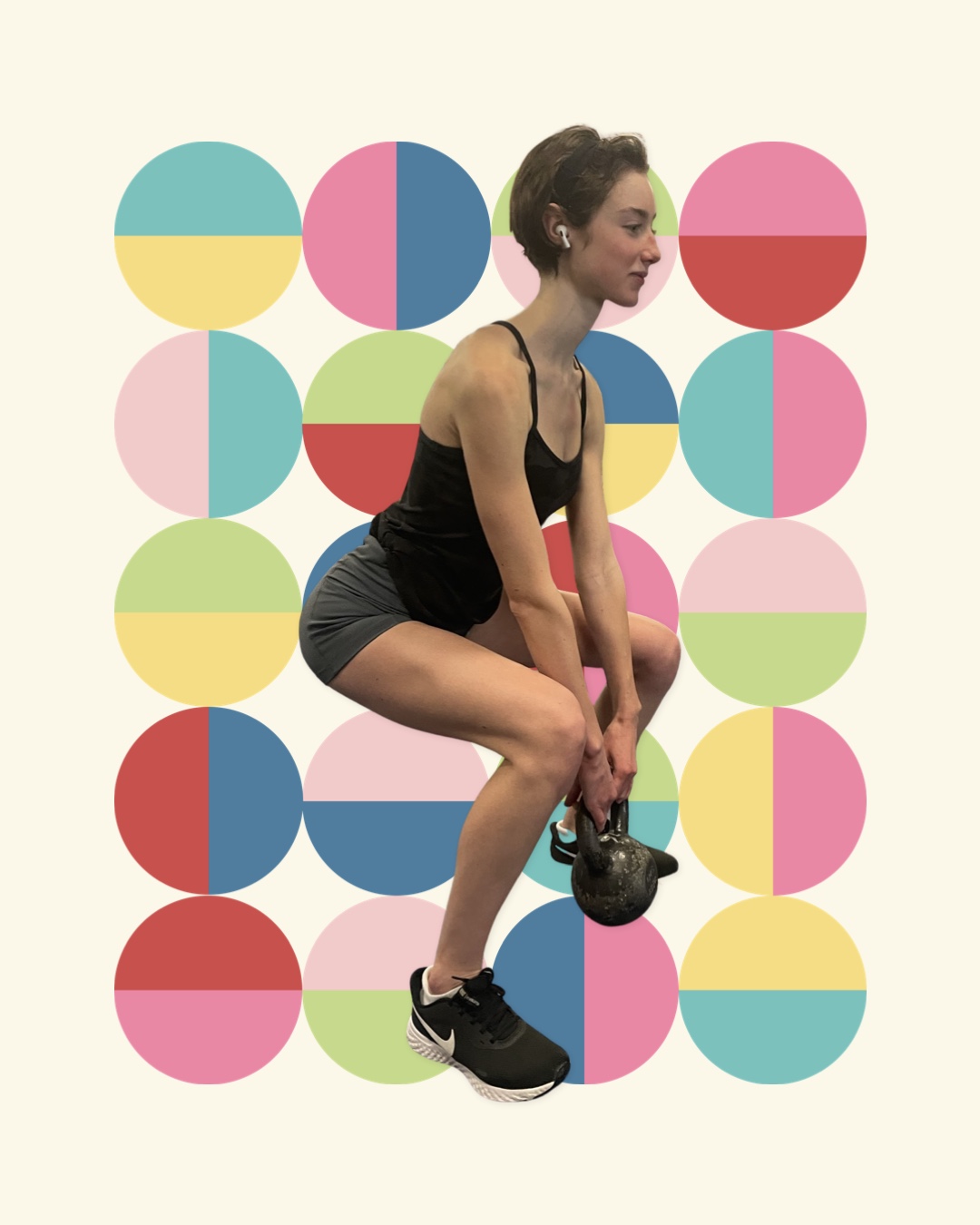
Quick fixes for your squats

Featured

A woman is stretching on the floor with another person.


All winter sports require strong leg muscles, good balance and core support—all benefits of doing regular squats. The squat is one of the most common and basic exercises performed in strength training and offers a tremendous bang for your buck.

There are many reasons you should be doing squats, if you aren’t already doing so. Getting out of a car, climbing stairs, skate or ski, all depend on strong legs. Squats strengthen your leg muscles, especially the quadriceps, glutes, and core, burn calories and help prevent injury. The inner thigh, hamstrings and calves are all challenged. Additionally, the erector spinae serve as stabilizing muscles in a squat. They help strengthen your core and promote good posture.

Form is so important in squats, and there are four common problems you often see; excessive forward lean, low back arching, low back rounding, or a lateral hip shift. Muscle imbalances, like tight hip flexors and calves, or weak core support, are often the culprits here. Lacking the mobility in your hips or ankles, forgetting to use your core muscles, or weak gluteal strength all contribute to problematic squats.

A fun and humbling test to improve your squat would look like this: Crawl on the floor for a few paces, rock forward, and without using your hands, stand up. This effectively demonstrates ankle and hip mobility, and core and lower body strength needed to transfer your weight up into standing. This drill exemplifies strength and mobility, important qualities in a squat.

Let’s look at two quick fixes to improve your squat technique.

Hip hinge with Dowel

The hip hinge is one of the most important cues to think of when you perform a squat. Hinging at your hips, in any type of squat, saves the spine stress and strain, as the motion is focused on the hips, not the back. The dowel teaches you to maintain a tall spine, without the head falling forward, a common mistake. The dowel exercise also helps correct excessive forward lean, or the lower back rounding.

A woman is stretching on the floor with another person.
Hip hinge with dowel
Photo by Connie Aronson
A woman is stretching on the floor with another person.
The dowel must remain in contact with these 3 points throughout your hip hinge range.

Place a dowel, or broom stick on the base of your skull, the thoracic spine –your upper back, and the sacrum.

The dowel must remain in contact with these 3 points throughout your hip hinge range.

Think of sinking your hips backwards, and return to start position.

Your legs can be straight or a slight knee bend.

Do 8 x, slowly.

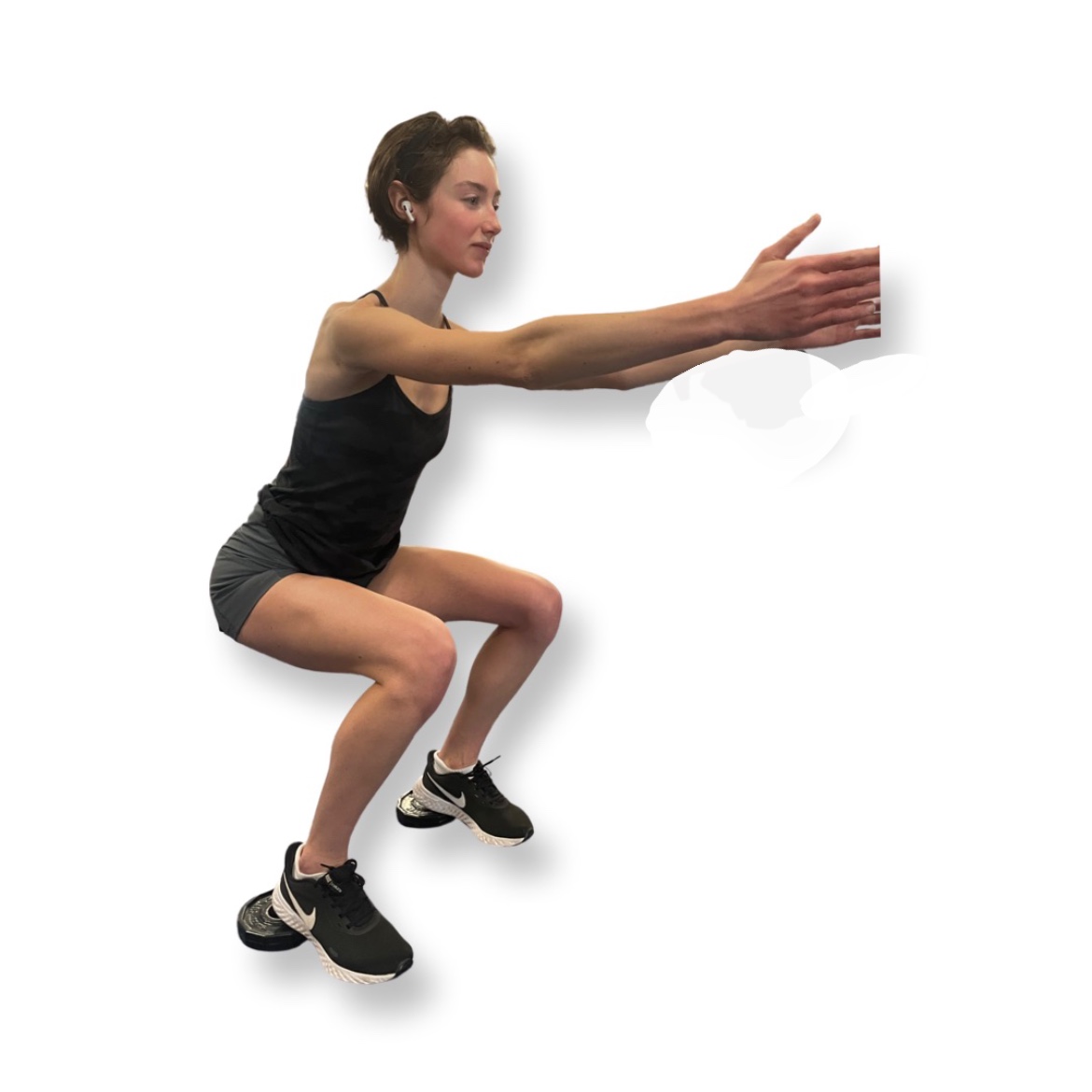
Squat with heel lifts

A woman is stretching on the floor with another person.

If your calves are tight, or you lack ankle mobility, try placing gym plates or a wedge under you heels in a squat. This will help you bend at the ankles (ankle dorsiflexion) an action that brings the shin over the foot. Improving your ankle flexibility will also help you flex into your ski turn more dynamically!

A woman is stretching on the floor with another person.
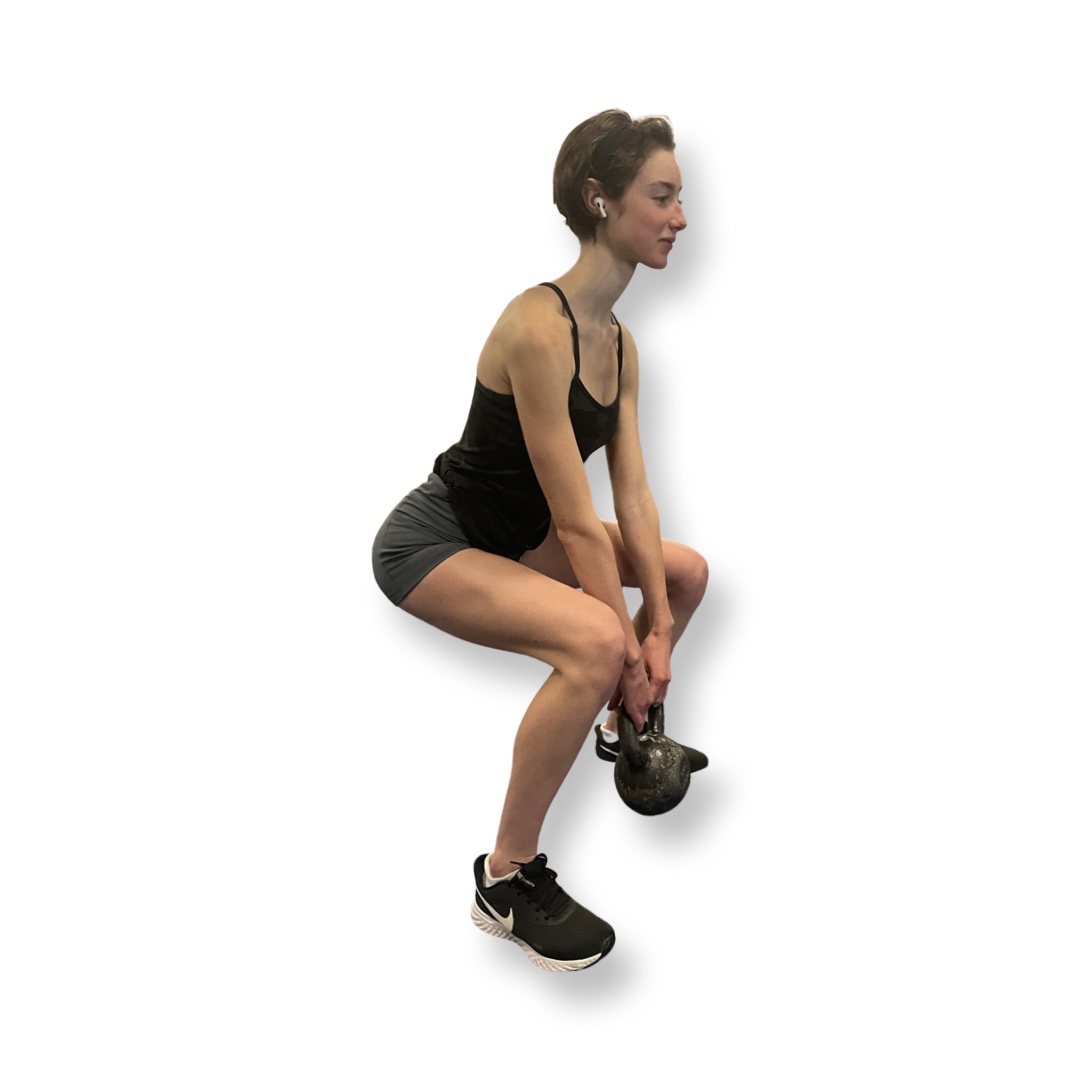
Squat with weight
Photo by Connie Aronson
A woman is stretching on the floor with another person.
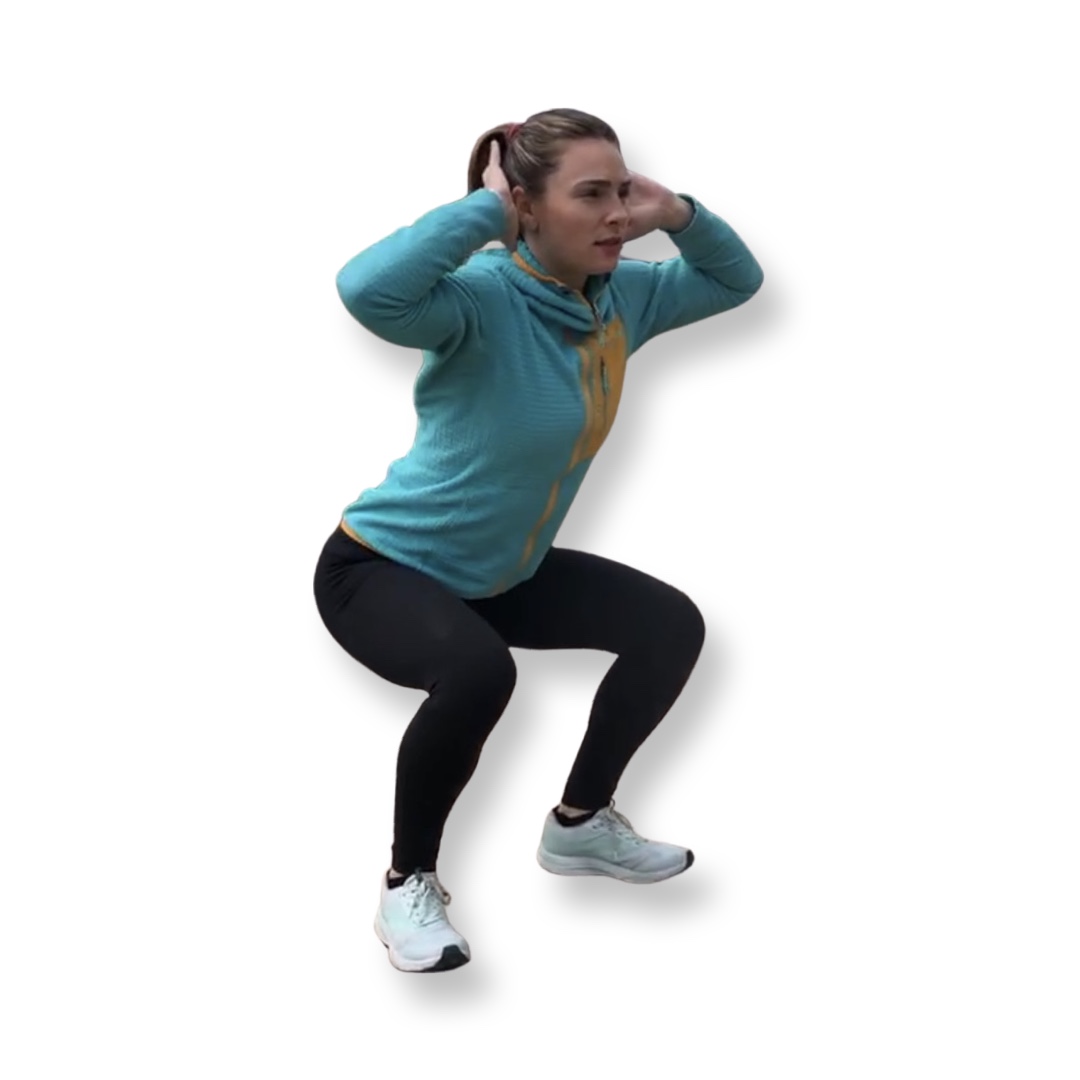
Squat form: Squat down by bending hips back while allowing knees to bend forward, keeping back straight, knees in line with toes. Descend until thighs are parallel or just past parallel. To rise back up, contract glutes and pressure through whole foot. 
A woman is stretching on the floor with another person.
Perfect squat form ( with overhead arms )

https://www.mtexpress.com/wood_river_journal/fitness-guru-quick-fixes-for-your-squats/article_118dc396-9cdf-11ed-ac22-6babf844dcdc.html?fbclid=IwAR2w_aB0sjZrmDfKmS_PnBv4Rlz5oPKQ99yz3u1YrxdOMyVse5pkaAIcRbc

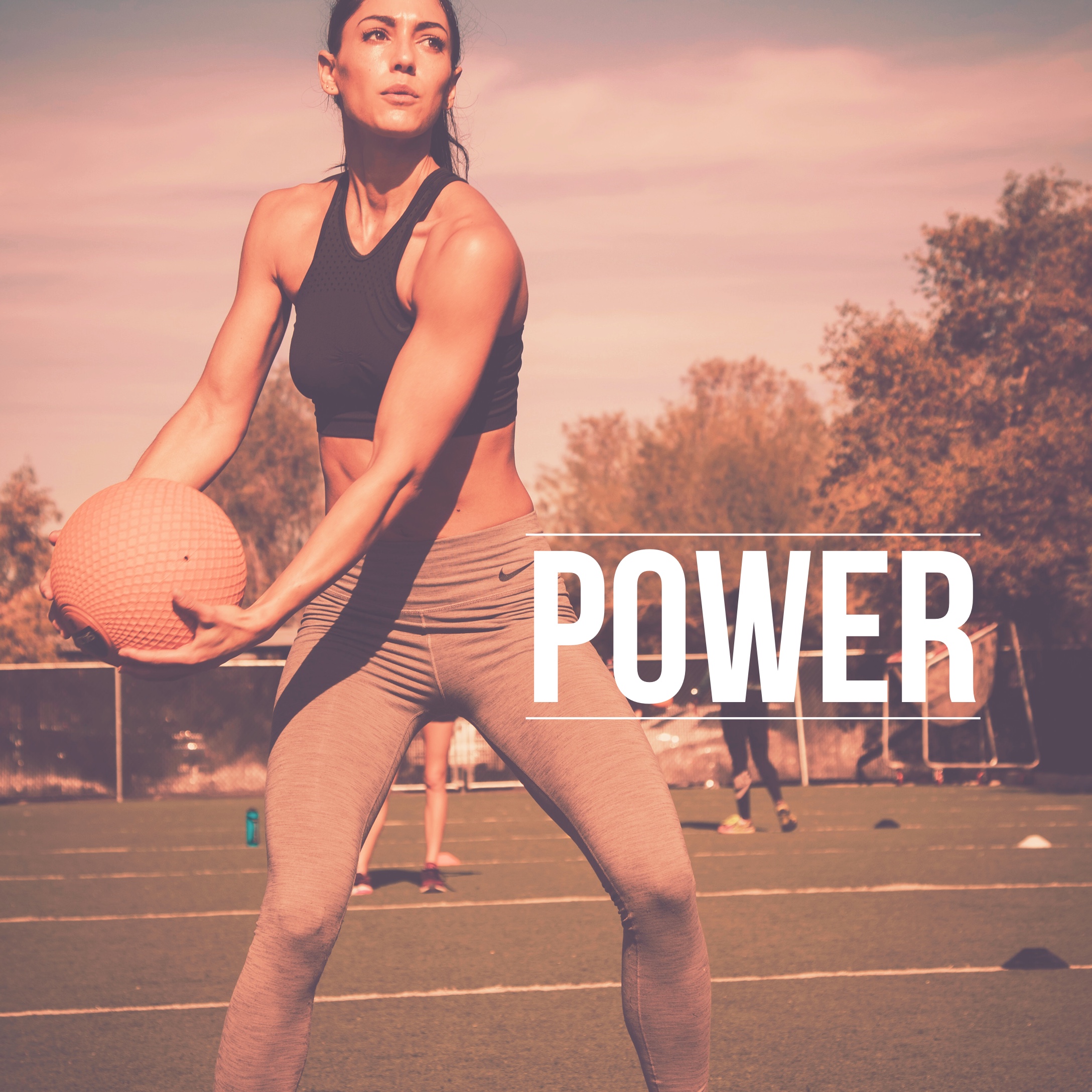
Add power to your workouts

A woman is stretching on the floor with another person.
Consider plyometrics for improved performance

  • Even if you visit your gym frequently, plyometric moves might be new to you. If you want to improve your overall fitness and burn calories, look to plyometric exercises for improved performance and power.

Power is the ability to produce large amounts of force quickly.

For every sport, unless you’re an equestrian athlete, or kayaker, your skill starts by your feet pushing into the ground or firm object that returns force back through you.

Plyometric is a quick powerful movement involving pre-stretching that activates the stretch shortening cycle. Plyometric exercises are also referred to as reactive training. The ultimate goal of reactive training is to increase the reaction time of the rate of force production. An explosive tennis serve, better basketball, golf swing, or a faster running gait are all examples of sports in which you could benefit from this type of training. It can also enhance how you react to ground surfaces throughout the day in simple daily activities. Quickly responding to an unexpected change, like ice, when stepping off a curb or rapidly changing direction when walking your dog on a leash are both examples of daily encounters when you’ll want to have better reaction time.

We all need vigorous levels of physical activity to maximize bone mass throughout our lives. Incorporating plyometric exercises is also extremely valuable in post-rehab and for a safe return to play.

Plyometrics, in its purest form, are meant to be all-out, quality efforts in each repetition of an exercise. Although commonly thought of as only muscular activity, the nervous system is intrinsically linked. The exercises heighten the excitability of the nervous system for improved reactive ability of the neuromuscular system, a benefit for both pro athletes and the rest of us.

Before incorporating plyometric exercises into your training, it is important to have good flexibility, motor control, core strength, and balance capabilities. If you can’t do it slowly, you can’t do it fast!

Be proficient in exercises such as step-ups and different kinds of squats before practicing, and start with plyometric exercises that are low intensity. Bounding or footwork patterns are a good place to start. Like hopscotch, they are fun and challenging.

Before any kind of jump, know that landing strategies are crucial. You should land in a partial squat. A partial squat is a position with feet shoulder-width apart and the bodyweight centered over a stable base of support. Bearing weight symmetrically, a stable base of support means that the trunk is relatively upright over the legs (or leg) with slight flexion of the ankle, knee, and hips.

The exercise selection is vast, as you would start with moves that are easy to complex, stable to unstable, body weight to loaded, to activity specific.

Plyometric training isn’t only limited to lower body training. Moves such as wall throws plyometric push-ups, or jump-squat with a chest pass are other examples.

Photos in article below~

As published in The Idaho Mountain Express- Fitness Guru

https://www.mtexpress.com/wood_river_journal/features/fitness-guru-add-power-to-your-workouts/article_5f9b3a20-52b5-11ec-b485-87eadcee070c.html