If squats are part of your regular workout, you’re building strength that carries over into everyday life. The squat is one of the most effective strength exercises because it develops the muscles you rely on every day. Strong legs aren’t just for the gym—they help you enjoy longer hikes, stronger rides, steadier footing on the trail and the active lifestyle that defines our community.
Better yet, stronger gluteal muscles can help reduce the risk of knee injuries and lessen stress on the hips over time. But there’s one catch—you have to perform the movement correctly. Some of the most common squat mistakes include leaning too far forward, rounding or over-arching the lower back, or shifting weight from one hip to the other. One simple concept can correct many of these problems: learning the hip hinge.
A hip hinge means bending from the hips while keeping your spine in a neutral position. Picture yourself closing a car door with your backside. Your hips move backward, your chest inclines forward, and your back stays straight. The motion comes from the hips—not the back.
Why does this matter? A proper hip hinge shifts the workload to the glutes and hamstrings, the powerful muscles along the back of your hips and thighs, while reducing unnecessary strain on the lower back. Research has shown that maintaining a neutral spine while loading the glutes and hamstrings creates a mechanical advantage, allowing these muscles to produce more force safely and efficiently.
Your gluteal muscles do much more than power your workouts. They help stabilize your pelvis, improve balance and generate the force needed for walking, climbing stairs, hiking uneven trails or getting up from a chair. Think of using your glutes and legs, rather than your back, next time you pick something up. Healthy glutes support better movement mechanics throughout daily life.
Regular squats strengthen both the glutes and hamstrings, helping maintain healthy pelvic alignment. Working together with your abdominal muscles, they provide the stability your body needs for efficient, pain-free movement.
The next time you squat, don’t just think about going lower. Think about sending your hips back first. Master the hip hinge, and you’ll build a stronger squat, a healthier back and a body that’s better prepared for whatever your day brings.
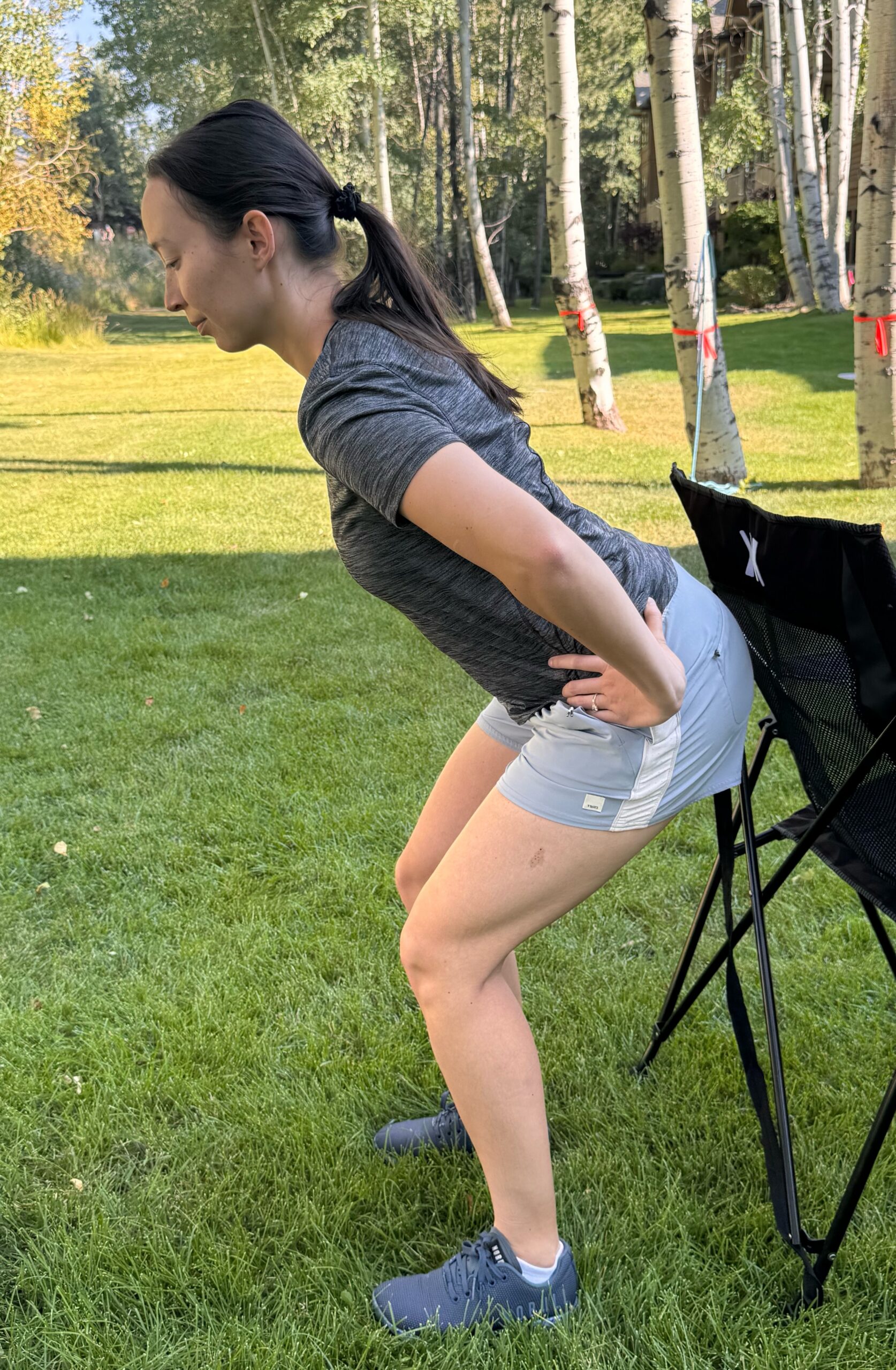
The hip hinge allowing glutes to touch chair or wall.
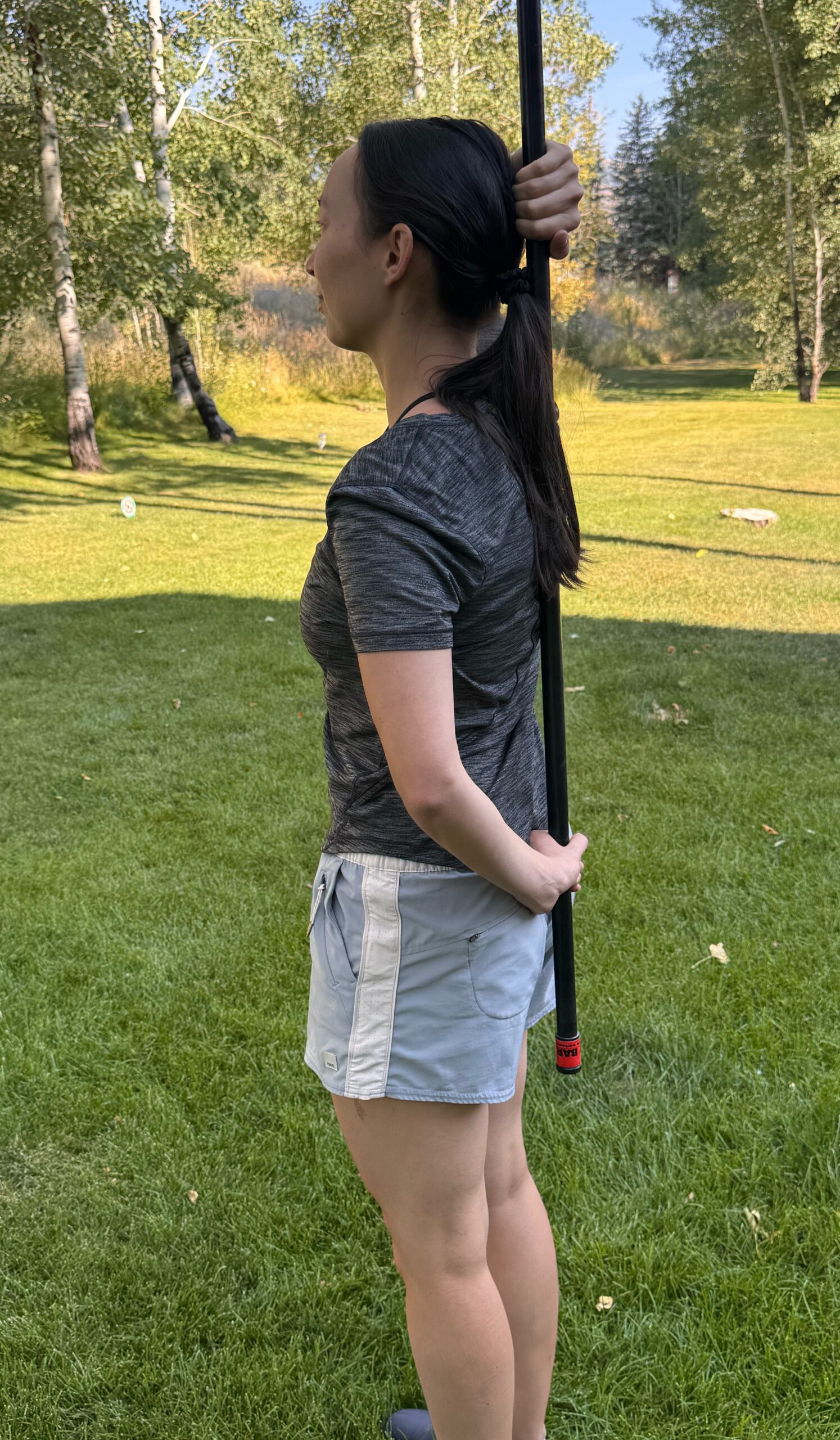
Hip hinge prep: Dowel lightly touching back of head, thoracic spine and tailbone.
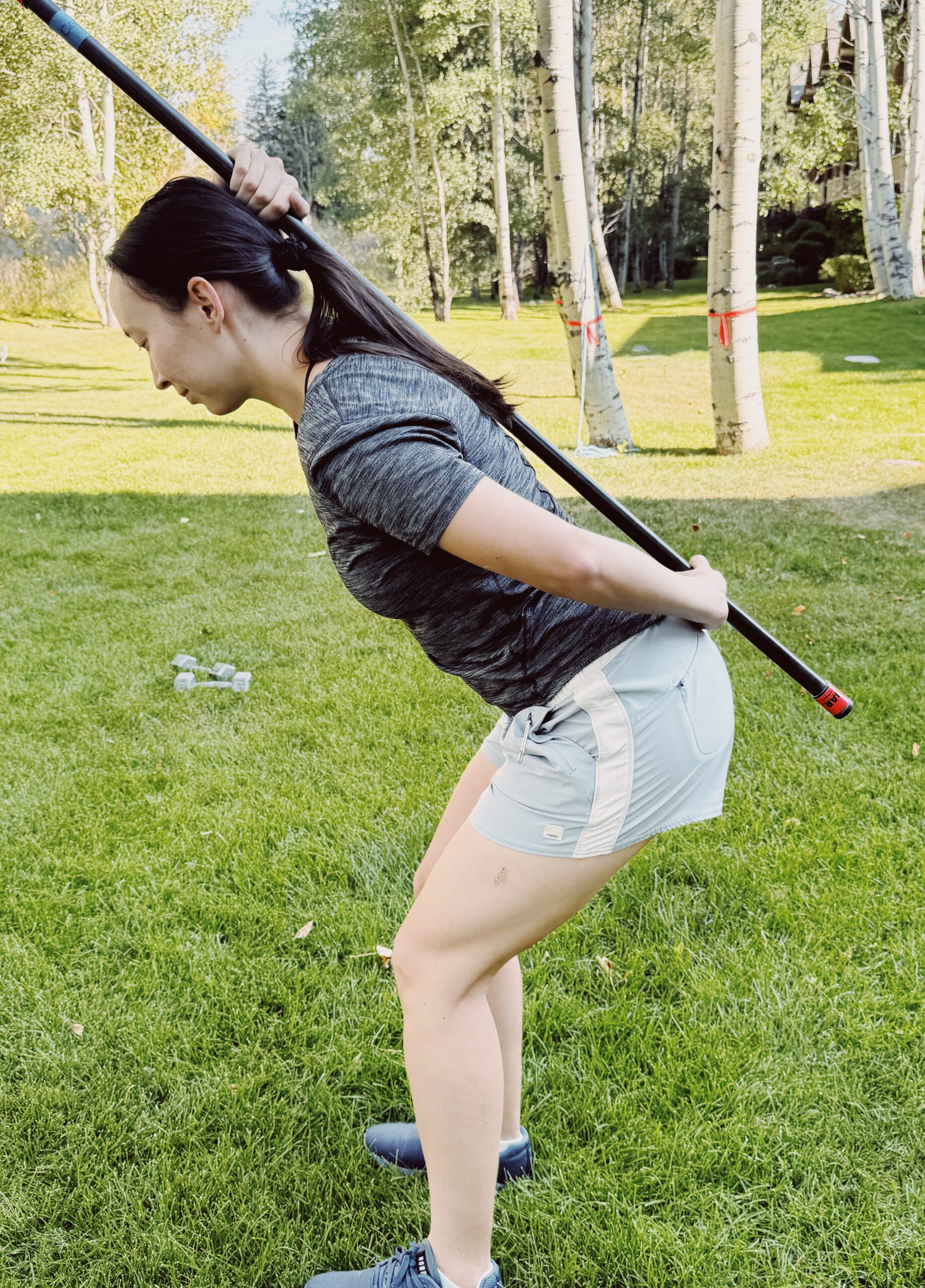
Hip hinge with dowel
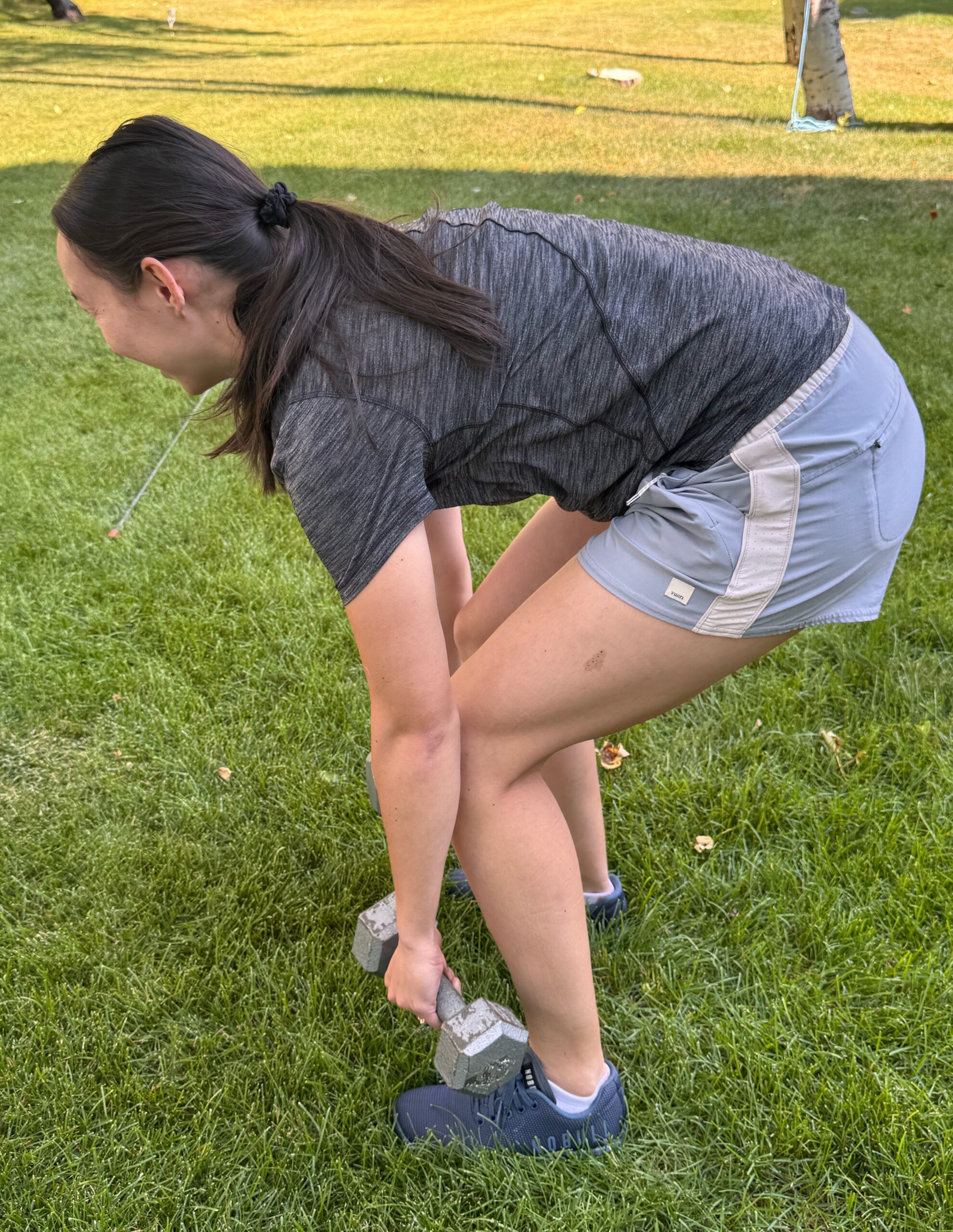
Rounded spine: the low back’s facets, discs and ligaments are compromised.
Published in The Idaho Mountain Express August 7, 2026.