Fitness Guru: The posture shift that changes everything

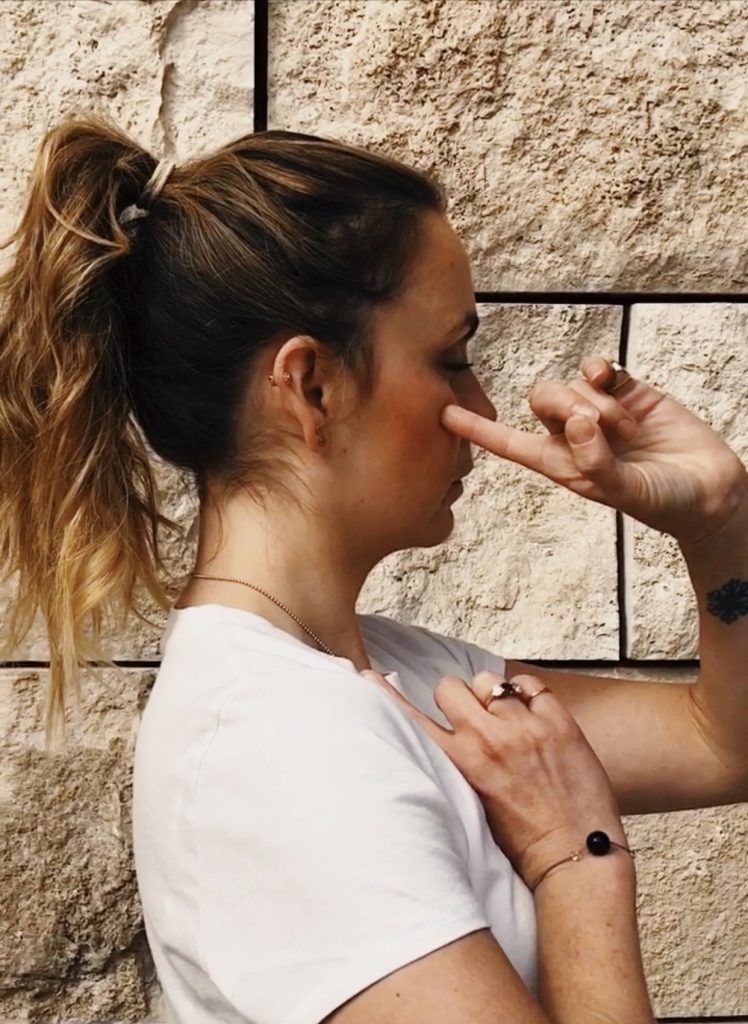
-Checking vertical alignment between cheekbone and collarbone.

  • Photos courtesy of Connie Aronson

Example of forward head position-note the misalignment

It’s to your advantage to have your head perched directly above your spine—not just for good alignment, but for how you feel and move throughout the day. A head in optimal alignment with the neck can reduce tension, improve your body image and even change the way you carry yourself.

Try this: Imagine your head as a helium balloon floating gently upward. Your neck and spine are the string, soft and flexible like wool. This simple mental image can instantly relax your shoulders, lengthen your neck and help you stand taller—without effort or strain.

Now, consider the weight of that “balloon.” The human head weighs anywhere from 9 to 12 pounds. When it’s aligned over the spine, your body carries that weight with ease. But for every inch the head shifts forward, the effective load on your neck doubles. That forward head posture—common with screen time and stress—can wreak havoc on your neck, shoulders and overall alignment.

Here’s a quick way to check your head position:

The forward head scan

1. Sit near the edge of a chair.

2. Place one index finger on the part of your cheekbone that sticks out just below the eye.

3. Place your other index finger directly below it on your collarbone.

4. Look in a mirror or ask someone to check: Are the two fingers vertically aligned?

If the finger on your cheekbone is ahead of the one on your collarbone, your head is likely too far forward for optimal alignment.

Awareness is the first step. Use both the visual imagery of the floating balloon and this hands-on check throughout the day to gently guide your head back to center. When your head is naturally balanced at the top of your spine, your whole body follows.

A small shift at the top can create big changes in how you feel, move and carry yourself—no equipment required.

Connie Aronson is an exercise physiologist and Corrective Exercise Specialist ( TBBM-CES ) Visit her and her Golden, Josie on Instagram @Josie_thegolden and www.conniearonson.com

Published in The Idaho Mountain Express October 24, 2025
https://www.mtexpress.com/wood_river_journal/features/fitness-guru-the-posture-shift-that-changes-everything/article_f3cc9071-4dd9-4b09-91fb-2953c180bb88.html

Sore neck? 2 quick fixes for forward head

A woman is stretching on the floor with another person.
If it’s your habit that your head juts forward and is ahead of your shoulders, you can learn how to fix this common musculoskeletal imbalance.


  • by CONNIE ARONSON

If you feel like you have the weight of the world on your head right now, it could be time to change that situation. If it’s your habit that your head juts forward and is ahead of your shoulders, muscular neck and head pain could be the culprit. It’s very possible that headaches, jaw pain or grinding noises in the jaw could be the result of your forward head. When you have a forward head position, your body’s center of gravity shifts forward and increases the weight of your head in relation to the body. Your head effectively weighs almost as much as two bowling bowls, if it is only 2 inches forward and out of alignment with your upper back.

Imagine the head as round as a ball perched on top of the spine. In real life, the head rests on the most mobile part of the spine, the neck. Because of the small base it sits on, the head becomes more like a large ball sitting precariously on a seal’s nose. The numerous neck muscles that hold your head up all work together to keep your head sitting correctly on top of your shoulders, whether you’re riding a bike, doing crunches, walking or running. However, if you are constantly looking down at your phone, or watching a lot of television, the front neck muscles become weak from being continually stretched forward. When you align the head in an optimal anatomical position, you align the entire upper back, shoulder girdle and ribcage.

There are two common muscle imbalances in the head and neck. One is your head being too far forward, (forward head) and the second one is excessive cervical lordosis, when the muscles in the back of the neck are chronically shortened. For example, suppose you are watching a great movie on a big screen, and you sit slouching, looking up. Sitting like this causes the position of your neck to arch backward to keep your eyes on the show. This position of holding your head up, with your eyes looking up, is a deviation. You’re slumped. When you later try to correct your posture by tucking your chin, those very muscles and fascia on the back of your neck can feel painful or irritated.

Quick fix: How to tell if your head is too far forward

Here is a quick and easy assessment to see if you have forward head. You can also do this alignment check at any time during the day to see if you are practicing good head carriage and posture.

  • Sit on the edge of a chair. With your index finger, find the part of your cheekbone that protrudes outward most, just below your eye. Gently place your index finger there.
  • With an imaginary line, place your other index finger directly below your top finger, on your collarbone. They should be vertically aligned.
  • If the end of the finger on your cheekbone is ahead, your head is too far forward

Tennis ball rejuvenation

A tennis ball is a great inexpensive tool to help you loosen up tight sore muscles. Lying down, place a tennis ball on one side of your neck, and move around a little to find a sore spot. Once there, try to breath and relax on that particular spot. Do for one minute, every day, on each side of the neck. Click on video to see the exercises: vimeo.com/manage/427520367/general.


Connie Aronson is an ACSM-certified exercise physiologist at the YMCA in Ketchum. Learn more at www.conniearonson.com.

https://www.mtexpress.com/wood_river_journal/features/fitness-guru/article_2a3367a6-ac2e-11ea-b3ee-d73273a6435f.html