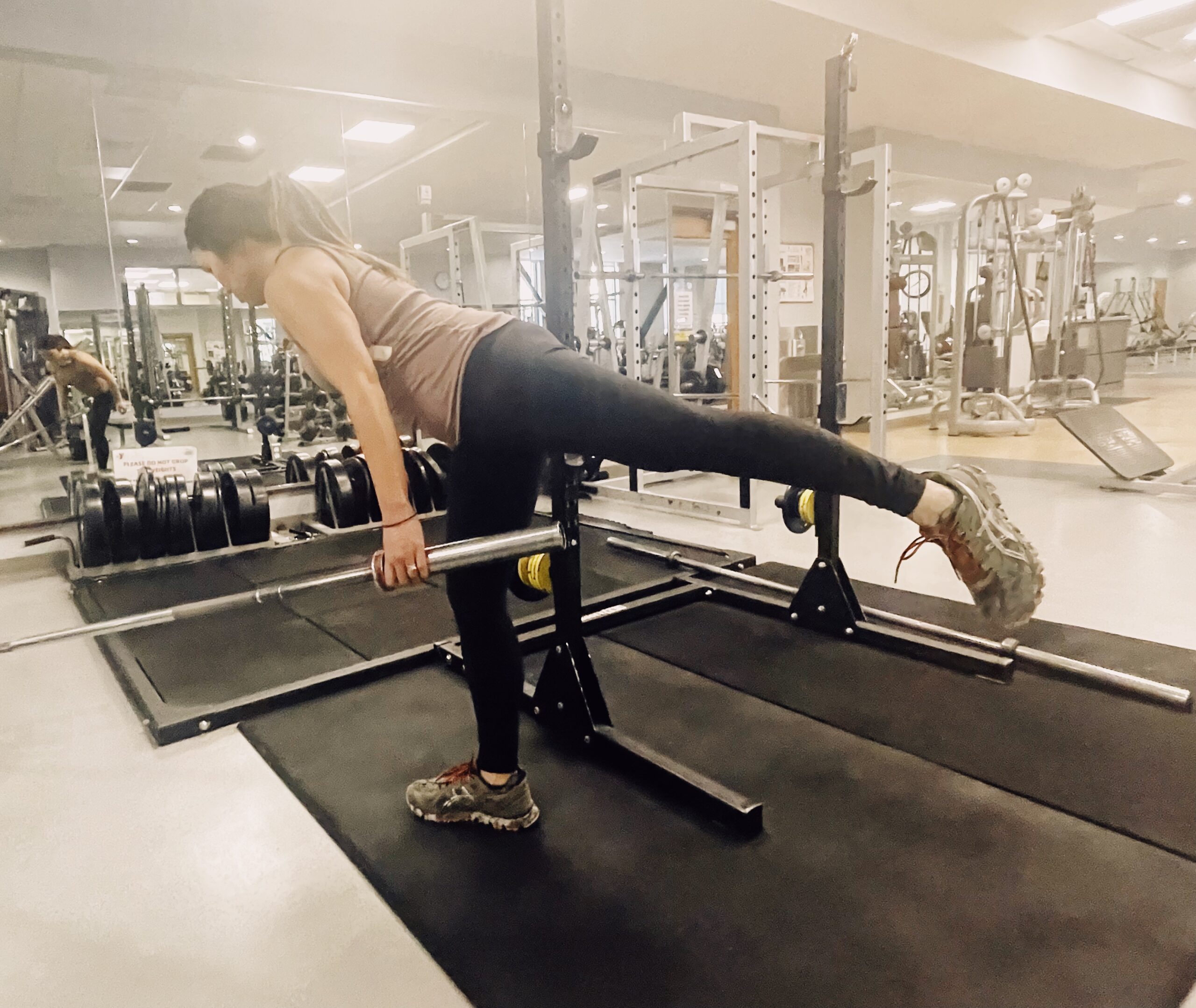
Train like an athlete with the landmine single-leg deadlift

A woman is stretching on the floor with another person.

You know you could always use a little extra strength. Strong legs, in particular, will help you excel in activities such as running, hiking, tennis and skiing.

More importantly, strength is a key component to avoiding injuries. If you are looking to up your game and need a leg and core strengthener, try the landmine single-leg Romanian deadlift. Don’t be intimidated by the name!

If we break it down, the base move—a deadlift—is a bend-and-lift movement. It’s simply picking up a stationary weight off the floor, with no momentum. The landmine single-leg Romanian deadlift will target your posterior chain; the hamstrings, gluteal muscles and the core. It’s a unilateral movement that builds stability, strength and power throughout the posterior chain. Performing it provides you a unique training effect because you combine elements of a free-weight and machine-based exercise. Furthermore, this particular lift will really activate the muscles located through the core to maintain proper form throughout the full range of motion.

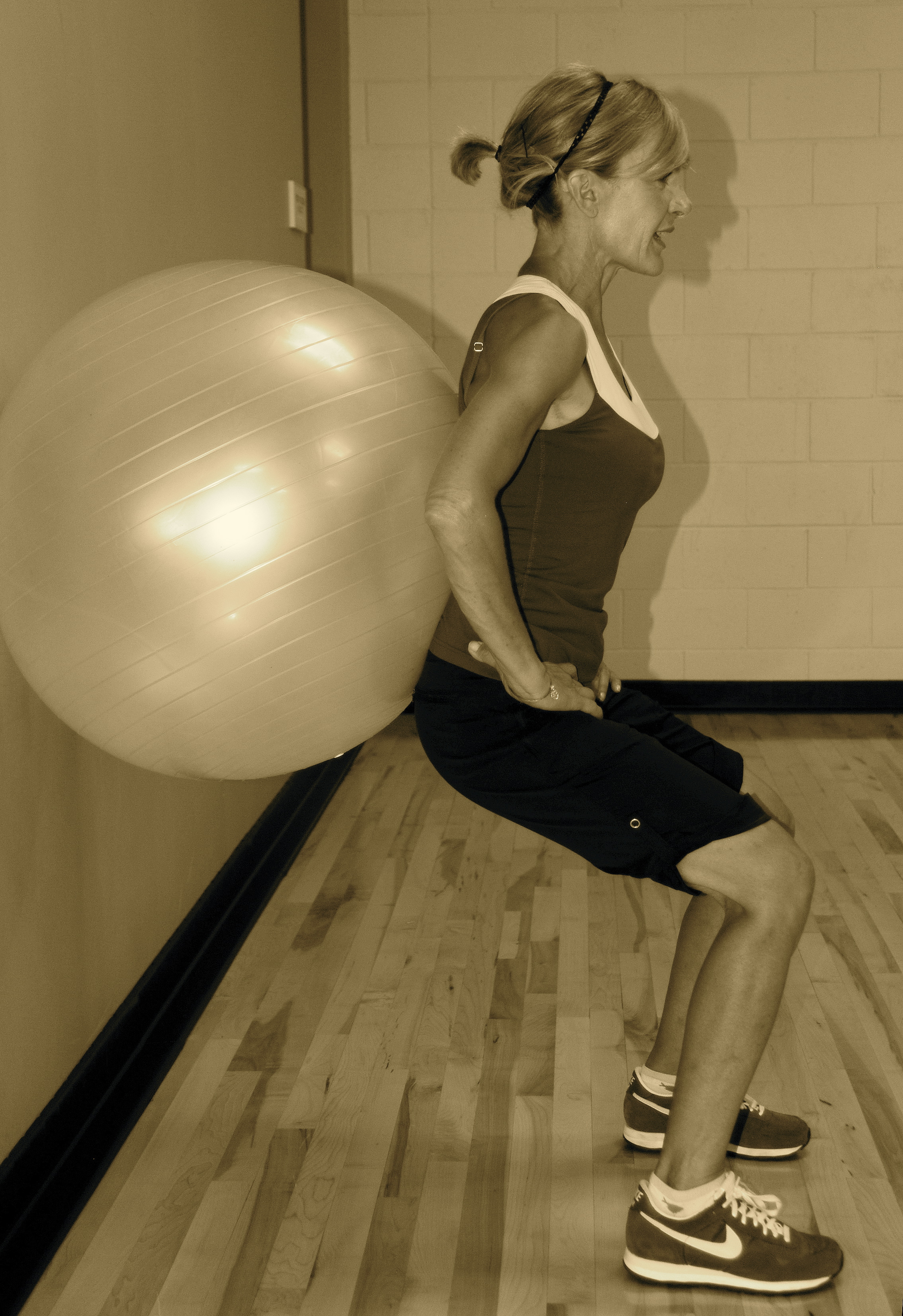
Landmine deadlift is a type of deadlift that features a barbell placed in a Landmine attachment. This particular attachment safely anchors the barbell to the floor. If you don’t have access to one, simply wedge the barbell in the corner of two walls.

The biomechanics of so many sports involve the power and strength of one leg, (running, soccer and football) so developing unilateral strength is important. In reality, most time in daily life is spent on one leg or the other, with minimal time on both legs. Any time you perform a single leg exercise, the inherent instability is a wonderful training stimuli. A good coach or trainer uses varieties like this landmine squat not only to prevent staleness or overtraining in a program, but to encourage proper form. Train like an athlete, with proper alignment and stability of the spine in the deadlift and any other exercise you choose.

Starting position
A woman is stretching on the floor with another person.

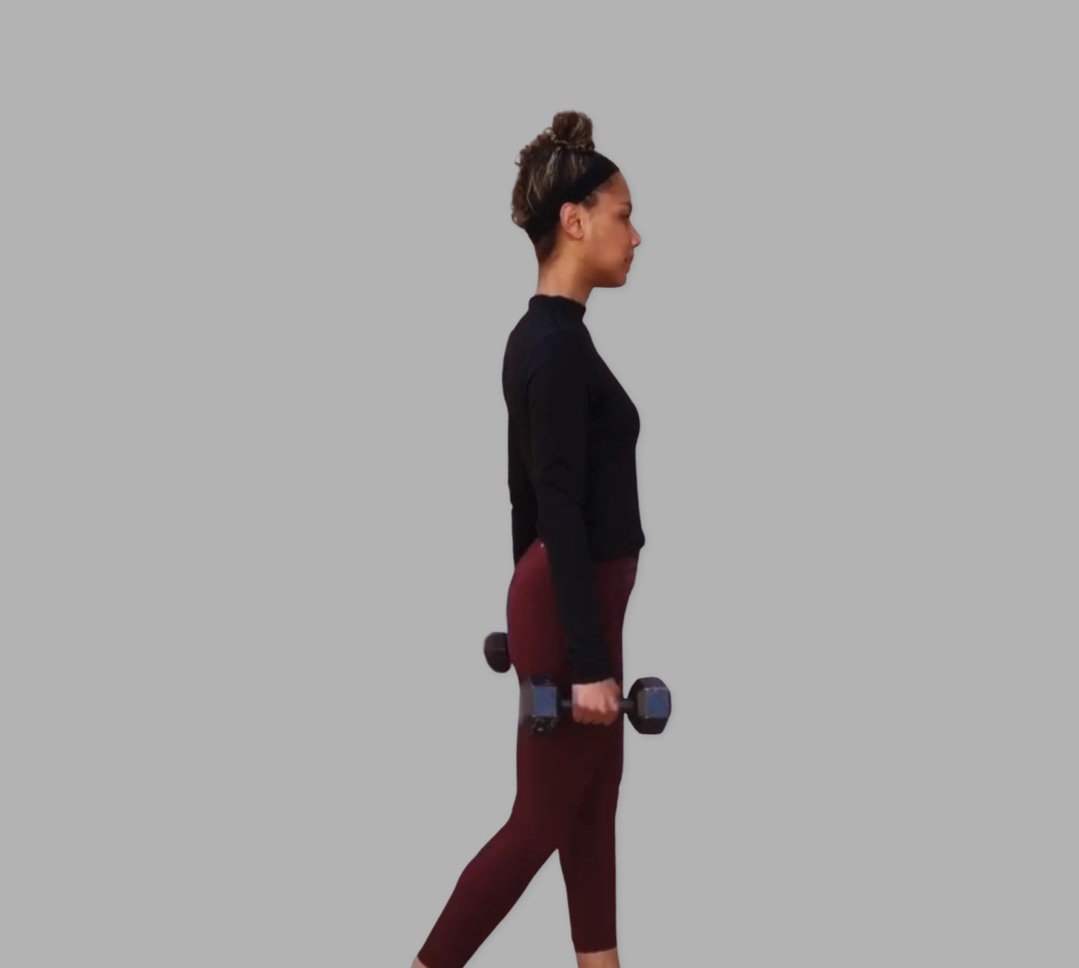
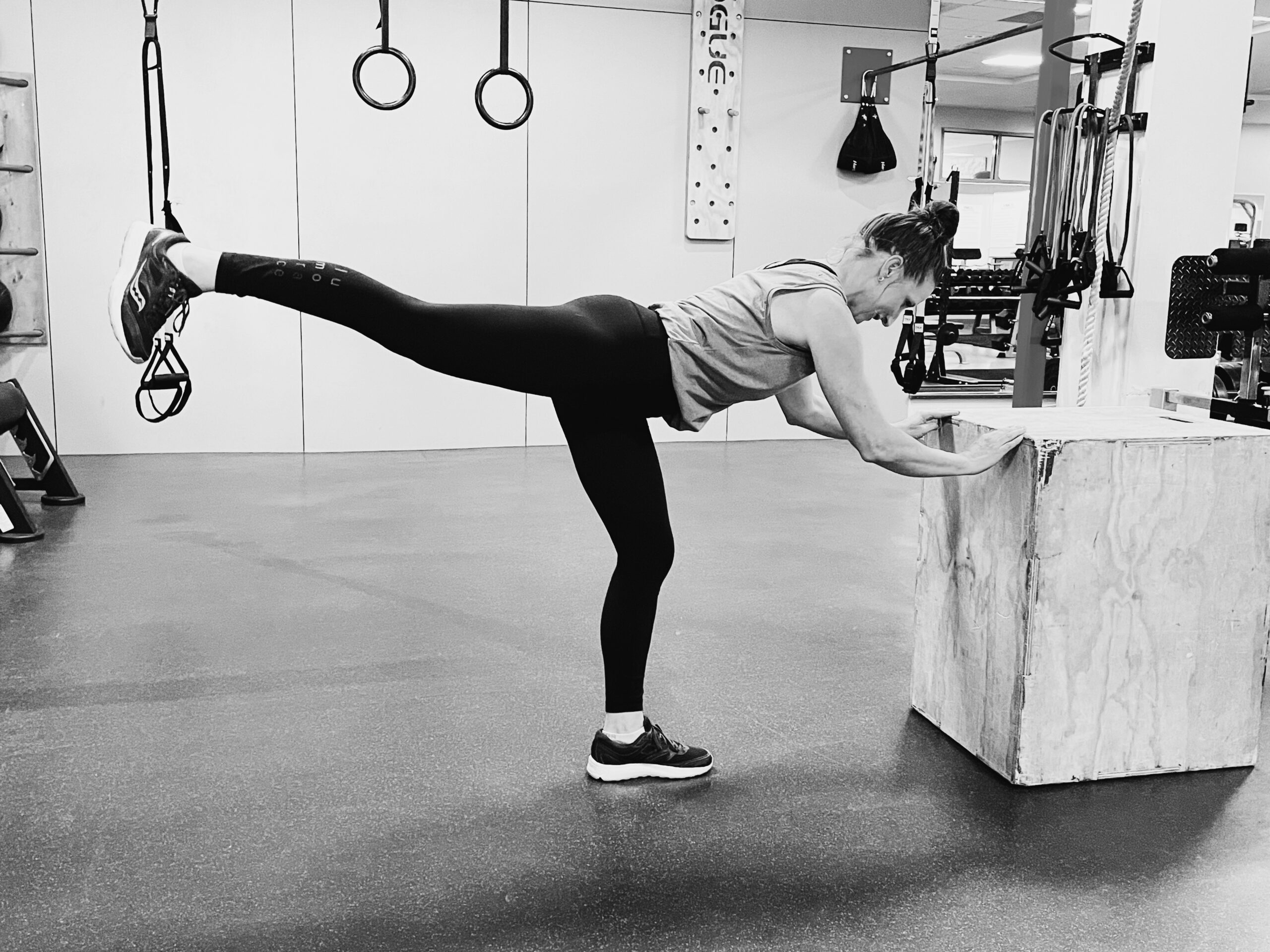
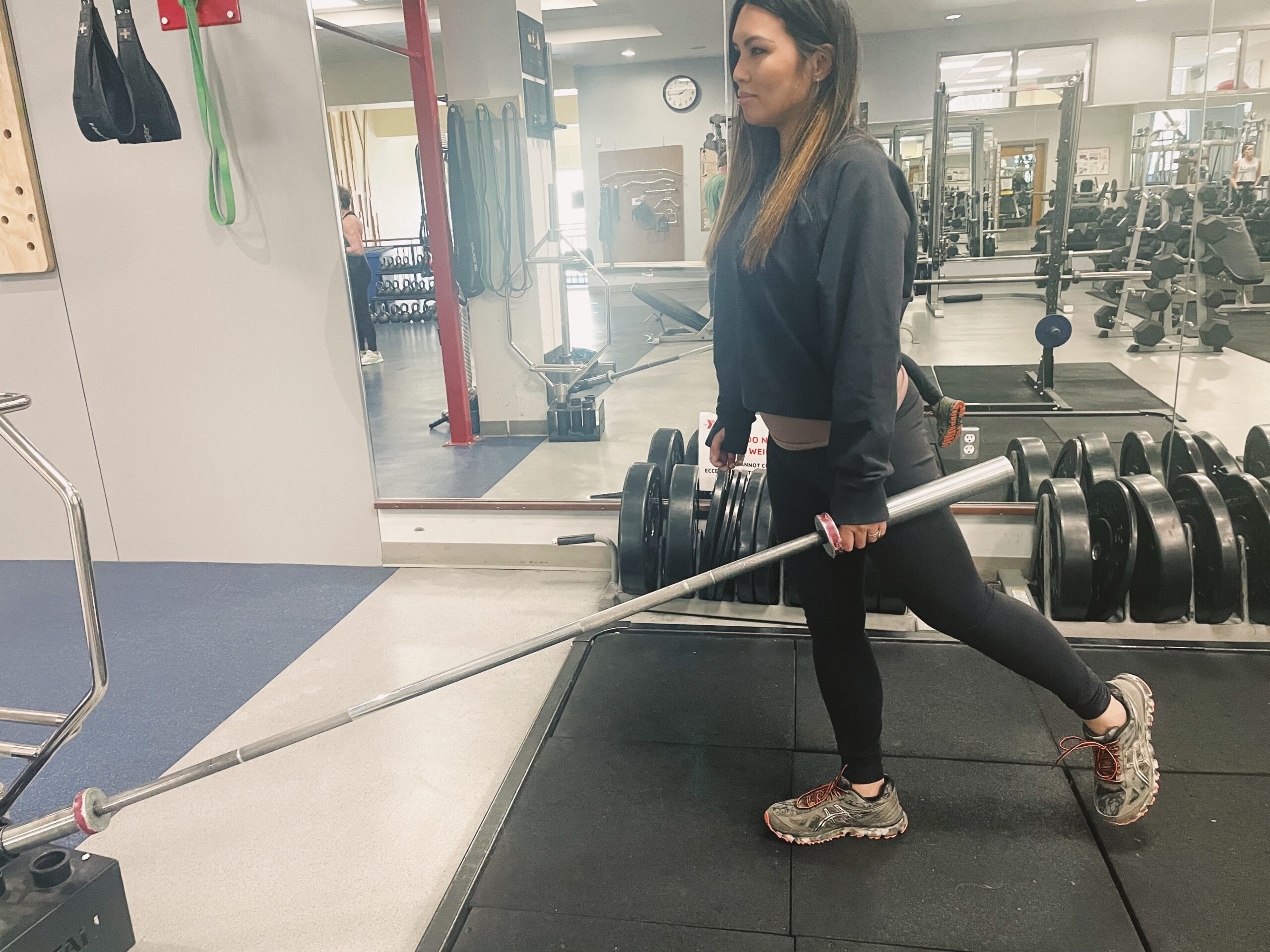
Start in an upright position while holding the bar close to your body. Hold the hand opposite your planted foot at hip level.

Maintain a slight bend in the knee, and push through the heel of the standing foot.

Keep your shoulders relaxed, head and eyes up (or in line with your spine), and core engaged.

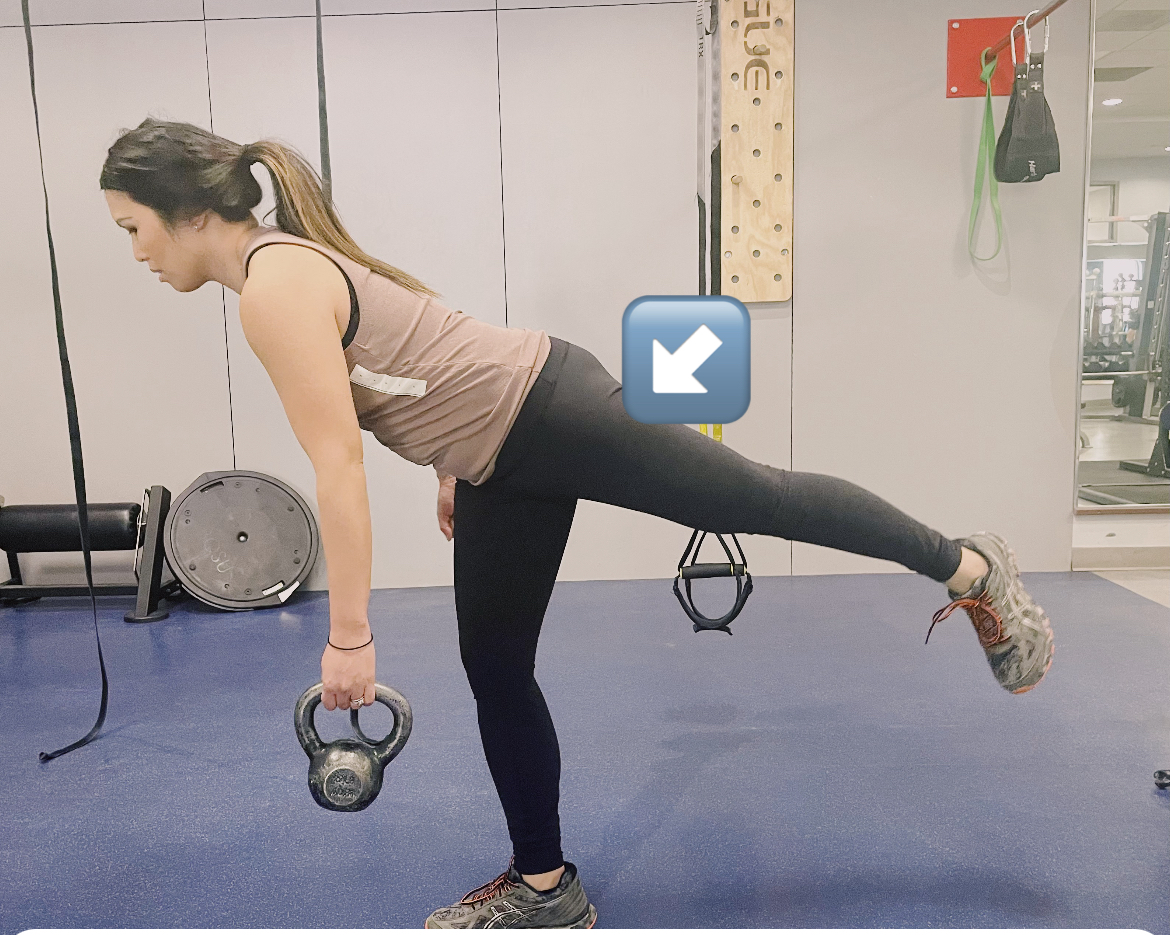
Lower the bar by flexing at your hips, as one leg lifts back up off the floor.

Tip: Focus on moving the rear leg and torso as one unit, maintaining postural control.

Return to the starting position

Once you reach the bottom of the move, quickly contract the glutes and hamstrings to drive the non-weight-bearing leg back to your starting position.

For newbies:
A woman is stretching on the floor with another person.

Start by practicing a traditional Romanian deadlift using a free weight. Make sure the hip doesn’t “open up†as the bar gets closer to the floor. 

https://www.mtexpress.com/wood_river_journal/features/train-like-an-athlete-with-the-landmine-single-leg-deadlift/article_166d1696-8f14-11ee-882e-53a650385d63.html

Think twice about skipping the gym

A woman is stretching on the floor with another person.

For muscles to grow and change, the stimulus must be great enough to allow the muscles to grow back stronger than before. Muscle growth happens whenever the rate of protein synthesis is greater than the rate of muscle protein breakdown. Resistance training can profoundly stimulate muscle cell hypertrophy and, as a result, gain strength.

Just a single bout of exercise stimulates protein synthesis within 2-4 hours after a workout and may remain elevated for up to 24 hours.

There’s no exact measurement as to how much muscle you can build in a month, but it’s typically between one-half to two pounds of muscle. Overall, the timeframe generally takes several weeks or months to be apparent. Greater changes in muscle mass will happen in individuals with more muscle mass at the start of a come back. Other variables, such as volume, training intensity, genetic factors, rest, hormone levels and diet, all affect muscle gain outcomes.

Commonly our muscle mass and strength increases steadily and reaches its peak at around 30-35 years of age. After age 40, men lose as much as 3-5 percent of their muscle mass per decade. And, unfortunately, studies from the Baltimore Longitudinal Study of Aging found that muscle power declines faster after age 65 for women, and 70 for men. We really can’t “stop the clock.†So, it’s important that we push our muscles as we age. Dr. Len Kravitz, program coordinator of exercise science at the University of New Mexico, happily shares that the ravages of time on muscles have been shown to be restrained or even reversed with regular resistance training.

Of course, life and unwanted stuff happens, and it’s quite all right to take two or three weeks off. Sometimes you just need rest and recovery. Yes, your ability to generate force in the muscles does take a hit. You might notice that the 10 body-weight squats you once did with ease now have you huffing and puffing. Thanks partly to muscle memory, you can get back lost muscle quicker than you thought, reverse muscle loss, and continue to progress.

https://www.mtexpress.com/wood_river_journal/features/fitness-guru-think-twice-about-skipping-the-gym/article_baa3bce2-79c5-11ee-9c1f-6b985a4275e7.html

Learn Hip Airplane for strong hips and stability

If you’re trying to get the most out of your leg program, you might want to try an exercise called Hip Airplane. I know a lot of us use squats and lunges to stay strong for strength in the sports we enjoy. With ski season right around the corner, you’ll need good hip function. Good hip function keeps you symmetrical on skis, or in a squat, minimizes any hip shifting, and helps mobility. The Airplane is an exercise that targets the posterior hip muscles, the Gluteus Medius and Maximus. Strengthening these muscles is important, as your glutes are key lateral stabilizing muscles of the hip and legs, including the hamstrings.

Along with teaching you good pelvic control, which can eliminate back pain, or excessive motion in your back (not good) the Airplane also targets six muscles in the deep gluteal region known as external rotators of the hip joint. Yes, squats and lunges are fundamental strengthening exercises. Your glutes have to work hard when you lift yourself out of the bottom of a squat. But squats are typically performed in a one plane of motion-up and down. Very few exercises work on the rotational aspect of a move. The Airplane does just that: it helps improve your mobility, especially if you are tighter on one side. For skiers who feel like they are tighter turning one way than the other, this can be a helpful pre-season exercise.

Airplane is also a terrific neuromotor exercise. Performing it throughout the season can improve your motor skills, such as balance, coordination, agility, gait and proprioception. The advantage of practicing most single leg exercise is that any neuromotor exercise helps solidify a connection between the nervous and muscular systems.

Hip Airplane:

A woman is stretching on the floor with another person.
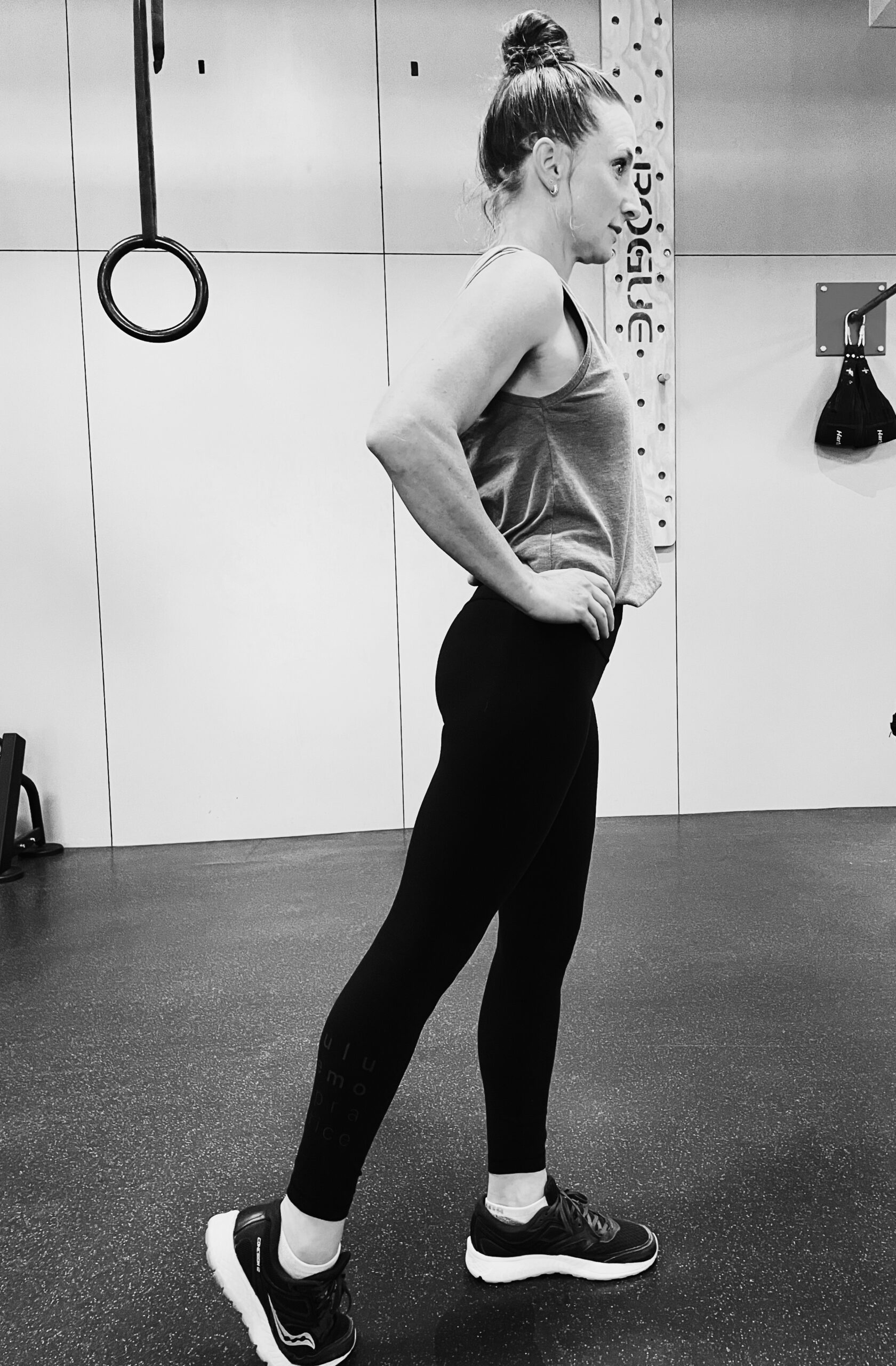
To begin, ground one foot into the floor.

1. Place your hands on your hips. Ground one foot into the floor, hinge from your hips, and lift the opposite leg back.

A woman is stretching on the floor with another person.
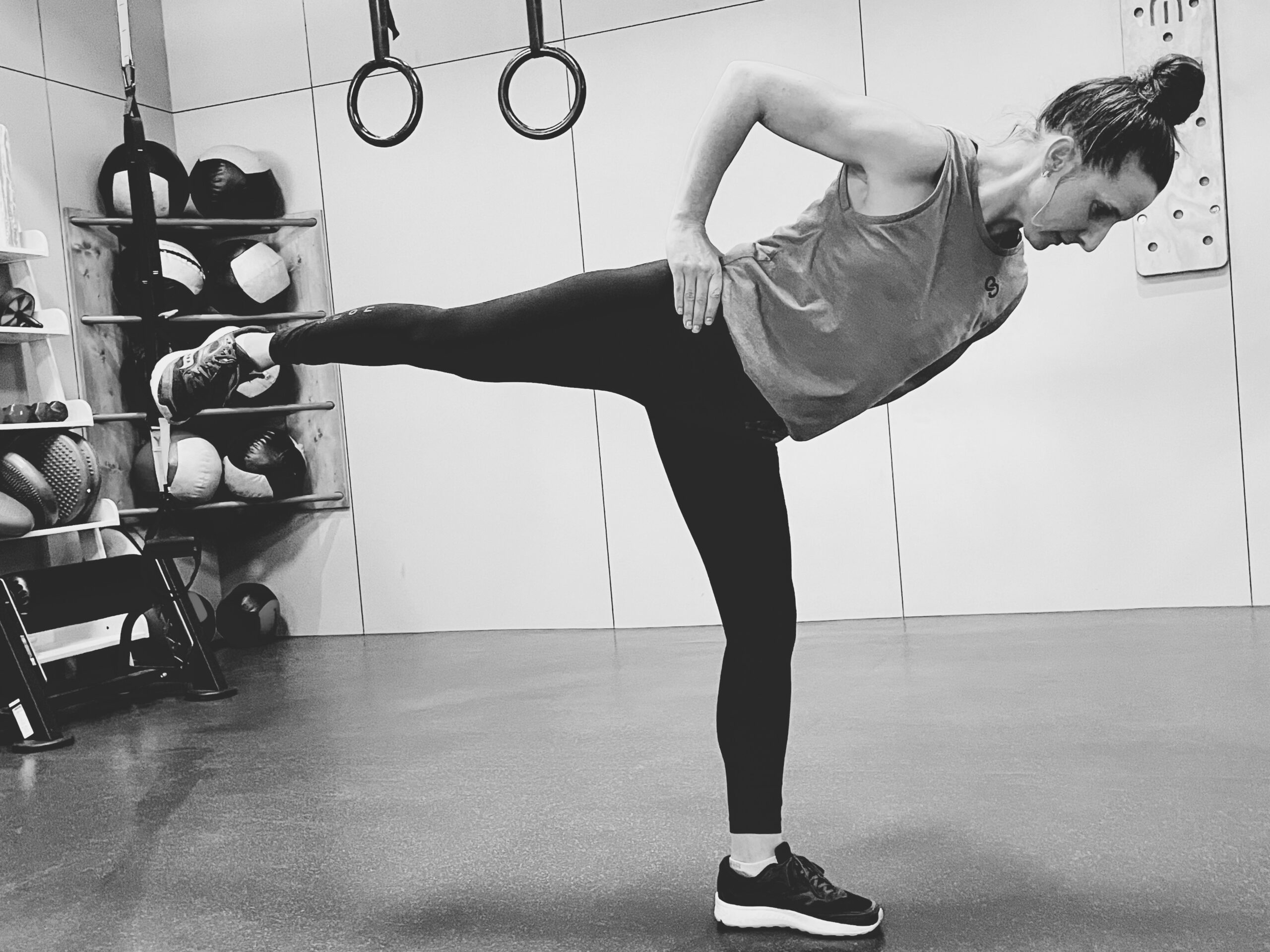
Hinge from your hips, and lift the opposite leg back. Hold 5 seconds.

2. Open the hip about 2 inches, or as far as you can, squeezing the glute. Hold 5 seconds.

A woman is stretching on the floor with another person.

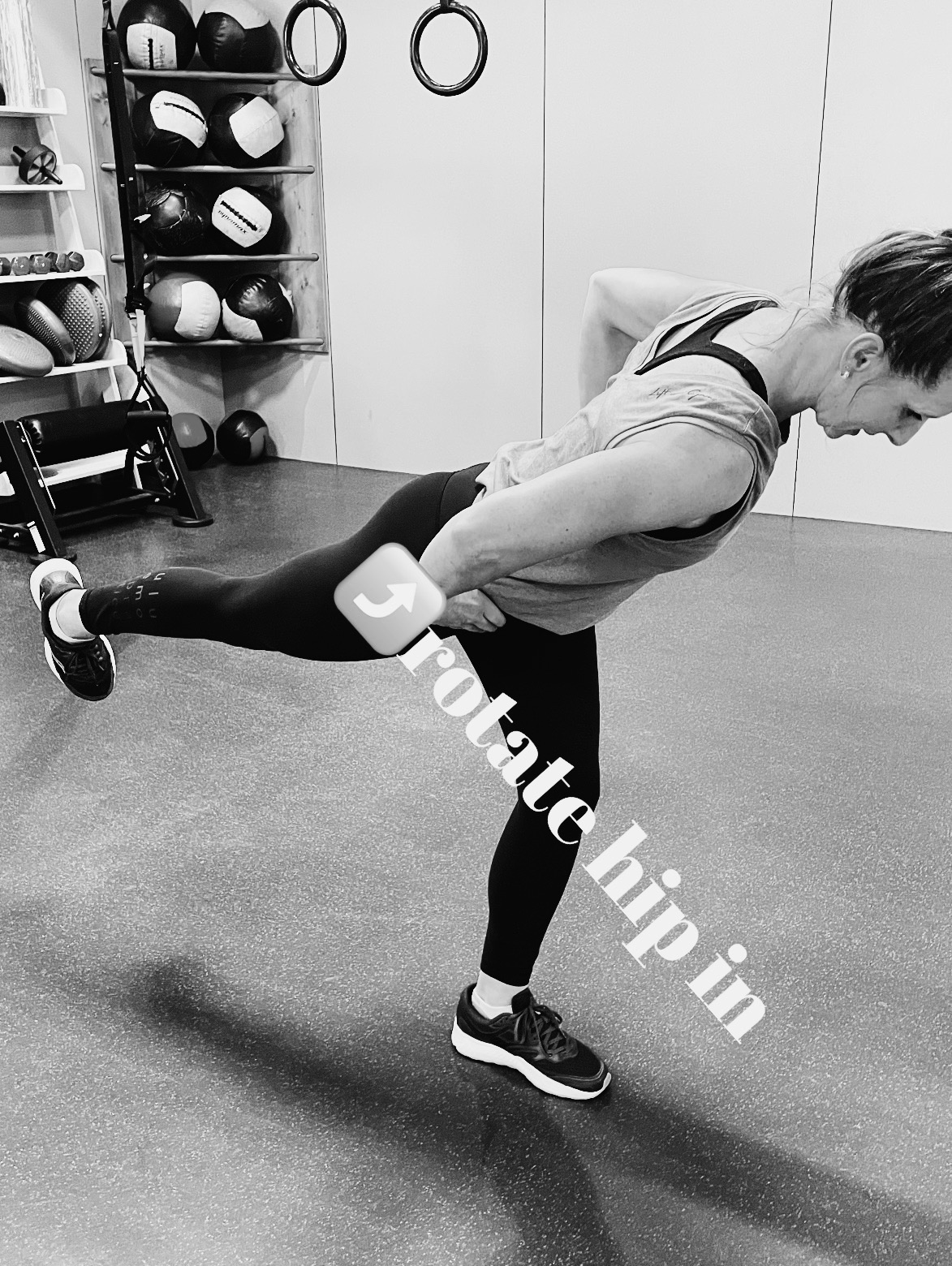
Tip- Steer the hip inward around the pelvis.

3. Drop the hip inward: you’ll feel a good stretch. Hold 5 seconds.4. Return to start.

A woman is stretching on the floor with another person.
Keep pressing into the stance foot, and fully extend your back leg, squeezing the gluteals.

5. To make it easier : Hold onto a bar or wall for support. You can also use your arms for balance.

https://www.mtexpress.com/wood_river_journal/features/fitness-guru-learn-hip-airplane-for-strong-hips-and-stability/article_420951ca-62f5-11ee-b984-5fd4ce48995e.html

 Improve your motor skills with crawling and bird dogs

Watch children play outside on a lawn and you can be sure they are crawling, rolling or somersaulting. From the time we kick and crawl as infants, our motor skills continue to evolve, leading to higher physical activity over a life span. There’s a new trend in fitness programs that focuses on ground-based fundamental or “primal†movements, like crawling. Some of these programs, like Animal Flow, are exercises performed in the quadruped position, linked together in continuous sequences called flows.

If you enjoy yoga flow, Animal Flow is quite similar, though not necessary performed completely on the hands and feet, in a quadruped stance. The later promotes reconnecting with your body’s natural movement abilities, or “primitive movement patterns,†ones of our four-egged friends, to improve function of the “human animal.†Studies show that an eight-week, twice-per-week Animal Flow program, in addition to regular exercise, increased trunk stability scores, range of motion and motor competence.

Crawling lights up your muscles

If we take away the 100-mile-an-hour lawn crawl that children love to show-off, the crawl itself is a body weight exercise that improves motor control mechanisms for better balance and coordination. Adam Eckhart, assistant professor at Kean University has studied how when we are upright, either walking or running, built in motor programs generated in the spinal cord play an important role in the rhythmic coupling of our arms and legs. When you step over an obstacle, he says, the central pattern generators adapt the timing and counterbalancing limb movements to adapt to changes in stability.

Studies show that patients with Parkinson’s disease have higher sensory signals in the arms when anticipating a step obstacle, concluding that a robust arm-leg coupling awareness is very helpful. Stroke patients conversely, rely on the same motor muscle activity in their arms to counterbalance difficulty lifting a leg over a step obstacle.

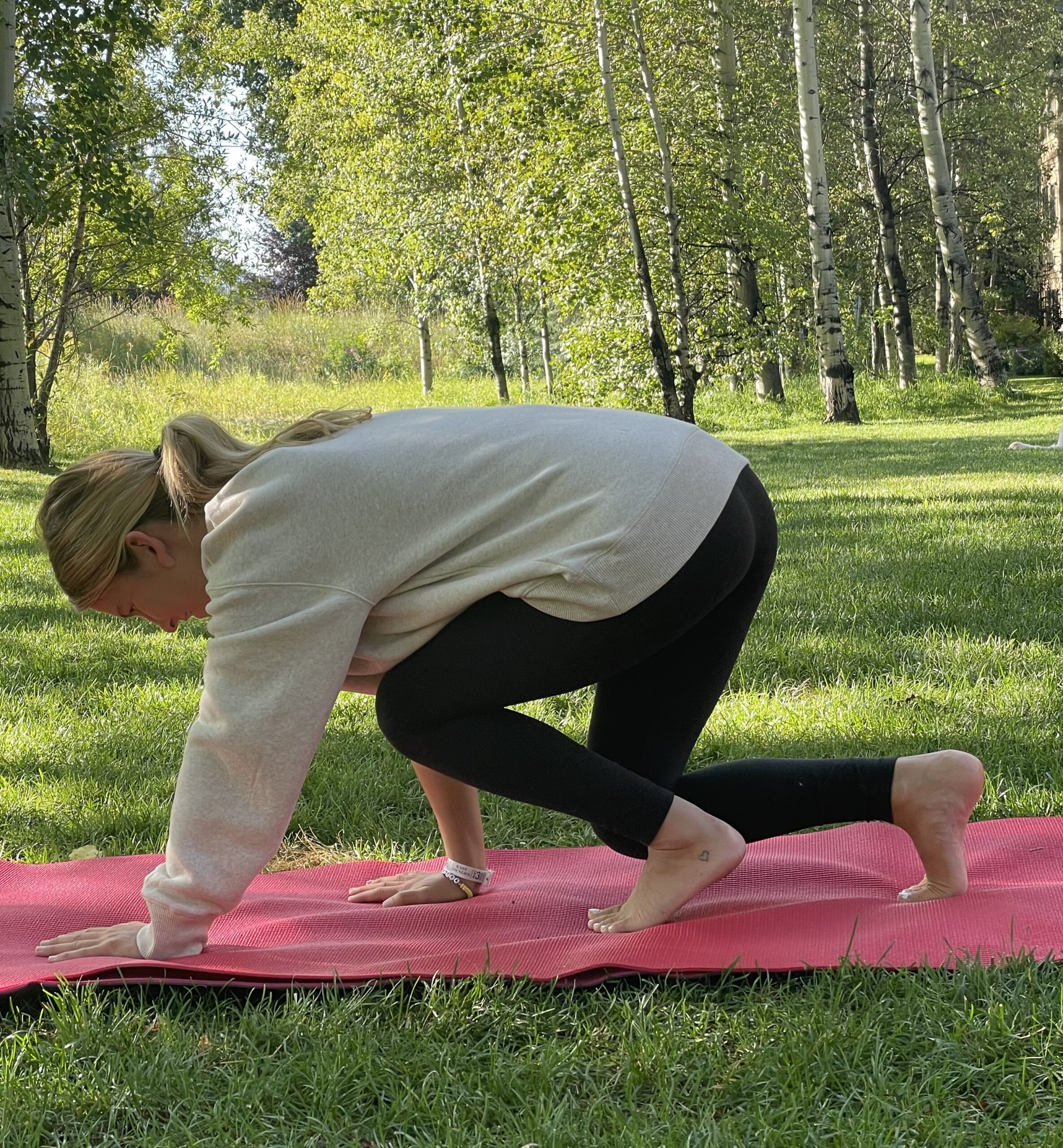
Compared to walking, hand-foot crawling lights all your muscles up, especially with added speed. Loads on the shoulders, triceps, quadriceps, hamstrings and calves change, depending on the whether the hips are high or low.

Four-point kneeling dogs

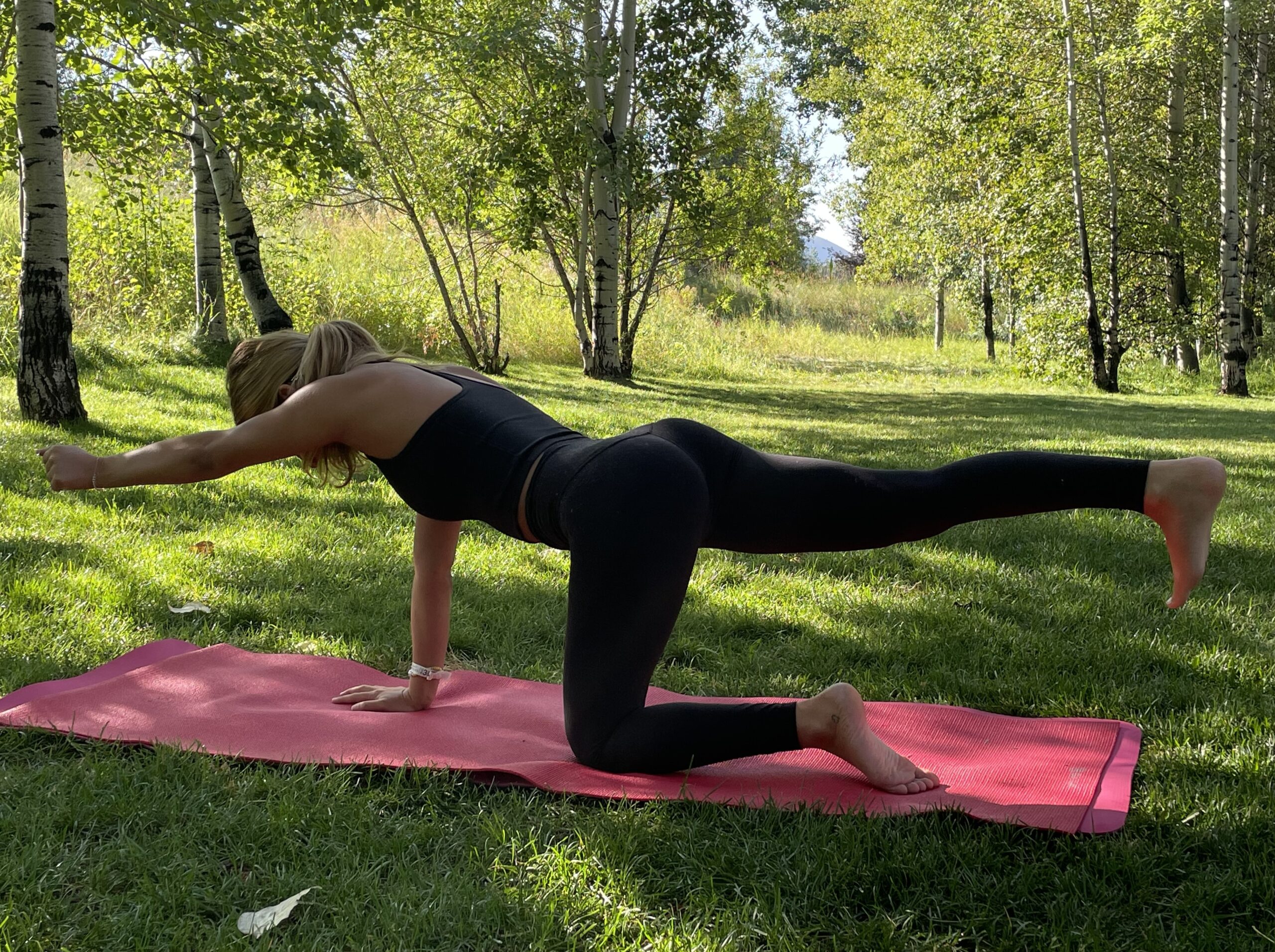
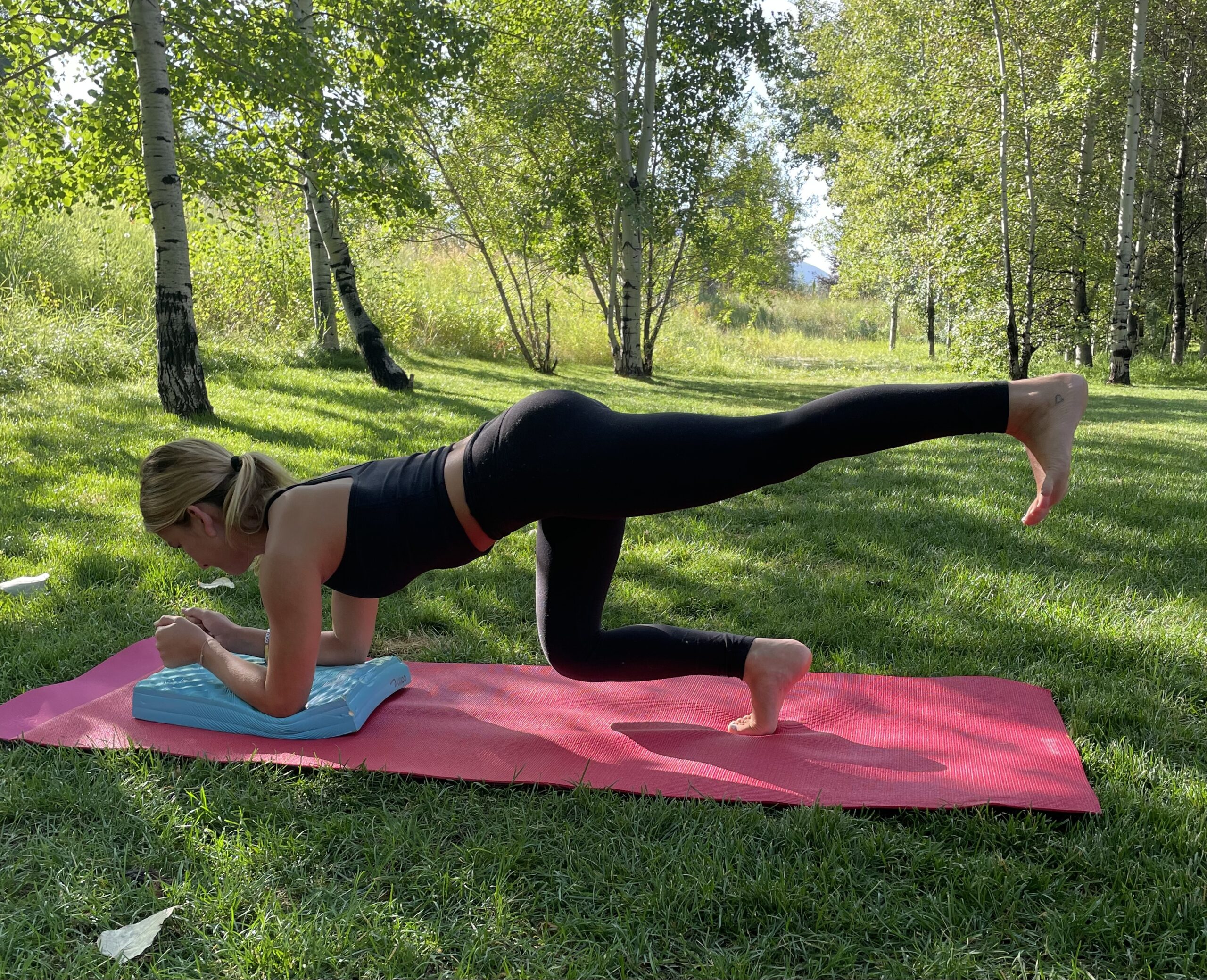
If animal flow feels too intimidating, another quadruped exercise called Bird Dog, (with variations) is an important go-to. Evidence shows that these simple but important exercises aid in balance and coordination when we’re upright, on two legs. Bird Dog, (also known as the quadruped limb lift) is one of the most important exercises used in low-back stabilization programs as it targets the back as well as the hip extensors. It also teaches the discipline of using proper hip and shoulder motion while maintaining a stable spine, says Stuart McGill.

A woman is stretching on the floor with another person.
Forward crawling. Photos by Connie Aronson
A woman is stretching on the floor with another person.
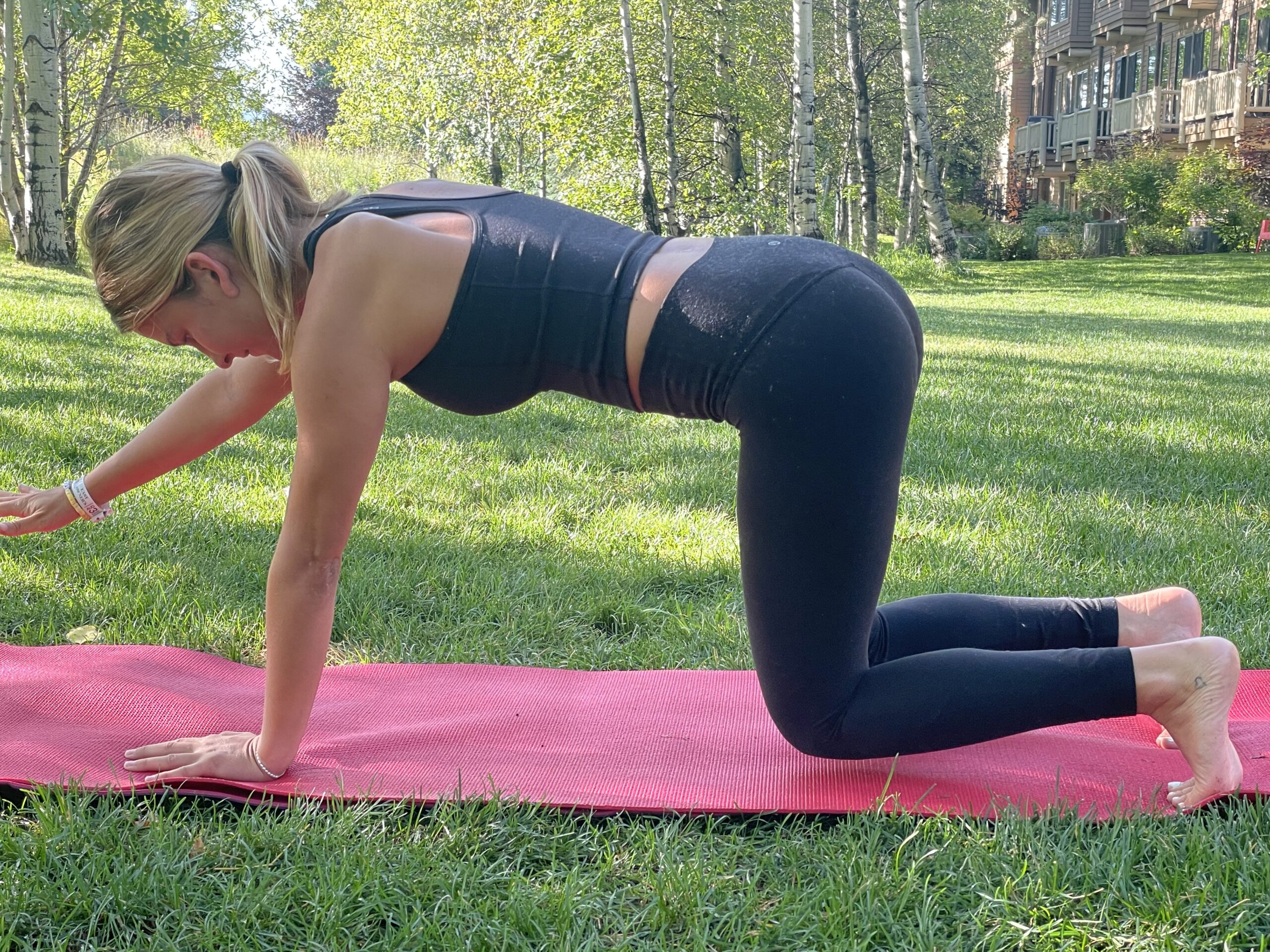
Knees elevated with one arm lifted.
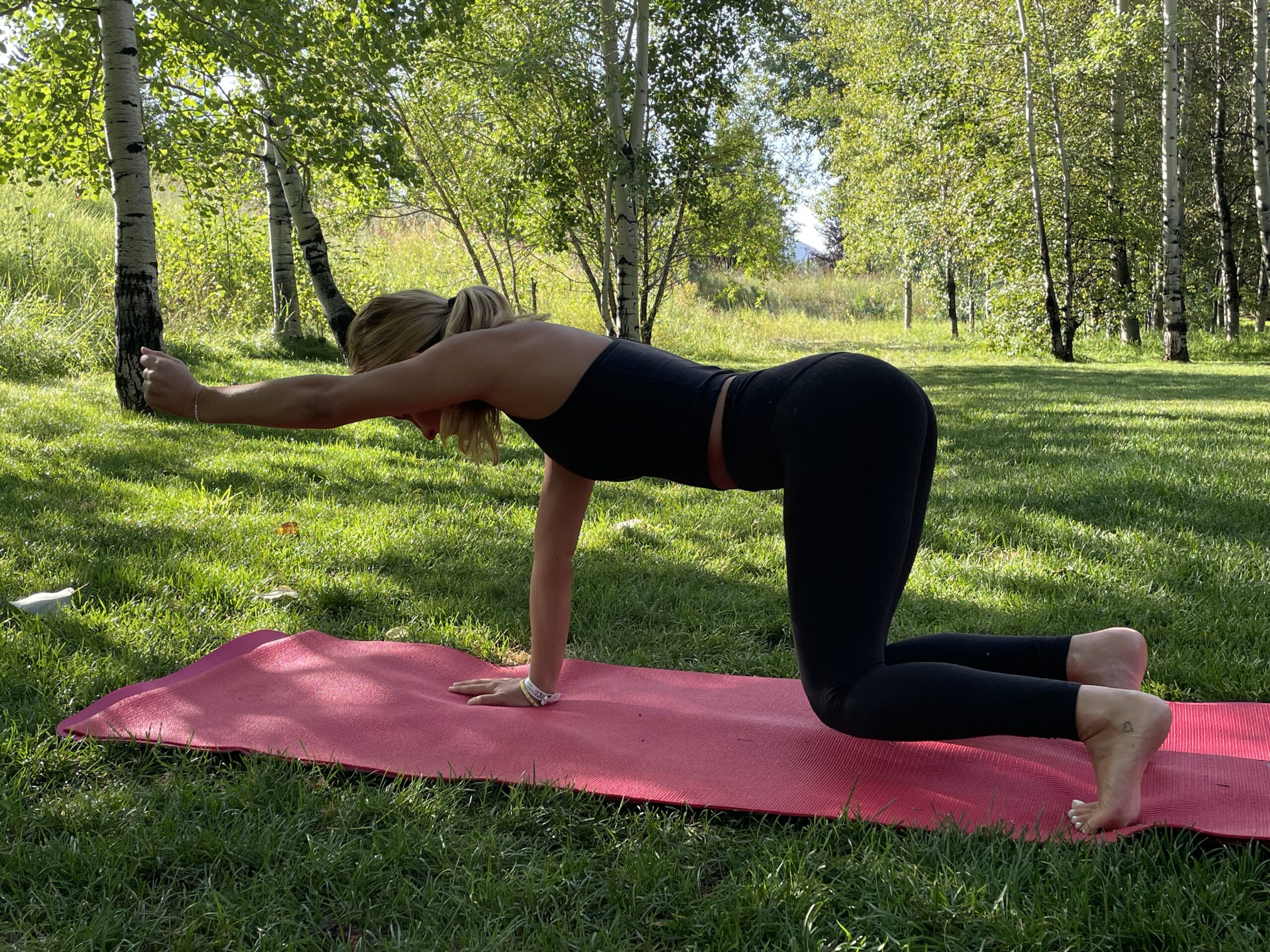
Knees elevated with one arm fully extended. Photo by Connie Aronson
A woman is stretching on the floor with another person.
Bird dog. Photo by Connie Aronson
A woman is stretching on the floor with another person.
Arms on foam pad, knee elevated, leg extended. Photo by Connie Aronson
A woman is stretching on the floor with another person.

Bird Dog starts in a four-point kneeling position, with a contralateral arm and leg lift. The act of raising opposing limbs changes the types of stress on the body and impels the body in the redistribution of forces in an unfamiliar way, forcing the body to adapt. By alternating the base of support, such as using an unstable upper body support, like a foam pad, research shows that you’ll improve total body joint stability, joint proprioception, and range of motion.

The goal of any fitness program is to train your body for the sports and activities you enjoy and to prevent injury. Overall, quadruped movements are simple, fun, and important fundamental movement patterns.

https://www.mtexpress.com/wood_river_journal/features/fitness-guru-improve-your-motor-skills-with-crawling-and-bird-dogs/article_203fff00-3701-11ee-b736-4f7a28cdca1b.html

Strong legs : learning the basic squat

Featured


A woman is stretching on the floor with another person.Nothing beats a great pair of legs. We need the strength of them to walk us through our lives. If you’re a skier, you can appreciate how hard your legs have to work on a powder day, as your hips and knees continually flex and extend. The lower body provides support and mobility for movement. The strongest muscles, for instance, the quadriceps, the front thighs, and your gluteals( posterior),  are powerful movers in  most every sport. No matter what your activity of choice may be, it is a good idea to keep them strong with a simple traditional exercise: the squat.

The movement seems simple enough: you “sit back “, as if you were to sit down a chair. Yet our bodies are a little more integrated than we think, as muscle is intertwined and inseparable from fascia. Rodney Corn, a biomechanics professor at the California University of Pennsylvania builds on the concept of how muscles are not islands by themselves. From the bottom of your foot, all the way up through your calf muscles, legs, hips, up to the top of your head is one continuous band of myofascia, transferring force from tendon to bone, all affecting each other. For example, the deep squat with the arms held overhead  is used as a movement assessment tool, as every joint in your body has to work. Here is where muscle imbalances show up. For example, if your knees track inward or outward, it probably indicates that your gluts are weak, or the inner thighs are weak and tight, or maybe your heels come up off the ground, indicating very tight calf muscles. Overtime, these kinds of compensations can lead to injury. Be aware of alignment, even though the squat seems simple enough, before you start adding either heavy weights or variations of a squat, such as a walking lunge exercise.

How-to:

Stand with your feet hip width apart, with your toes pointing forward. Bend your ankles, knees and hips as if you were sitting back in a chair. The authors of Strength and Conditioning Journal December 2009 use the cue to “sit back into the squat.†Shifting your weight backwards not only reduces the torque on your knees by decreasing the angle, but also distributes the forces throughout the whole lower body, not just the front thighs. Pause for 1-2 seconds, tighten your gluts, and extend your legs fully back up to standing.

Sitting back in the squat can also prevent you from arching your back. By engaging the glutes, it becomes easier not to arch the low back. Keep your spine in a neutral position. The authors suggest that repetitive extension of the lumbar spine beyond the anatomical limit (arching) places stress in the small bones that join the facet joints in the back of your spine, called pars interarticularis. Keeping  a neutral spine throughout the move increases stability through the spine and allows it to handle greater compressive loads. Once your movement patterns are ingrained, you can progress the difficulty of a body weight squat to ones that include free weights, weighted bars, kettleballs or medicine balls. The variations  are numerous.

A shallow squat might be better for you if you have knee pain or patellar tendinous, because more than anything, strong quads will help in your rehabilitation.

Knee flexion and extension strength was recently measured in competitors in the National Senior Games. They had an average of 66% greater isometric knee flexion strength and 38% greater extension strength than control groups because of the demands of 20 or more years of competing, and loading the skeletal muscle. Other research, published in the Journal of Strength and Conditioning  Research  Journal 2009 shows a 53% increase in leg strength after 6 months of resistance training in older men. The point is the basic squat is a good exercise to do. Stronger legs make for better days on or off the hill, or on the tracks this winter.

Connie Aronson is an American College of Sports Medicine Fitness Specialist located in Ketchum, Idaho

Printed in Idaho Mountain Express January 31, 2010