Slowing down aging with strength and grace


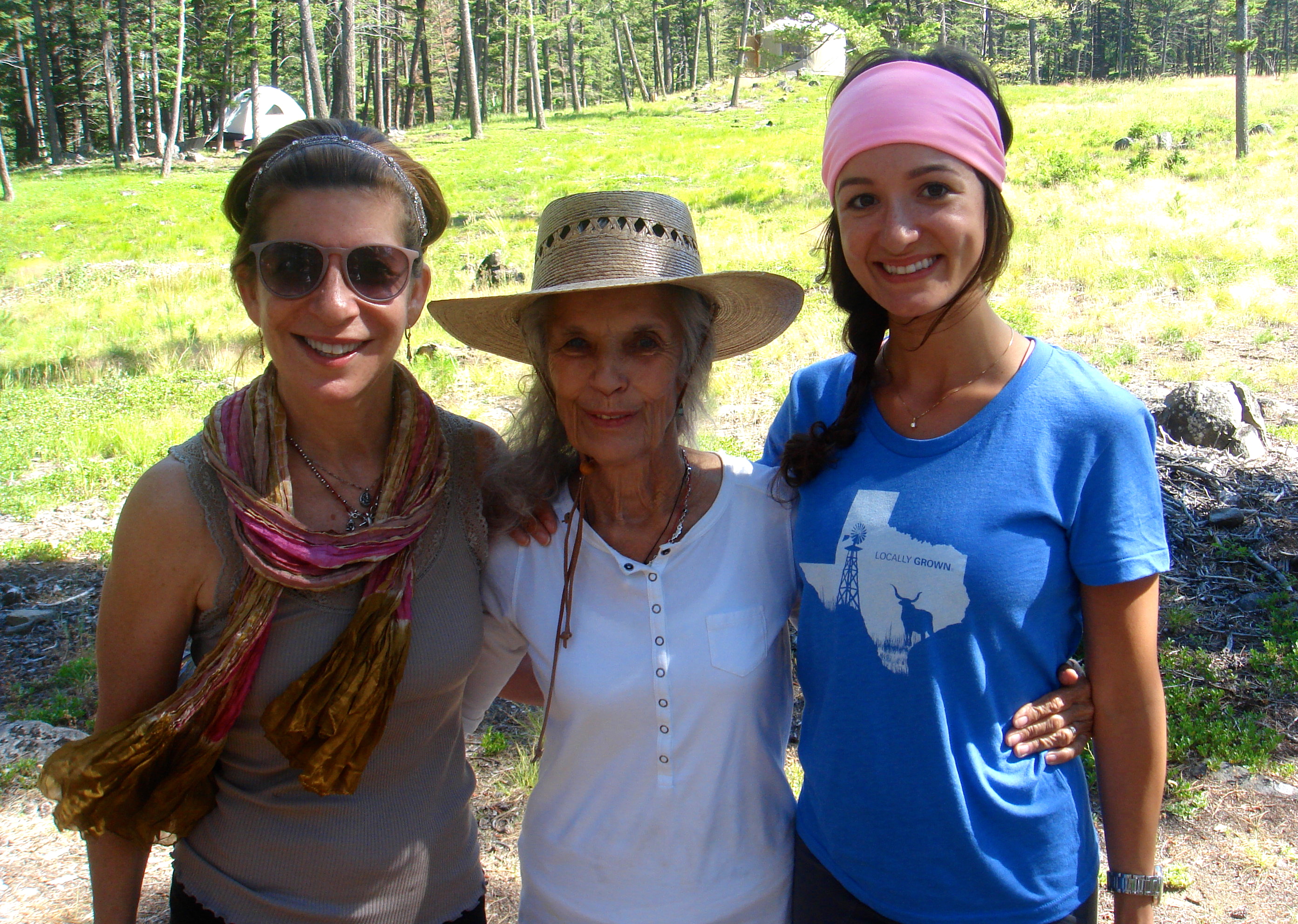
Three women standing next to each other in a field.

3 generations living well!

“It’s paradoxical that the idea of living a long life appeals to everyone, but the idea of getting old doesn’t appeal to anyone.â€- Andy Rooney

Older adults need exercise training to improve their functional fitness that results in their independence, reduced falls, and a positive and profound impact on their mental and emotional health. Programs that involve strength, agility, dynamic balance, sensory enhancement and joint mobility ( think chest- up-confident stride ) all contribute to helping slow down the aging process.As we age, the size and quality of our muscles shrink at a loss of .5-1% per year. From the age of 60-80 years, the natural prevalence of muscle loss, or sarcopenia, jumps exponentially  from 15-32% for men , and 23- 36% for women. At 80, the values increase to about 51% -55% respectively for women and men.

Shrinking  muscles affect strength, power, endurance and speed.According to the US Center for Health Statistics, a person spends about 15% of their lifespan in an unhealthy state because of disability, injury or disease occurring in old age. The good news is that only one day a week of training will help you. A recent study of healthy women aged 60 years and older, showed that as little 1 day per week of aerobic activity and 1 day per week of resistance training may be just as good for improving strength,endurance, and quality of life as more frequent training. The study, published in the Journal of Strength and Conditioning Research, sited significant  improvement of daily activities such as standing, sitting climbing stairs and walking. The majority of studies suggest that older less conditioned people adhere to training 2-3 times a week, with 48 recovery hours, performing 3 sets of 10-12 exercises.

Functional fitness involves dynamic balance, and it is not necessarily your fate to be the 1 of 3 people over 65 that suffer a bad fall. In younger people balance is largely an automatic reflex. A variety of movements, with practice, can make your legs stronger, ankles,hips and spine more flexible, and challenge the nervous system. Optimal balance requires information from both our body in space and our external environment. It also involves using all 360 degrees of thigh muscle, as these are the muscles that need to be strong. Try the following mobility and sensory-enhancement exercises adapted from Christian Thompson, PhD, associate professor in the department of exercise and sport science at the University of San Francisco:

1. Ankle Circles .
Stand tall with feet hip- width apart. Hold onto a stable object with one or two fingers only. Lift one leg off the floor slightly, in front of the body. Do 15 slow, clockwise ankle circles, moving your foot to the greatest degree possible. Repeat counter clockwise; switch legs. ( www.ideafit.com/ST-older-adults.com)

2. Rotating Head.
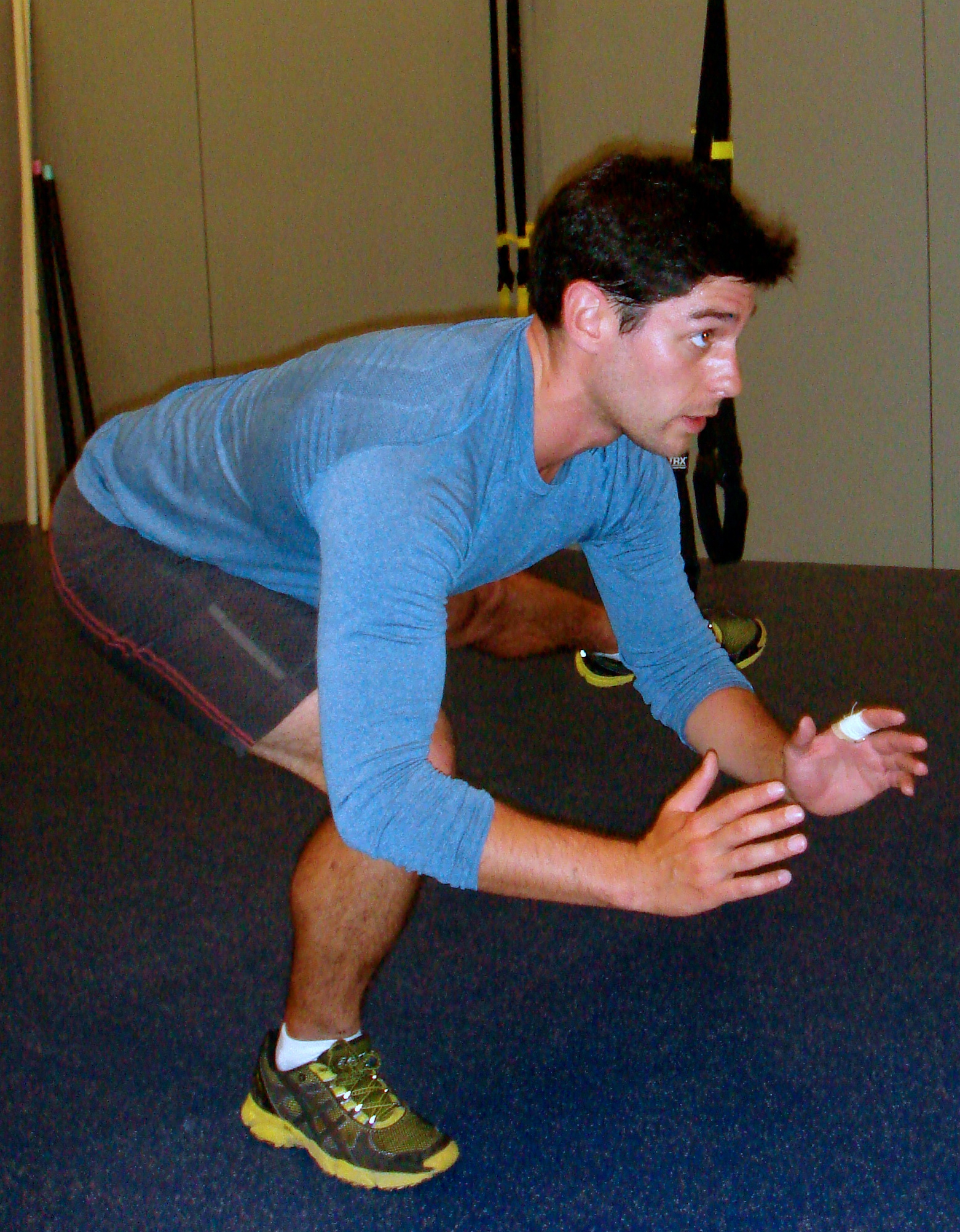
Stand with feet hip width apart while holding a shortened TRX Suspension strap in a single- handle mode, palm down, with arm partially extended at chest height. Repeatedly turn head fully from right to left at a brisk pace while keeping eyes fixed on anchor point.Try for 60 seconds. To progress exercise, march while turning head.

http://ketchumkeystone.com/2013/09/30/slowing-down-aging-with-strength-and-grace/PA man riding on the back of a bicycle.
Why Yoga Works – The Top Reasons to Try It


A woman is stretching on the floor with another person.

Yoga is good for the mind, body and soul.

Yoga might be the only time in your busy day that is truly yours; a time when all of your attention is directed to exactly what you are doing. Today over 15 million people in the US know the value of doing just that-relaxing with yoga. The yoga that we practice today rises out of an ancient meditation heritage dating back at least 4,000 years. Fast forward to today’s crazy hectic pace, especially with the approach of the holiday season, the benefits to your physical, mental and emotional health are top reasons why yoga still works.

1. Stress relief. Yoga reduces stress by encouraging relaxation and lowering the levels of the stress hormone cortisol. Yoga teaches you how to breathe more fully by taking slower, deeper breaths. Known as  pranayama, breathing more fully helps improve lung function and trigger the body’s relaxation response. By changing our pattern of breathing, we can significantly affect our body’s experience and response to stress. Other benefits include reduced blood pressure, cholesterol and heart rate,  improved immune system as well as reduced anxiety, depression, fatigue, insomnia, and easier pregnancies.
2. Pain relief. Next time you have a headache, neck, back, or other chronic painful conditions, yoga can help. In the largest US study to date, published in the Archives of Internal Medicine, yoga or stretching classes were linked to diminished symptoms from chronic low back pain, more so than a self-care book. Both the yoga and stretching class emphasized the torso and legs. Researchers found that the type of yoga, called viniyoga, which adapts and modifies poses for each student, along with breathing exercises, works because the stretching and strengthening of muscles benefit back function and symptoms. Many people with chronic pain shy away from yoga’s misleading reputation for requiring supple joints for fear of getting hurt. But the same goes for approaching any new activity with too much gusto, writes Kelly McGonigal, Ph.D., in Yoga For Pain Relief . Instead of pushing yourself to your limit, think of staying in a 50-60% effort zone.

3. Better Posture & Better Bones. Yoga helps to maintain your muscularity and that helps with maintaining your posture. It also helps with stretching all the muscle groups that support better body alignment. For women, increasing research is showing that exercise is a means of preventing the risk of various cancers, particularly breast cancer. The reasons are twofold, in that both the physical effects and indirect effect of adding yoga as a form of exercise prevents weight gain.

4. Befriending Your Body. For anyone who feels ashamed or self-conscious about their body, yoga can help you become an alley with yourself instead of an adversary. Our obsession with thinness equates the physical practice as a good way to sweat/ get /thin/quick; all about the outer body. Yet yoga primarily evolved for a subtle and more powerful connection of the inner world: the mind, senses and emotions. Today 90% of all women and junior and senior high school girls, respectively, dislike their bodies and are on a diet. ( 15% of these girls are actually overweight.) It doesn’t help that classes might be packed with thin fit people. While yoga does teach you to use and discipline your body to be strong and flexible, the emphasis is on your body as a whole entity: living, changing, accepting and alive in the moment.

This article was originally published in the Idaho Mountain Express. November 16, 2012.

Connie Aronson is an American College of Sports Medicine Health & Fitness Specialist. Visit her at: www.conniearonson.com

Strong legs : learning the basic squat

Featured


A woman is stretching on the floor with another person.Nothing beats a great pair of legs. We need the strength of them to walk us through our lives. If you’re a skier, you can appreciate how hard your legs have to work on a powder day, as your hips and knees continually flex and extend. The lower body provides support and mobility for movement. The strongest muscles, for instance, the quadriceps, the front thighs, and your gluteals( posterior),  are powerful movers in  most every sport. No matter what your activity of choice may be, it is a good idea to keep them strong with a simple traditional exercise: the squat.

The movement seems simple enough: you “sit back “, as if you were to sit down a chair. Yet our bodies are a little more integrated than we think, as muscle is intertwined and inseparable from fascia. Rodney Corn, a biomechanics professor at the California University of Pennsylvania builds on the concept of how muscles are not islands by themselves. From the bottom of your foot, all the way up through your calf muscles, legs, hips, up to the top of your head is one continuous band of myofascia, transferring force from tendon to bone, all affecting each other. For example, the deep squat with the arms held overhead  is used as a movement assessment tool, as every joint in your body has to work. Here is where muscle imbalances show up. For example, if your knees track inward or outward, it probably indicates that your gluts are weak, or the inner thighs are weak and tight, or maybe your heels come up off the ground, indicating very tight calf muscles. Overtime, these kinds of compensations can lead to injury. Be aware of alignment, even though the squat seems simple enough, before you start adding either heavy weights or variations of a squat, such as a walking lunge exercise.

How-to:

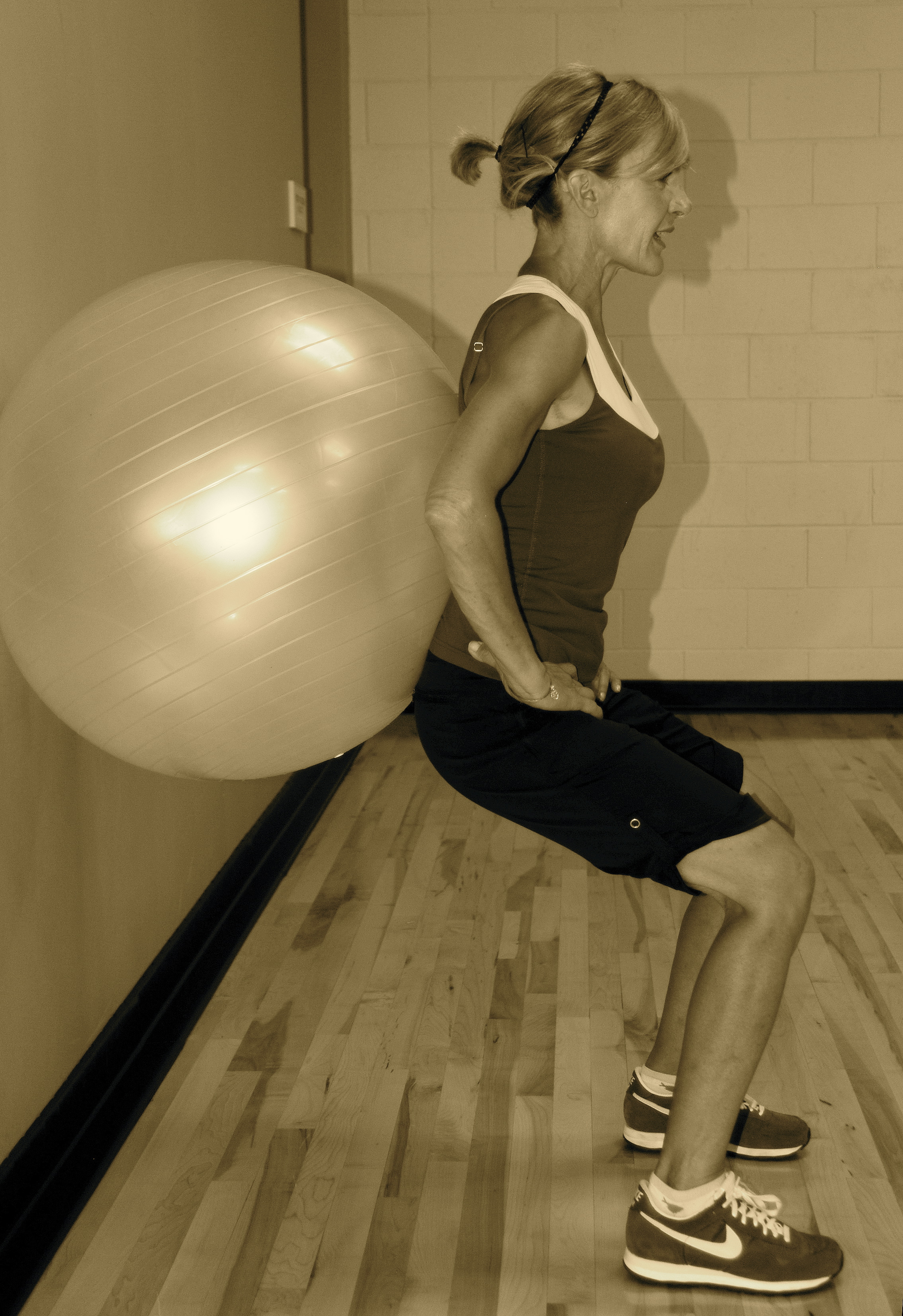
Stand with your feet hip width apart, with your toes pointing forward. Bend your ankles, knees and hips as if you were sitting back in a chair. The authors of Strength and Conditioning Journal December 2009 use the cue to “sit back into the squat.†Shifting your weight backwards not only reduces the torque on your knees by decreasing the angle, but also distributes the forces throughout the whole lower body, not just the front thighs. Pause for 1-2 seconds, tighten your gluts, and extend your legs fully back up to standing.

Sitting back in the squat can also prevent you from arching your back. By engaging the glutes, it becomes easier not to arch the low back. Keep your spine in a neutral position. The authors suggest that repetitive extension of the lumbar spine beyond the anatomical limit (arching) places stress in the small bones that join the facet joints in the back of your spine, called pars interarticularis. Keeping  a neutral spine throughout the move increases stability through the spine and allows it to handle greater compressive loads. Once your movement patterns are ingrained, you can progress the difficulty of a body weight squat to ones that include free weights, weighted bars, kettleballs or medicine balls. The variations  are numerous.

A shallow squat might be better for you if you have knee pain or patellar tendinous, because more than anything, strong quads will help in your rehabilitation.

Knee flexion and extension strength was recently measured in competitors in the National Senior Games. They had an average of 66% greater isometric knee flexion strength and 38% greater extension strength than control groups because of the demands of 20 or more years of competing, and loading the skeletal muscle. Other research, published in the Journal of Strength and Conditioning  Research  Journal 2009 shows a 53% increase in leg strength after 6 months of resistance training in older men. The point is the basic squat is a good exercise to do. Stronger legs make for better days on or off the hill, or on the tracks this winter.

Connie Aronson is an American College of Sports Medicine Fitness Specialist located in Ketchum, Idaho

Printed in Idaho Mountain Express January 31, 2010


We Can Be Better-How Stress on our Long Bones is Good for Us


A man is squatting on the floor with his hands in front of him.Modern man may not be the hottest athlete in history. Some prehistoric Australian aboriginals could possibly have outrun Usain Bolt’s 100- and 200-meter world record. With modern training, spiked shoes and rubberized tracks, it is possible that aboriginal hunters might have reached speeds of 45 kilometers an hour chasing an animal. Anthropologist Peter McAllister, in his book “Manthropology; The Science of the Inadequate Modern Male,” believes our ancestors could most probably have outrun us, and opens his book saying to his male readers, “No ifs, no buts—as a class we are in fact the sorriest cohort of masculine Homo sapiens to ever walk the planet.” Ouch.

McAllister believes our predecessors were better at the basic Olympic athletics of running, jumping and throwing. His examples describe Roman legions completing more than one and a half marathons a day carrying more than half their body weight in equipment. The 26.2-mile marathon that thousands now participate in is not a strange genetic marvel, but proof of our ancient, inherited endurance capacity, dating back to the fabled Greek foot soldier, Pheidippides. We were great runners, millennia before these great armies and men, when primitive humans left the forests to seek out and hunt for food in the open plains. They had a crucial functional advantage—the ability to run long and fast to tire their prey.

What happened? Have we become a slovenly lot? In the United States, we spend a large part of our day sitting: driving to work, sitting at a desk at work, sitting for lunch, playing Nintendo, texting, sitting at the computer or watching television. I’m not suggesting that we give up all our modern conveniences and run barefoot in the mud or sharpen a spear to catch dinner. But research clearly shows that a lot of us have become sedentary.

Stresses and loads on our long bones are good for us. Dr. Walter Bortz, clinical associate professor at Stanford University, writes in “We Live Too Short and Die Too Long” that “the robustness of any bone is in direct proportion to the physical demands applied to the bone. Use it or lose it.”

The same holds true for incorporating as much moving as possible wherever and whenever possible during the day. New research shows that when rats are not allowed to stand, there is a large drop in lipoprotein lipase, the enzyme in the legs that captures fat out of the blood to be used by the body as fuel. Blood triglycerides soar, elevating the risk for cardiovascular disease.

If you do spend a good part of the day sitting, make some small changes—stand up and walk around more often, at least once every 30 minutes. At work, get up for some water or walk to a coworker’s desk rather than e-mail. Go for a fast-tempo, 10-minute walk break. At home, watching television, do some easy squats or curl-ups during commercial breaks or run up or down stairs for a bathroom break. Stand on one leg for one minute while you cook, or brush your teeth.

Above all, keep working out regularly. Make our ancestors proud.

Connie Aronson is a health and fitness specialist and personal trainer based in Ketchum.
Published November 13 2009 in the Idaho Mountain Express.

Copyright Å  2013 Express Publishing Inc.
All Rights reserved. Reproduction in whole or in part in any form or medium without express written permission of Express Publishing Inc. is prohibited.


Enjoy high altitude by staying hydrated


A woman is stretching on the floor with another person.

Enjoy high altitude & high desert trips by staying hydrated

Trust an Exum mountain guide to describe a day where the air looks good enough to gulp. Author and guide Jack Turner has a myriad of words to describe high altitude peak and meadow air: sharp, raw, crisp, and, yes, thinner. Most of us living here are used to the altitude, but there are some things you can recommend to friends and family while they are here to ski this March. Likewise, if you’re lucky enough to travel to Peru or Zermatt this spring, simple pre-cautions can prevent a lot of altitude-related illnesses. Ketchum, like Denver or Flagstaff, Arizona, is actually moderate altitude, (greater than 5,280 feet),and high altitude is defined as elevations above 8, 500 feet ( Baldy, Colorado ski resorts, North Rim of the Grand Canyon, the Matterhorn, and of course, the highest summit, Mt. Everest at 29,028 feet.)
Nobody wants to start out their ski vacation with a splitting head-ache, and Dr. Keith Sivertson, Blaine County Emergency Medical Service Medical Director, has some good advice for visitors upon arriving here. Firstly, because we’re not sleeping above 8,000 feet, we are not technically high altitude; Ketchum is high desert. But altitude as low as 3000 feet can impose physiologic limitations on the body, and even mild dehydration can compromise performance during exercise. Add to that increased sweating and quick evaporation of that cold dry air, and you’ve lost up to 1-2 liters a day. Most people, especially those over 60, are sippers, and are not drinking enough to replace their sweat losses, furthering their risk of dehydration. A simple way to tell you are dehydrated, Dr. Severson says, is that you’re not having to get up in the night to pee (and that your pee isn’t clear in the morning).The American College of Sports Medicine suggests drinking two glasses of water two hours before exercise, and to drink during exercise at a rate that matches your sweat losses. In other words, as Dr. Silvertson says, much of the symptoms ski patrollers see at Seattle Ridge, like nausea, headaches, weakness and a heavy feeling are signs of dehydration, not high altitude sickness.
Getting off the mountain is important if there are any indications of any feeling of fullness in the chest, or a shortness of breath, as these can be serious health matters. Mike Lloyd, Baldy Mountain’s ski patrol director, has his staff trained to take no chances that it could be something of a more serious nature.
Evangelista Torricelli, in the 1600’s, was the first person to realize that the atmosphere above us create pressures that could support weight. At higher elevations, there’s less pressure of oxygen moving from the air into our blood, resulting in less oxygen to help our muscles & heart function. Many people experience high-altitude illnesses when they rapidly ascend to elevations above 8,000 feet. The most common of these is acute mountain sickness. Being in shape,( a good idea no matter what), or age seems to have no bearing on if you will develop symptoms either. More life –threatening are high-altitude pulmonary edema and high altitude cerebral edema. Descending to lower altitudes and medical care are a must for these three illnesses.
While you may not know your susceptibility at high-altitude, there are some things to do for your next trip or a longer trek. Try to go a few days earlier, or if you can’t, try to pre-acclimatize by planning several week-end hiking trips to a similar target altitude in the month prior to departure, to judge whether you are susceptible to mountain sickness. While at attitude, stay hydrated, and consume enough calories. If you are skiing, trekking or climbing at altitude, you can be using up to 300-500 calories extra calories a day The energy used to support body functions, basal metabolic rate, burns up 200 of these calories, so it’s important to eat enough calories. Savor it all.